Last updated October 31, 2026
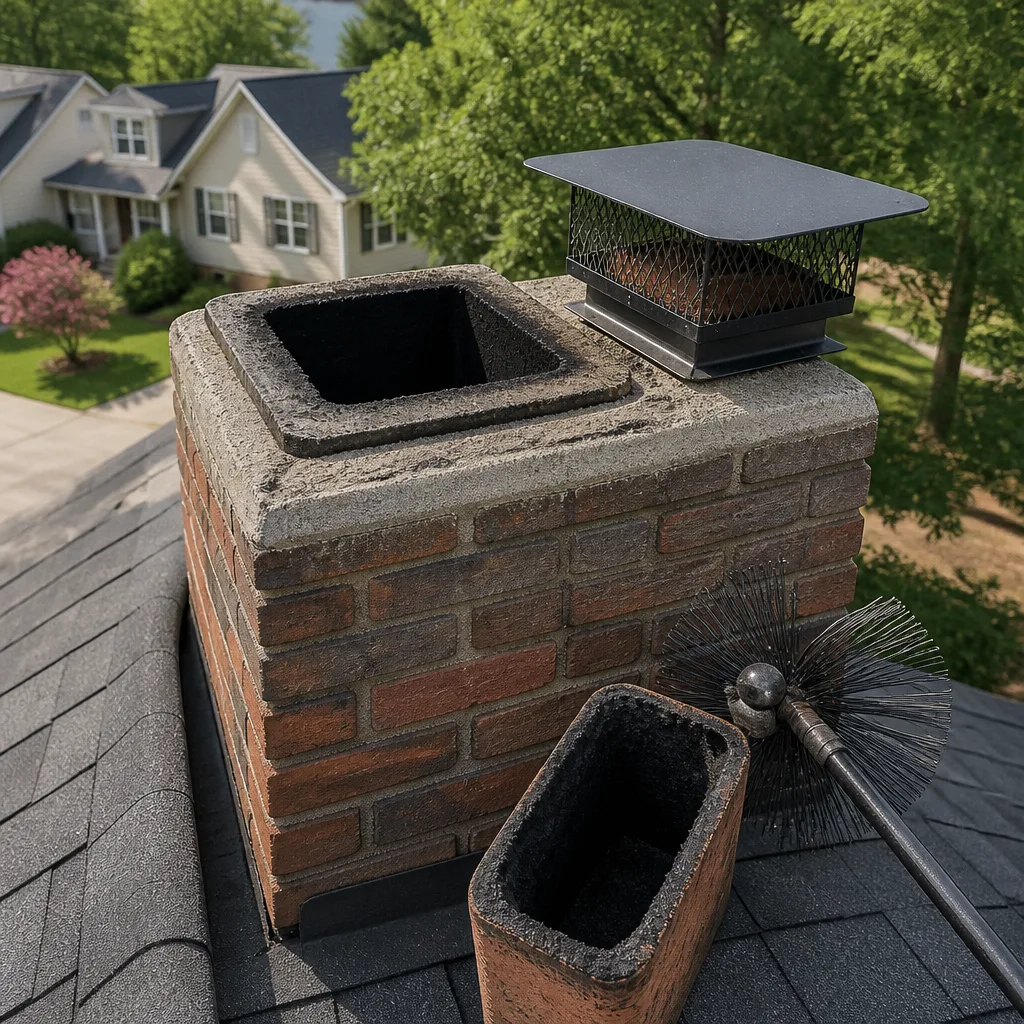 Sweep & inspection
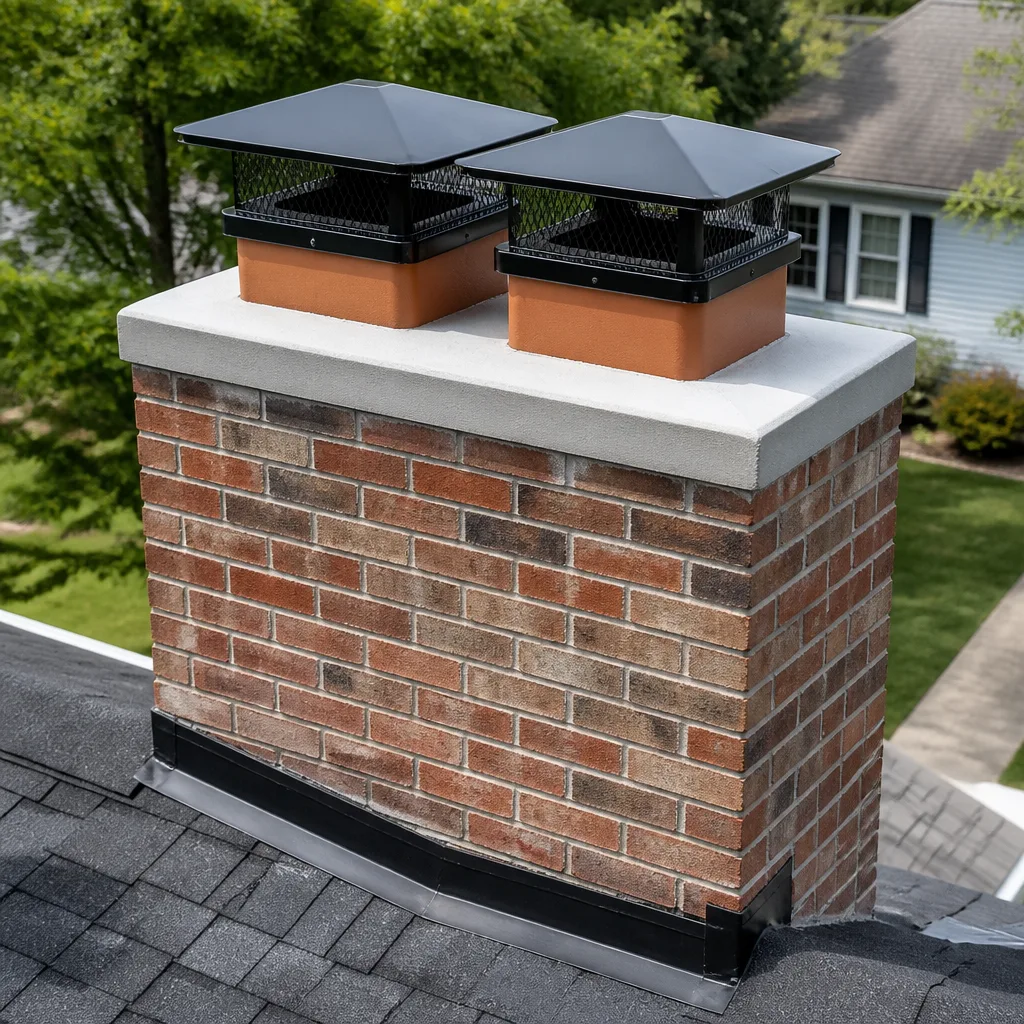 Caps & crowns
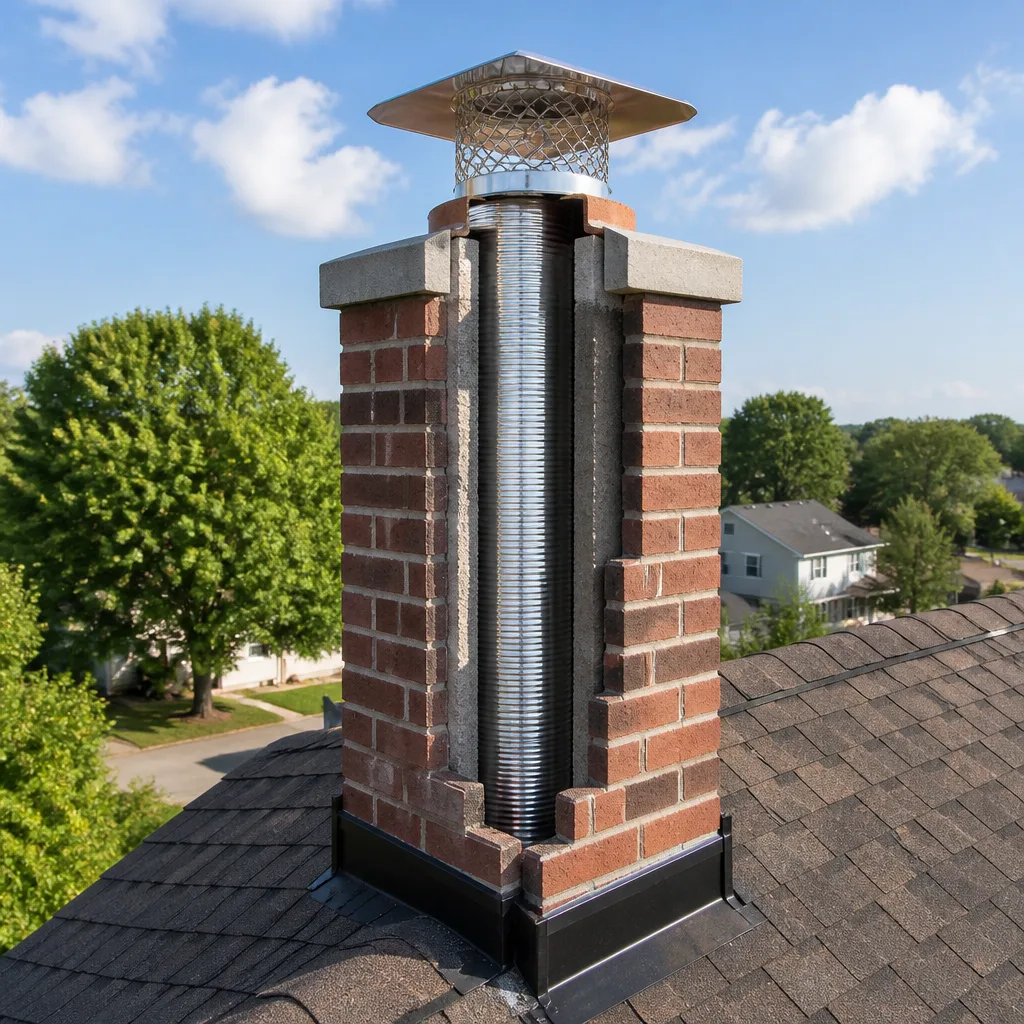 Flue relining
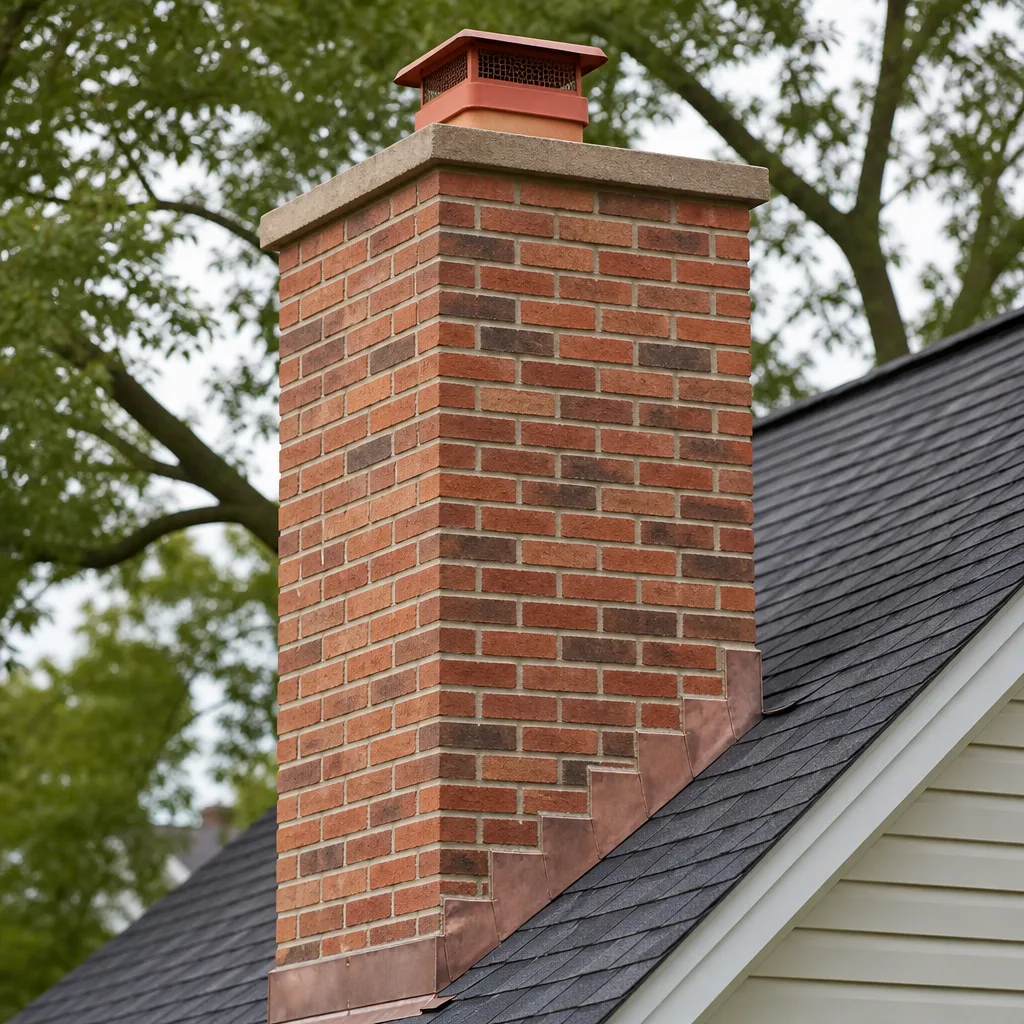 Masonry repair
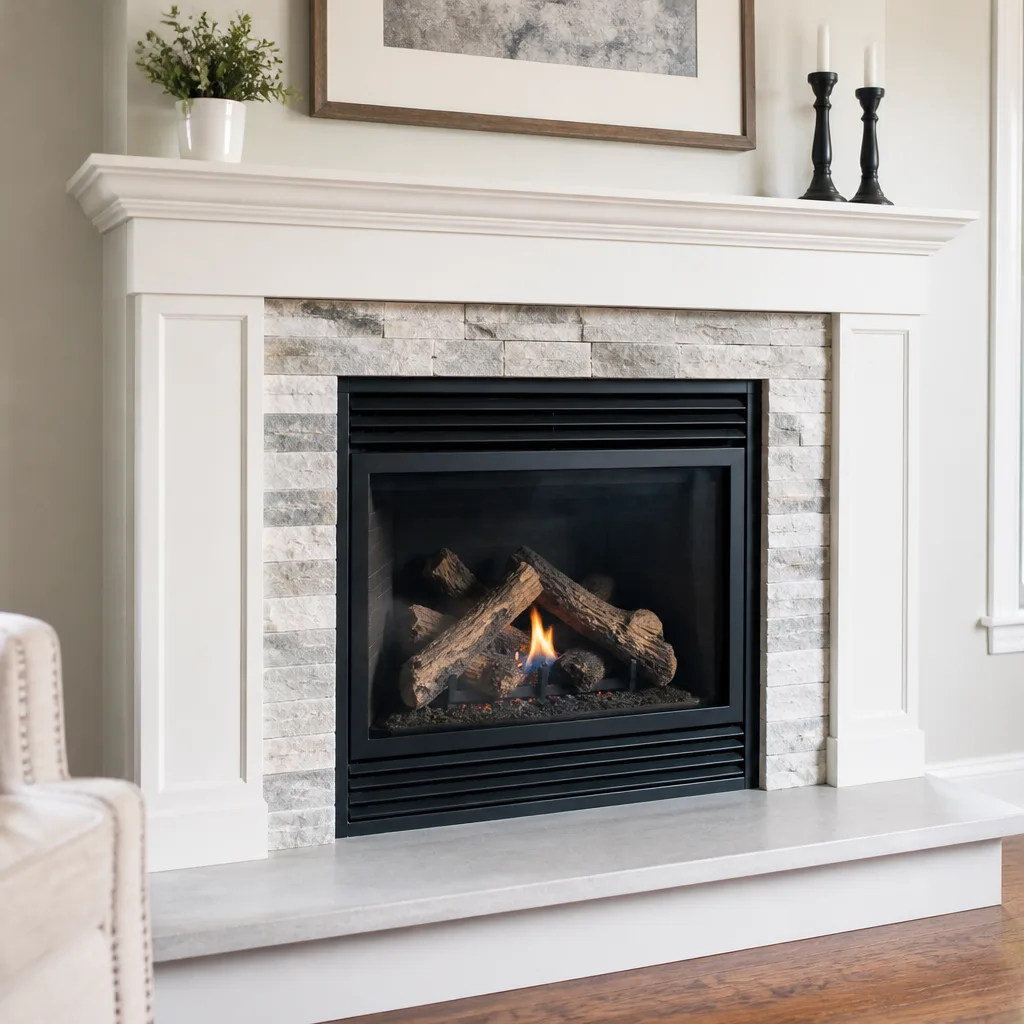 Gas fireplace service
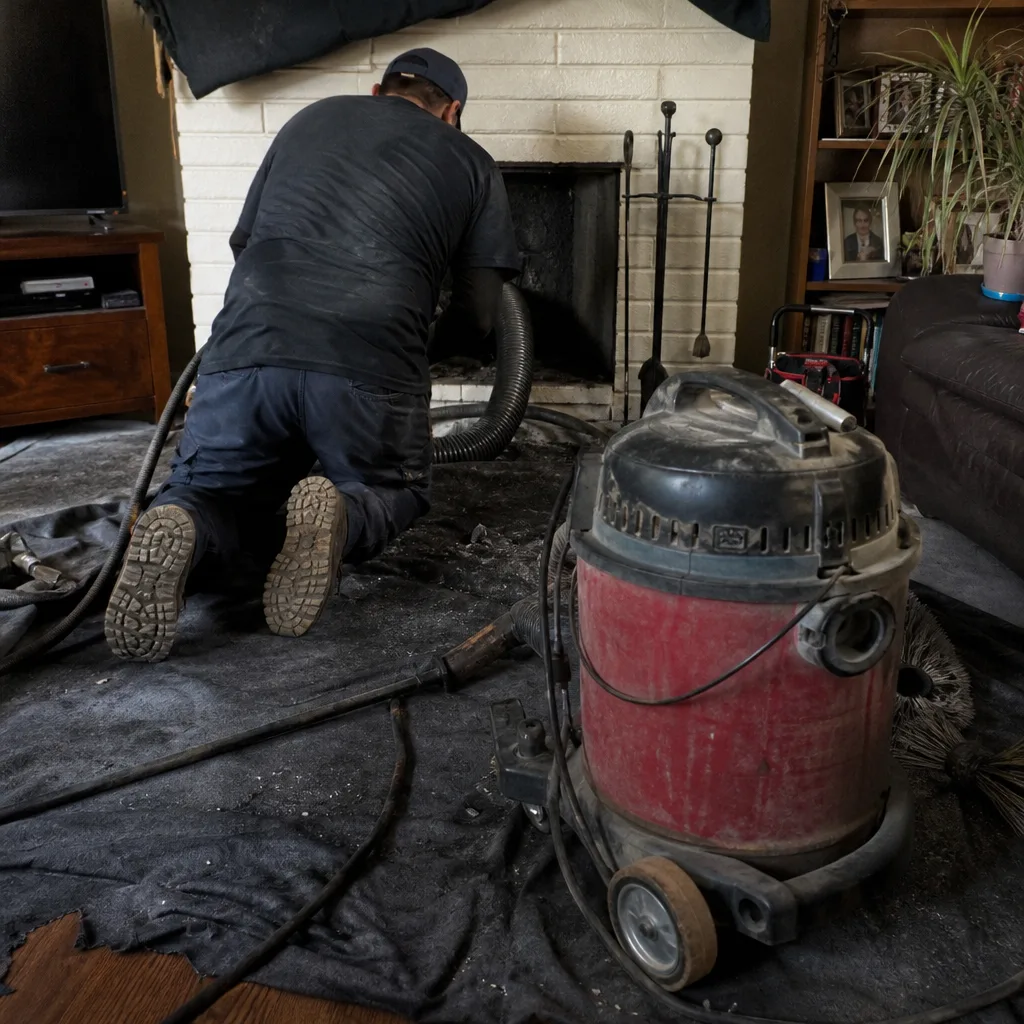
Level 1 sweep and inspection to the NFPA 211 annual standard - flue, crown, cap, and flashing checked and photographed
Chimney sweep logs do not sweep chimneys. They loosen some creosote - which then falls where a brush and vacuum still have to collect it.
Chimney Cleaning Emergency Preparedness Guide for Santa Ana Homes
A chimney fire burns at roughly 2,000°F inside the flue. That’s hot enough to crack clay liner tiles, warp a stainless steel liner, and ignite wood framing within minutes. In Santa Ana, where seasonal winds routinely hit 40 to 60 mph, a chimney fire that might smolder and self-extinguish on a calm night gets forced air through every gap in the system. The draft becomes a bellows. This guide covers what actually matters before, during, and after a chimney emergency in Santa Ana: how to recognize an active chimney fire, what to do in the first 90 seconds, how to check a chimney after an earthquake, how to handle wildfire smoke season, and how to document everything for your insurance carrier.
Quick Answer
Chimney emergency preparedness in Santa Ana means three things: keeping your flue clean enough that creosote can’t fuel a chimney fire, knowing the exact response sequence if one starts anyway, and having a post-event inspection protocol for wind events, earthquakes, and wildfire smoke. The most important preparation is an annual chimney sweep before burning season, plus a documented inspection after any significant seismic event or chimney fire. For a full breakdown of what to check each year, see our Chimney Sweep Maintenance Checklist for Santa Ana Homeowners. If you hear a roaring sound from your chimney, see flames from the cap, or feel the stovepipe shaking, call 911 immediately, evacuate, and do not use the fireplace again until a certified sweep inspects the flue.
Styles & brands we work with
Table of Contents
- How to Recognize an Active Chimney Fire in Santa Ana
- The Three-Step Response Sequence Before Calling 911
- Post-Earthquake Chimney Inspection Protocol for Santa Ana Homes
- Wildfire Smoke Season: Sealing Your Chimney Without Trapping Carbon Monoxide
- Pre-Emergency Equipment Checklist for Chimney Hazards
- How to Document Chimney Condition for Insurance Claims
- Common Mistakes to Avoid
- When to Call a Professional
How to Recognize an Active Chimney Fire in Santa Ana
Chimney fires don’t announce themselves the way house fires do. There’s no smoke alarm going off in the living room, no visible flames in the fireplace itself. The fire is happening inside the flue, behind brick or stone, and that’s why homeowners miss the warning signs until the damage is done. In Santa Ana, where many homes date from the 1950s and 1960s and still have original clay tile liners, the margin for error is thinner than in newer construction.
The most reliable sign is the sound. A chimney fire sounds like a freight train or a low-flying jet, not like a crackling fireplace. It’s a deep, steady roar that doesn’t change when you adjust the damper. If you hear that sound, you are not dealing with a normal fire. The second sign is visual: flames or dense smoke coming from the chimney cap, not just the top of the flue. During daylight, look for dark smoke and bits of flaming creosote falling onto the roof. At night, the cap may glow. The third sign is the stovepipe itself, if you have a wood stove. It may shake or vibrate. On a fireplace, the surround may feel hotter than normal to the touch.
The science matters here. Creosote, the tar-like residue that condenses on flue walls when smoke cools, ignites at around 451°F. But once burning, it can drive flue temperatures past 2,000°F. Clay tiles crack at roughly 1,800°F under rapid heating. The cracked tile exposes the brick and mortar behind it, and from there, the fire has a path to wood framing. Santa Ana wind events make this sequence faster. A 50 mph gust doesn’t just feed the fire. It creates pressure differentials that pull flames into any crack or gap and spread embers onto surrounding roofs.
We’ve seen flues in the Floral Park and Morrison Park neighborhoods where a chimney fire that lasted less than three minutes left the liner so compromised that the system was unsafe to use until relined. Recognition matters because minutes matter.
The Three-Step Response Sequence Before Calling 911
If you recognize an active chimney fire, the sequence matters. Here is the exact three-step response, in order:
- Close the air supply. Close the fireplace damper fully if you can do so without putting your hand near the opening. For a wood stove, close the air intake vents. This starves the fire of oxygen. Do not open the firebox door. Do not throw water into the fireplace. Water hitting a hot flue creates steam that can crack the liner explosively.
- Evacuate everyone from the home. Get every person and pet out through the nearest exit. Do not stop to collect belongings. Chimney fires can transition into structure fires in under two minutes when a liner has already failed.
- Call 911 from outside the home. Tell the dispatcher you have an active chimney fire, not a fireplace fire. The distinction changes the response. Firefighters need to know the fire is inside the chimney chase and may be spreading through the framing.
After the fire department clears the scene, do not use the fireplace again. Even if the fire stayed contained in the flue, the heat has likely damaged the liner. The next step is a Level 2 chimney inspection, which uses a camera to document interior flue condition. This is non-negotiable after any chimney fire, regardless of how small it seemed. The inspection is what tells you whether the chimney is safe to use again or whether the liner needs repair or replacement.
In Santa Ana, fire crews see more chimney fire calls during Santa Ana wind events than any other time of year. The wind doesn’t cause the fire, but it accelerates the spread. A well-maintained chimney with a clean flue rarely has a chimney fire at all, which is why the preparation side of this equation matters more than the response side.
Post-Earthquake Chimney Inspection Protocol for Santa Ana Homes
Santa Ana sits roughly 12 miles from the Whittier Fault and within shaking distance of the San Andreas and San Jacinto faults. A magnitude 5.0 or greater earthquake can damage a chimney without leaving any visible exterior crack. Masonry chimneys are the most vulnerable structural component of any home because they’re tall, rigid, and lightly reinforced. In the 1994 Northridge earthquake, chimney damage was among the most common structural failures reported, even at distances of 30 miles or more from the epicenter.
Here is the post-earthquake chimney protocol we recommend for Santa Ana homeowners:
- Visual exterior check from ground level. Look for shifted bricks, new cracks, missing mortar, or a chimney that’s visibly leaning. Use binoculars to look at the mortar joints near the roofline. Do not climb onto the roof. A damaged chimney can collapse under the weight of a person.
- Check the attic. If you can access the attic safely, look at the chimney chase where it passes through the roof deck. Look for daylight coming through gaps, dust or debris on the attic floor near the chimney, or cracked framing around the flue.
- Interior fireplace check. Look inside the firebox for fallen mortar, cracked firebrick, or debris. Shine a flashlight up the flue from inside the firebox and look for obstructions or visible cracks.
- Do not use the fireplace until a Level 2 inspection. Even if everything looks fine, hidden damage inside the flue is common after an earthquake. A camera inspection is the only way to see it.
After an earthquake, a damaged chimney can be a safety hazard even when the fireplace isn’t in use. Loose brick can fall. A cracked flue can leak carbon monoxide into the home if a gas appliance shares the flue. If you notice any shifting, cracking, or debris, call a chimney professional before you light anything. The Chimney Repair in Santa Ana page covers what structural repairs typically involve, including options that don’t require a full teardown.
Wildfire Smoke Season: Sealing Your Chimney Without Trapping Carbon Monoxide
Santa Ana wind season and wildfire smoke season overlap almost perfectly. When smoke from the Cleveland National Forest or the foothills pushes into the Santa Ana basin, homeowners close up the house and run air purifiers. But the chimney is a hole in the building envelope. If the damper is open, even slightly, smoke gets pulled into the house as the indoor air pressure fluctuates. If the damper is sealed too aggressively, you might be trapping exhaust gases from a gas appliance that shares the flue.
The solution depends on what vents into the chimney.
If your fireplace is wood-burning only and not in use during smoke season, close the damper fully. For better sealing, a top-mount damper is the most effective option. It seals at the top of the flue rather than just above the firebox, which blocks smoke intrusion far more effectively than a throat damper. Top-mount dampers also keep out embers, rain, and pests during the off-season.
If a gas appliance shares the flue with the fireplace, or if the chimney is the vent for a gas furnace or water heater, you cannot simply seal the flue. Doing so traps carbon monoxide inside the home. The safe approach is to have the chimney inspected to confirm what vents into it, and then install a top-mount damper with the appropriate configuration, or address the venting arrangement directly. This is one situation where guessing is dangerous. Carbon monoxide is odorless, invisible, and fatal at surprisingly low concentrations over time.
During active wildfire smoke events, we recommend checking the seals and gaskets on any chimney cleanout door at the base of the flue. A leaky cleanout door lets smoke and ash into the house even when the damper is closed. The same applies to the gap around the firebox damper frame. Gasketing and high-temperature silicone can close small gaps.
For homeowners with a wood-burning fireplace, the long-term solution is to keep the flue clean. A heavily creosote-coated flue absorbs and holds smoke odor longer. A clean flue, combined with a functional top-mount damper that you can seal, gives you the best control during Santa Ana smoke events.
Pre-Emergency Equipment Checklist for Chimney Hazards
Most chimney emergencies happen fast, and the time to gather tools is before you need them, not when you hear the roar. Here’s what to keep in the home, not in the garage, for chimney-specific hazards:
- A fireplace-rated fire extinguisher. A standard ABC extinguisher works, but a Class A-rated extinguisher, or one specifically listed for fireplace use, is better. Keep it within 10 feet of the fireplace but not so close you can’t reach it if the firebox is involved. Know how to use it before you need it.
- Welding gloves. Heavy leather gloves let you close a hot damper or air intake without burning your hands. They cost under $20 and belong near the fireplace.
- A top-mount damper with a known operating condition. This is the best emergency shutoff for a wood-burning chimney. If you don’t have one, a well-maintained throat damper is the fallback. A top-mount damper is also a spark arrestor assembly, which matters during Santa Ana wind events when embers from your own fire or a neighbor’s fire can enter the home.
- A battery-operated carbon monoxide detector on every floor. If a chimney or flue fails, CO is the first killer. Interconnected detectors that all sound together are the minimum we recommend. Replace batteries annually and test them monthly.
- Documentation binder or digital folder. Keep your last chimney inspection report, any repair receipts, and a set of photos of the fireplace and chimney in a place you can access quickly. If the house burns, you’ll need these for the insurance claim.
The most overlooked item on this list is the damper. A damper you can close in an emergency is the difference between a contained chimney fire and a structure fire. Throat dampers are notoriously weak at sealing, and after years of heat cycles, many don’t close fully at all. A top-mount damper, like those from Famco or Copperfield, replaces the leaky throat damper with a tight-sealing cap at the top of the flue. In our experience, homeowners who switch to top-mount dampers report noticeably less smoke intrusion during wind events and better control over fireplace drafting year-round.
How to Document Chimney Condition for Insurance Claims
If a chimney fire, earthquake, or wind event damages your chimney, the insurance claim process goes much more smoothly when you have documentation from before the damage occurred. Insurers frequently deny chimney claims because homeowners can’t prove the system was in good condition before the incident. Here’s how to build a claim-ready file:
- Take baseline photos now. Photograph the firebox, damper, chimney cap, the exterior chimney from the ground, and the area where the chimney passes through the attic. Date-stamp the photos. These are your “before” images. If you never take them, you can’t prove the damage wasn’t pre-existing.
- Get a professional inspection report. A Level 2 inspection from a certified chimney sweep provides a written, documented baseline. The report includes camera footage of the flue interior. This is the single most valuable document for an insurance claim because it establishes the pre-loss condition professionally.
- Measure and record key dimensions. The flue diameter, the height of the chimney above the roofline, and the thickness of the brick or stone facing are useful data points for a claim. Keep these in a file with the inspection report.
- Document the incident immediately after it happens. Take photos of visible damage from multiple angles before anything is disturbed. If a chimney fire occurred, photograph the interior damage during the inspection if the sweep provides the footage.
- Use a third-party inspection for the claim. Insurance carriers respond differently to reports from a service company that also sells repairs versus an independent third party. A documented Level 2 inspection with camera footage from a qualified sweep is the format carriers accept. Many of the chimney claims we’ve seen denied were denied because the homeowner tried to document damage with phone photos alone and no professional report.
For Santa Ana homeowners in older neighborhoods like Washington Square and Park Santiago, where chimneys are original to 1950s and 1960s construction, the baseline documentation is especially important. Once damage occurs, the insurer will ask whether the chimney was properly maintained. A stack of annual sweep records and a recent inspection report answers that question before it gets asked.
Common Mistakes to Avoid
- Throwing water on a chimney fire. Water hitting a 2,000°F flue flashes to steam instantly. The expansion can crack the liner and blow burning creosote into the room. Close the damper, evacuate, and call 911.
- Using the fireplace again after a chimney fire without an inspection. Even a small chimney fire can damage the liner or the mortar joints enough to make the system unsafe. The only way to confirm the flue is sound is with a camera inspection.
- Assuming a clean-looking firebox means a clean flue. Creosote builds up inside the flue, not in the firebox. You can’t see it from inside the house. The firebox can look fine while three inches of creosote coats the flue walls above.
- Sealing a shared flue during a wildfire smoke event. If a gas appliance vents through the same flue as the fireplace, closing the damper can trap carbon monoxide in the home. This is fatal in the wrong circumstances.
- Skipping the post-earthquake inspection because nothing looks cracked. Structural damage inside the flue is invisible from the ground. A chimney can look fine from the curb and be dangerous from the attic.
- Burning unseasoned wood in a Santa Ana home. Wet or green wood burns cooler, which means more creosote condenses in the flue. In Santa Ana’s mild winters, the temptation to burn whatever firewood is available is common, but unseasoned wood is the fastest way to build up a chimney fire fuel load.
- Letting the damper rust open or closed. A damper that won’t close means an open hole in the building envelope during wind events and smoke season. A damper that won’t open means smoke pouring into the house when you light a fire. Both are fixable before they become emergencies.
When to Call a Professional
Some chimney work is genuinely DIY-safe: cleaning the firebox, checking the damper by hand, taking photos for documentation. Most of the rest is not. Call a professional if you’ve had a chimney fire, if you’ve experienced an earthquake strong enough to crack drywall or shift furniture, if you smell smoke in the house when the fireplace isn’t in use, if you see white staining on the exterior brick (a sign of water intrusion), or if your carbon monoxide detector reads anything above zero near the fireplace. You should also call before burning season begins if you haven’t had a sweep in the past 12 months.
Santa Ana Chimney Sweep offers free estimates in Santa Ana. Call (855) 341-9658 to schedule a chimney inspection or sweep before burning season, or to have us look at a chimney after any emergency event. We carry professional-grade replacement parts from DuraFlex and HeatShield, and we’ll tell you plainly what needs fixing and what can safely wait.
See the difference
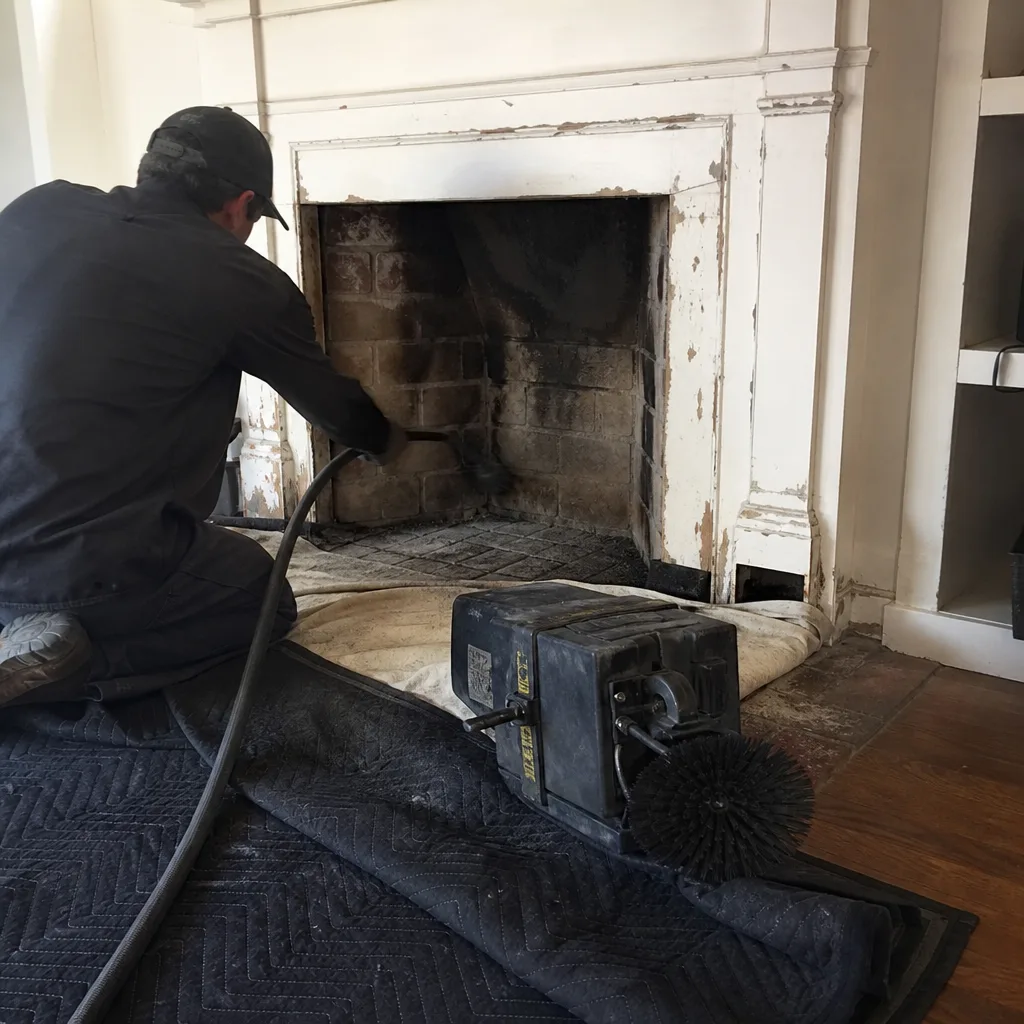 Before
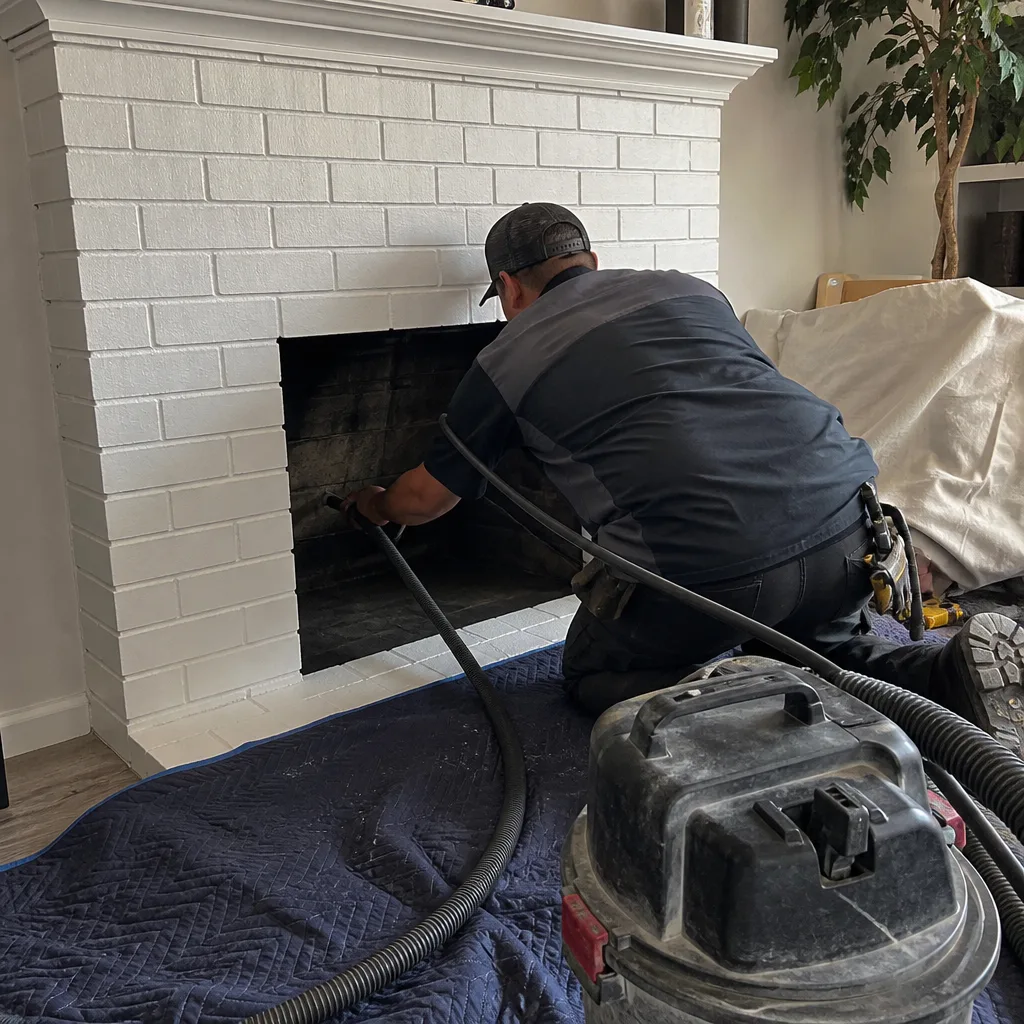 After
 Before
 After
 Before
 After
Frequently Asked Questions
Every 12 months, or more often if you burn more than two cords of wood per year or burn unseasoned wood. The National Fire Protection Association standard is an annual inspection at minimum, with sweeping as needed based on creosote accumulation. In Santa Ana, where fireplaces are seasonal rather than year-round, one pre-season sweep per year is the baseline.
A standard chimney sweep in Santa Ana typically runs $150 to $300 for a straightforward flue cleaning, with higher prices for larger flues, heavy creosote buildup, or systems with multiple bends. The price goes up if a Level 2 camera inspection is included, which is a worthwhile add-on for any home that’s had a chimney fire or an earthquake. A sweep without an inspection cleans the flue but doesn’t tell you whether the liner is damaged.
You can, but you should be aware of the risk. High winds create strong drafting and can pull embers out the top of the flue and onto the roof or nearby vegetation. A top-mount damper with a spark arrestor reduces this risk significantly. If the wind is strong enough that the National Weather Service has issued a red flag warning, it’s safer not to burn.
You can’t from the outside. Structural damage to the flue interior is only visible with a camera inspection. After any earthquake strong enough to crack drywall, shift furniture, or knock items off shelves, we recommend a Level 2 inspection before using the fireplace again.
Creosote accumulation from burning unseasoned wood or skipping annual sweeps. In our experience, chimney fires in Santa Ana are almost always in systems that haven’t been swept in two or more years. The fire needs fuel, and creosote is that fuel.
Yes. A proper chimney sweep includes checking the flue for blockages, cracks, and venting issues that can cause carbon monoxide to back up into the home. This is also when we look at whether gas appliances share the flue and whether everything is venting correctly.
The Bottom Line
Chimney emergencies in Santa Ana come in three forms: chimney fires accelerated by Santa Ana winds, earthquake damage that hides inside the flue, and smoke intrusion during wildfire season. All three are manageable if you prepare before the event. Keep the flue clean. Know the response sequence if a chimney fire starts: close the damper, evacuate, call 911. Inspect the chimney after any significant earthquake before you light a fire again. Document your chimney’s condition with photos and a professional inspection report before anything goes wrong. Use a top-mount damper and know whether gas appliances share the flue during smoke season. Most chimney emergencies are preventable, and the ones that aren’t are survivable if you’ve done the preparation. For more guides & resources, visit our blog.
Written by the team at Santa Ana Chimney Sweep, serving Santa Ana since 2016.