Last updated October 31, 2026
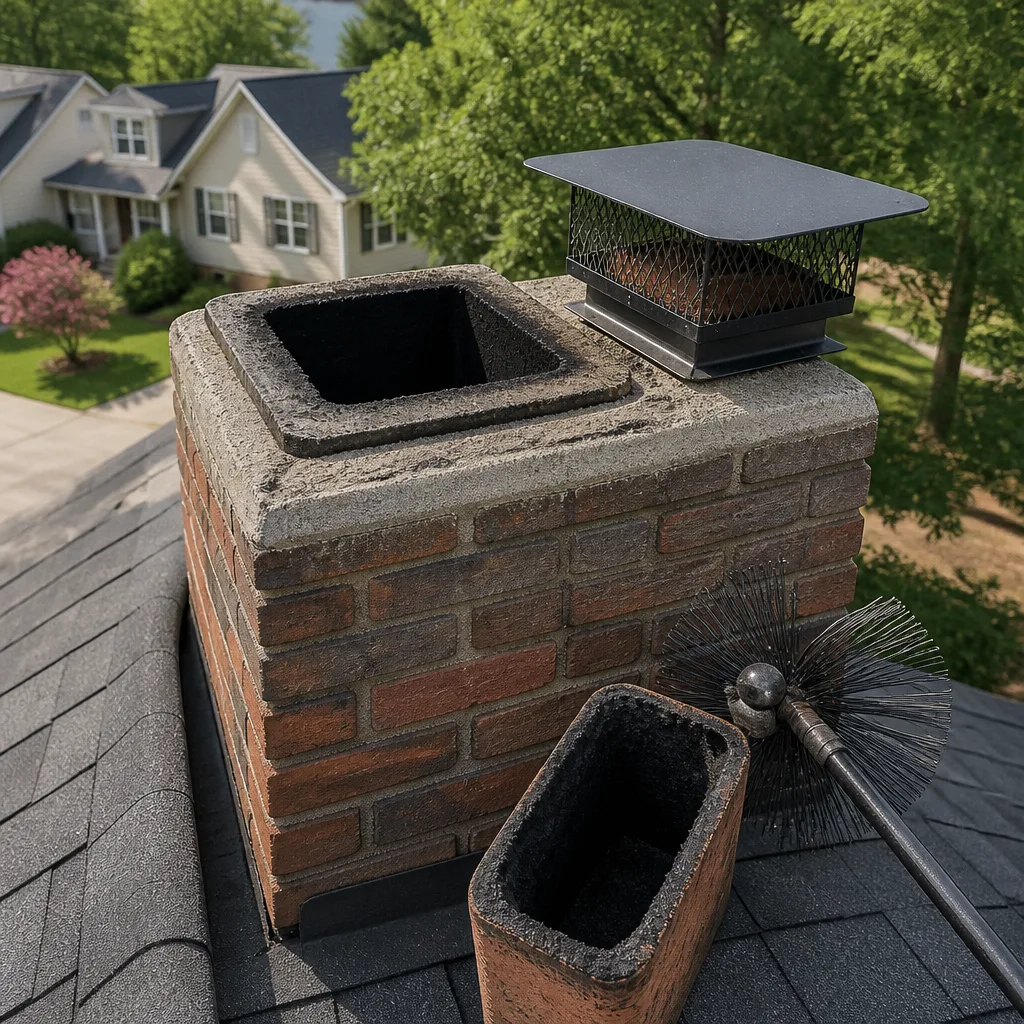 Sweep & inspection
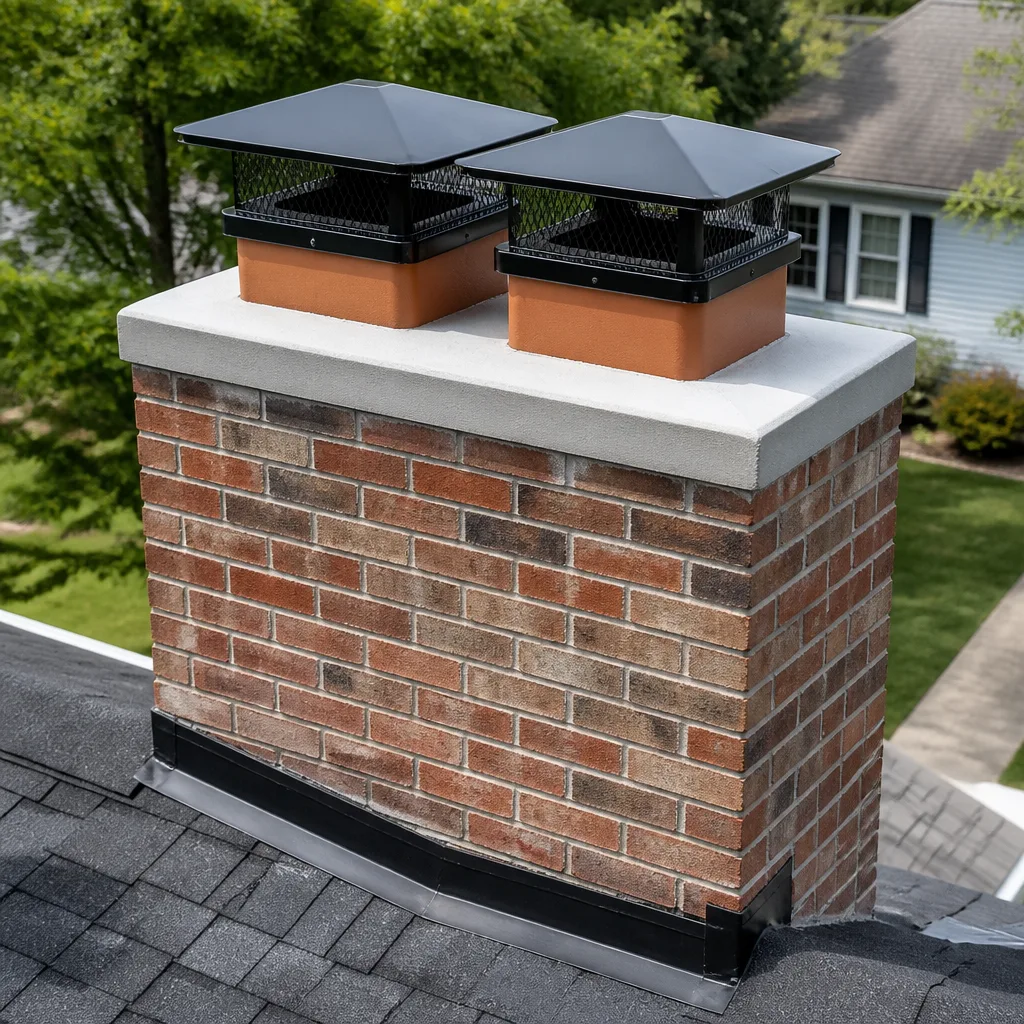 Caps & crowns
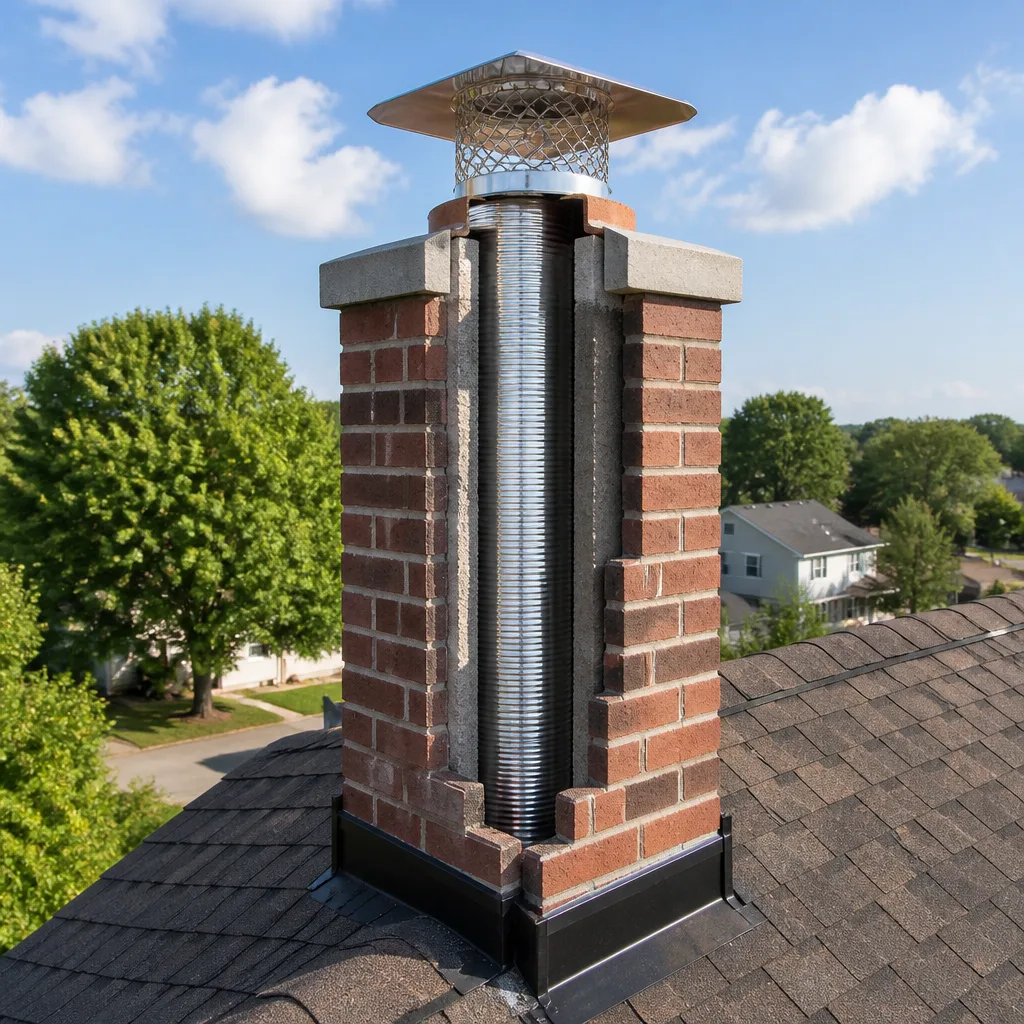 Flue relining
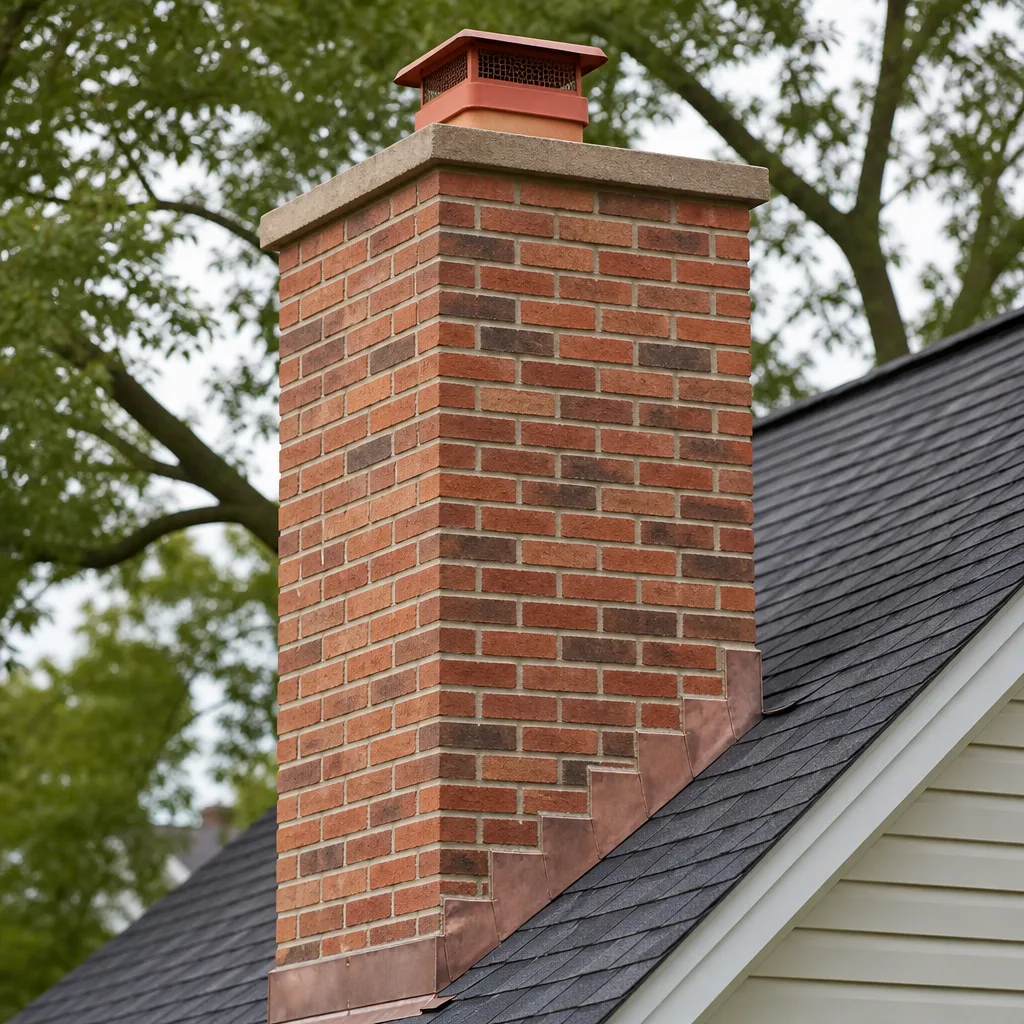 Masonry repair
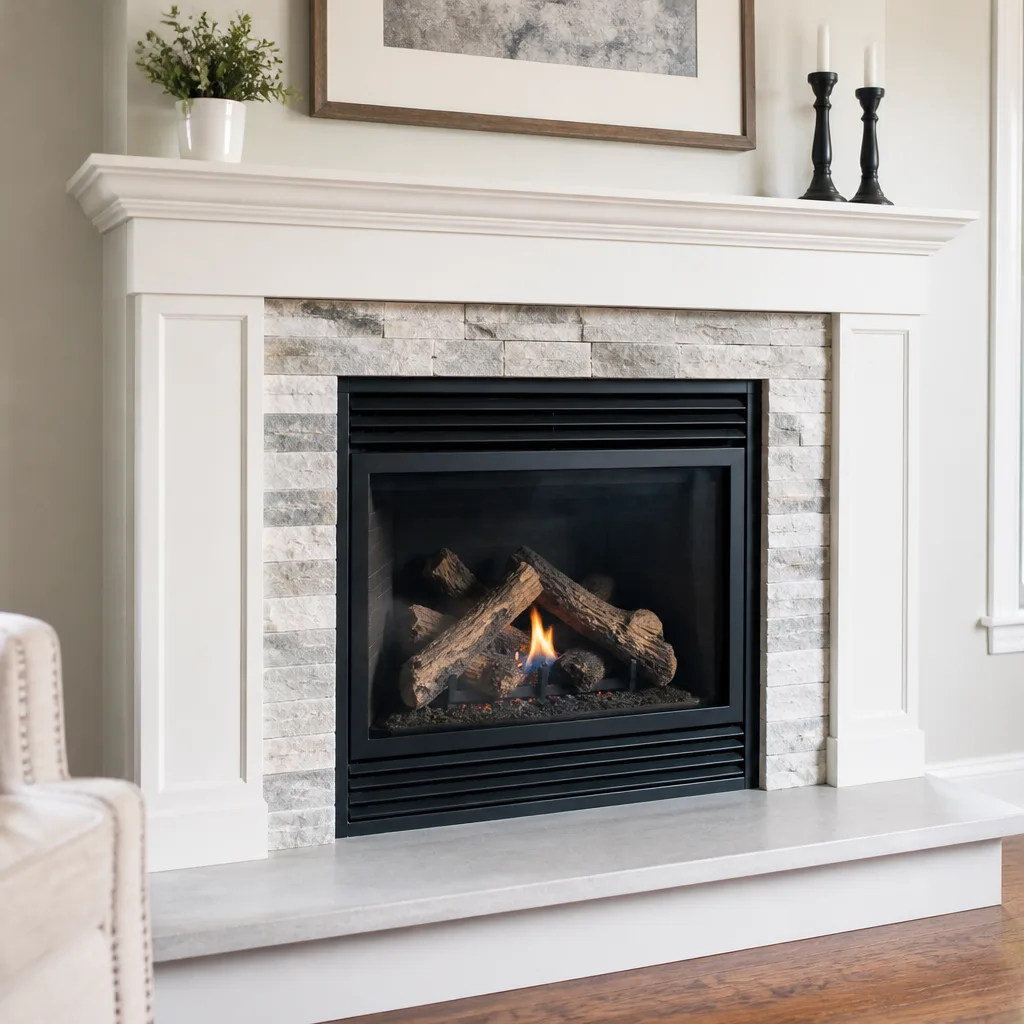 Gas fireplace service
Level 1 sweep and inspection to the NFPA 211 annual standard - flue, crown, cap, and flashing checked and photographed
Chimney sweep logs do not sweep chimneys. They loosen some creosote - which then falls where a brush and vacuum still have to collect it.
Chimney Cleaning Warning Signs: A Santa Ana Homeowner’s Reference Guide
Most homeowners wait for smoke in the living room or a chimney fire before they take their chimney seriously. That’s a costly way to learn. The reality is that a chimney in trouble talks for months before anything dramatic happens – you just have to know what you’re listening for and looking at. This guide covers the specific warning signs we see most often on Santa Ana chimneys, what each one actually means, and when it’s time to move from “keep an eye on it” to “schedule a sweep this week.” For more guides & resources, see our blog.
Quick Answer
A chimney needs attention when you see white staining (efflorescence), dark streaking, flaking brick or mortar, or rust on the cap or chase. You should also act on smells – especially a hot creosote odor in summer – or smoke that rolls back into the room. In Santa Ana, most warning signs trace to three root causes: water intrusion, creosote accumulation, or structural joint failure from decades of thermal cycling and the occasional seismic event. Our Chimney Sweep Troubleshooting: Common Problems and How to Fix Them walks through each in more detail.
Styles & brands we work with
Table of Contents
- The White Staining Problem: Efflorescence Is Water Damage, Not Weathering
- Reading Chimney Odors: Musty, Acrid, and Sulfurous Each Mean Something Different
- Why a Campfire Smell in Summer With No Recent Fire Is a Warning Sign
- Dark Streaking and Creosote Glazing: What You’re Actually Looking At
- Three Sounds a Chimney Makes That You Should Not Ignore
- Cracks in Santa Ana Chimneys: Settling vs. Seismic Joint Failure
- The Firebox Floor: Spalling, Thermal Shock, and What the Brick Pattern Tells You
- Smoke Rollout and Draft Failure: When Smoke Comes Back Into the Room
The White Staining Problem: Efflorescence Is Water Damage, Not Weathering
That chalky white film spreading across the exterior brick of your chimney has a name: efflorescence. It’s not normal aging, and it doesn’t come from sea air. Efflorescence forms when water moves through masonry, dissolves the salts inside the mortar, and carries them to the surface. When the water evaporates, the salt stays behind. That’s the white residue you’re seeing.
The important part is what it means. Water is inside your chimney’s structure, moving from somewhere it shouldn’t be. In Santa Ana, the usual entry points are a cracked crown, failed mortar joints at the top course, or a chase cover that’s rusted through on a prefabricated chimney. Once water is inside the masonry, every heat cycle from your fireplace stresses the structure further. Heated moisture expands. Cooled moisture contracts. Over time, the face of the brick begins to spall – thin shards pop off the surface, and the interior of the brick, which was never meant to be exposed to weather, starts to erode.
Cleaning efflorescence off with a wire brush or a store-bought masonry cleaner changes nothing. The stain comes back within months because the water source is still there. The only real fix is to identify the entry point and seal or replace the failed component. If the masonry itself has become porous, applying a breathable water repellent designed for chimneys can slow absorption, but that’s a secondary measure, not the repair itself.
Here’s the urgency level: efflorescence alone is not an emergency. But it’s a countdown timer. Every wet-dry cycle in a Santa Ana chimney pushes mortar joints closer to failure. We’d rather address white staining the month you notice it than quote a full crown rebuild or partial teardown two years later.
Reading Chimney Odors: Musty, Acrid, and Sulfurous Each Mean Something Different
Chimney odors are the least visible warning sign and the one homeowners rationalize away the most. The key is to stop asking “does it smell bad?” and start asking “what does it smell like?” The type of odor reveals the problem.
Musty or damp-earth smell: This is moisture. Water is getting into the flue or the masonry and sitting there. You might also notice it after rain. In Santa Ana, this usually points to a chimney cap that’s missing or damaged, a cracked crown, or flashing that has separated from the roofline. The fix is to stop the water, then evaluate whether the interior masonry needs attention. A musty smell is not a fire hazard by itself, but water plus masonry plus time equals structural deterioration.
Acrid, sharp, or barnyard smell: This is creosote. Specifically, it’s the volatile organic compounds inside creosote off-gassing. You’re smelling accumulated combustion byproducts from wood fires. The smell often gets stronger on humid days or when the house warms up. This should be treated as a maintenance signal: the flue has enough creosote accumulation that it’s actively releasing odor into your home. A Chimney Sweep in Santa Ana can remove it and tell you how much buildup you’re actually working with.
Sulfurous or rotten-egg smell: This is different and worth immediate attention. Sulfur odors can indicate a drafting problem that’s pulling combustion gases from a gas water heater or furnace back down the chimney instead of venting them out. It can also appear when a flue is partially blocked. If you smell sulfur anywhere near your fireplace or utility closet, call a professional before using the fireplace again.
The point we want homeowners to internalize: your chimney should not smell like anything. A properly drafting, properly capped chimney is odor-neutral. Any persistent odor is a diagnostic signal, not a quirk of an old house.
Why a Campfire Smell in Summer With No Recent Fire Is a Warning Sign
We hear this one every year in Santa Ana around July and August. The house warms up, the attic heats, and suddenly a living room smells faintly of a campfire. The fireplace hasn’t been used since February. Homeowners assume it’s a residual smell, maybe from the ash pit or an old log holder.
It’s usually creosote off-gassing. Creosote is a tar-like residue that condenses on flue walls during wood fires. It’s semi-liquid at elevated temperatures and sticky at room temperature, and it contains hundreds of chemical compounds, many of which are volatile. When the air inside the flue heats up – even just from a hot Santa Ana afternoon – those volatiles release. The warm air rises, carrying the smell down through the fireplace opening and into the living space.
Why is this a warning sign and not just an annoyance? Because the smell is proof of accumulation. If enough creosote is present to produce a noticeable odor from passive heating alone, the flue is likely carrying a meaningful load. That’s the same material that ignites in chimney fires at around 2,000°F. A creosote fire isn’t a slow burn; once it starts, it roars through the flue and can crack liners, ignite nearby framing, and spread faster than homeowners expect.
The action threshold here is simple. If you smell fireplace odor in the summer, schedule a cleaning before the next burn season. It’s the cheapest intervention with the highest safety return. If you’re diligent about it, you’ll also catch other issues early. For more on what a proper cleaning involves and why it matters, see our guide at the Santa Ana Chimney Sweep home page.
Dark Streaking and Creosote Glazing: What You’re Actually Looking At
Dark staining on the exterior of a chimney can appear in two very different places, and they mean different things. Here’s how we break it down when we inspect a chimney in Santa Ana.
Dark streaks on the exterior face below the crown or cap: This is usually wash-down of soot and creosote by rainwater. It’s common on chimneys that lack a proper cap or whose cap is undersized. Rain hits the flue interior, picks up residue, and carries it down the exterior brick or stucco face. The stain itself is cosmetic. The actual problem is that rain is entering the flue, which accelerates creosote absorption into the masonry and triggers the same water damage cycle as efflorescence. We treat these streaks as a cap problem until proven otherwise.
Black, glossy, tar-like buildup inside the flue: If you shine a light up from the firebox and see what looks like hardened black paint, that’s glazed creosote, also called third-degree creosote. It forms when creosote vapor condenses and bakes on in repeated layers. It’s dense, stubborn, and extremely flammable. Standard brushes don’t remove it well. Removal usually requires chemical treatments or mechanical methods beyond routine sweeping.
Here’s the Santa Ana-specific angle: our coastal plain climate doesn’t produce the extreme cold-weather burning patterns of mountain communities. Homes here tend to use fireplaces recreationally and intermittently. That intermittent use pattern is actually efficient at producing first- and second-degree creosote because fires rarely get hot enough, long enough, to burn residues clean. In other words, casual burning habits are exactly what builds the kind of accumulation we’re describing.
Three Sounds a Chimney Makes That You Should Not Ignore
A chimney should be almost silent. When it makes noise, each sound has a meaning.
Popping or ticking during a burn: This is often thermal expansion – masonry heating up and moving slightly. Occasional ticking, especially in the first minutes of a fire, is normal. Repeated popping that sounds like small stones hitting metal, or popping that continues long after the fire is established, is different. It can indicate shifting between flue tiles, a liner that’s separating, or metal components that are binding. In a Santa Ana chimney that has survived decades of thermal cycling, that kind of sound deserves an inspection.
A loud whooshing draft or roaring when there’s no fire: This is air moving through the chimney, and it’s usually a sign of an oversized flue or a missing damper seal. You’ll hear it on windy days. The problem isn’t just the noise: a chimney that pulls air down when the fireplace isn’t in use is actively drafting conditioned air out of your home. It also creates the negative pressure that can reverse draft from gas appliances elsewhere in the house.
Crackling or settling sounds after the fire is completely out: We listen for this carefully. When masonry cools and contracts, it can make faint creaks. But crackling that persists or sounds granular, like sand trickling down, often means small fragments of mortar or flue liner are falling. We’ve found dislodged flue tile pieces sitting on smoke shelves in Santa Ana homes where the only clue the homeowner had was a strange sound after the fire died. By the time pieces are falling, the flue’s structural integrity is already compromised.
If you hear any of these sounds consistently, write down when and under what conditions, then have someone inspect the chimney before the next burn. It’s not paranoia. It’s how professionals diagnose the difference between a nuisance and a precursor to failure.
Cracks in Santa Ana Chimneys: Settling vs. Seismic Joint Failure
Santa Ana sits in a seismically active region, and many of the city’s older homes have masonry chimneys that were built before modern seismic retrofitting standards. So when we see cracks, the first question is always: is this age-related settling, or is this earthquake-related joint failure? The answer determines urgency.
Normal settling cracks: These appear as hairline vertical fissures in individual bricks or in thin mortar lines, often near corners or around the base. They stay consistent in width over months and don’t change with seasons. A settling crack in a mortar joint is not an emergency. It should be monitored and repointed when convenient.
Seismically induced joint failure: This looks different. We look for stair-step cracks that follow the mortar joints in a diagonal pattern across the chimney face. We look for horizontal cracks along a single plane, which can indicate shear movement. We look for displacement, where brick edges no longer align flush. And we look for cracks that have widened or lengthened between inspections. Any of these patterns on a Santa Ana chimney warrants an immediate structural evaluation. A chimney with a shear crack is a fall hazard in the next significant tremor, and it’s a liability to the roof structure even without one.
There’s also a specific regional pattern we see: cracks concentrated in the upper third of the chimney, above the roofline. Unbraced upper sections amplify ground motion during earthquakes – a phenomenon structural engineers call the whip effect. The top of the chimney moves further than the base, and that’s where joints fail first. For homeowners with pre-1990 construction, we recommend checking the upper chimney section twice a year for new or widening cracks. If you identify structural issues, the repair path matters. We offer Chimney Repair in Santa Ana that addresses joint failure directly, including rebuilds where necessary.
The Firebox Floor: Spalling, Thermal Shock, and What the Brick Pattern Tells You
The firebox is the brick-lined chamber where the fire actually burns. It’s built to withstand direct flame, so when the firebox shows damage, it’s telling you something about stress the rest of the chimney is experiencing. Here’s how we read it.
Spalling brick faces in a grid pattern, no visible moisture: This is classic thermal shock. Repeated high-temperature exposure causes the surface of the firebrick to expand and contract at a different rate than the core. Eventually, thin shards or chunks pop off. It’s a wear pattern, and in an aging Santa Ana chimney, some degree of it is expected. But if spalling accelerates quickly, or if the firebox floor shows pitting and crumbling, the firebrick has reached the end of its service life. Replacement is the fix, not patching.
Spalling combined with white deposits or a damp floor: Here we’re back to water. Liquid water or condensation from a poorly drafting flue enters the firebox, soaks into the brick, and the resulting steam expansion during the next fire spalls the surface. This is a compound problem: both a moisture issue and a combustion efficiency issue. Fixing one without the other just moves the failure date.
Vertical cracks running through firebrick and up the back wall: This is the most concerning pattern. Firebox cracks that align with the flue above suggest the firebox is no longer structurally independent – it’s moving with the chimney body, or the chimney body is moving around it. Either way, that’s a structural problem before it’s a cosmetic one.
For Santa Ana homeowners with older masonry fireplaces, the firebox floor is one of the best places to start a DIY inspection. Use a flashlight, look for uneven wear, missing brick corners, or a sunken center. If anything looks off, have a professional evaluate it before the next fire.
Smoke Rollout and Draft Failure: When Smoke Comes Back Into the Room
Smoke rolling out of the fireplace opening instead of rising up the chimney is not a subtle warning sign. It’s the clearest indication you’ll get that the draft has failed. But the causes vary, and knowing which one applies in your home changes how urgent the fix is.
Draft reversal at startup: When a fireplace is cold and the house is warm, the column of air in the flue can become heavier than the air inside the house. The result: smoke comes into the room for the first several minutes until the flue warms enough to reverse the flow. Common in Santa Ana during the shoulder seasons when people light a fire on a cool evening. The fix is usually simple: prime the flue by holding a lit rolled newspaper up near the damper before starting the fire to warm the air column.
Competing exhaust systems: If you’re running a kitchen exhaust hood, a bathroom fan, or anything else that pulls air out of the house while the fireplace is working, you may be competing with the chimney for the same replacement air. The chimney loses, and smoke comes back. This is increasingly common in tightly sealed homes. We sometimes recommend opening a window slightly or confirming that the house’s ventilation design doesn’t subvert chimney draft.
Blockage, restriction, or failed flue: This is the dangerous cause. A bird’s nest, a dead animal, a fallen flue tile, a collapsed liner, or accumulated creosote can restrict the flue enough that smoke has nowhere to go. If smoke rolls back even with a window open and after the flue has warmed, stop using the fire and schedule an inspection. The same restriction that prevents smoke from escaping is preventing combustion gases from escaping.
Smoke rollout should always be treated as a data point, not just an inconvenience. Ask yourself: when does it happen, how bad is it, and does it clear after a few minutes or persist? The answer determines whether you’re dealing with a nuisance or a blocked vent.
Common Mistakes to Avoid
- Brushing off efflorescence as a cosmetic issue. White staining means water is inside the masonry. Cleaning it without finding the water entry point guarantees it comes back, and each cycle weakens mortar joints further.
- Assuming a summer campfire smell is normal. That odor is creosote off-gassing, and it means there is enough accumulation to warrant cleaning before the next burn season.
- Ignoring dark streaking below the crown. Dark wash-down streaks show rain is entering the flue. That means your cap is missing, damaged, or undersized, and water is reaching the flue interior every time it rains.
- Waiting until smoke rolls back to investigate. Smoke rollout is a late-stage symptom. The conditions that cause it are usually visible or smellable months before, with far less expensive fixes.
- Patching a structural crack with sealant. If a crack in the firebox or chimney face is structural, surface sealant hides the symptom and does nothing for the movement. The crack will open again, usually wider.
- Running gas appliance vents and chimney drafts simultaneously without checking competition. Tight Santa Ana homes with kitchen exhausts and multiple venting appliances can reverse draft through a cold fireplace flue.
- Skipping an inspection after a noticeable earthquake. A little shaking may not topple a chimney, but it can open shear cracks. Any Santa Ana homeowner with a masonry chimney should inspect it after seismic events strong enough to be felt.
See the difference
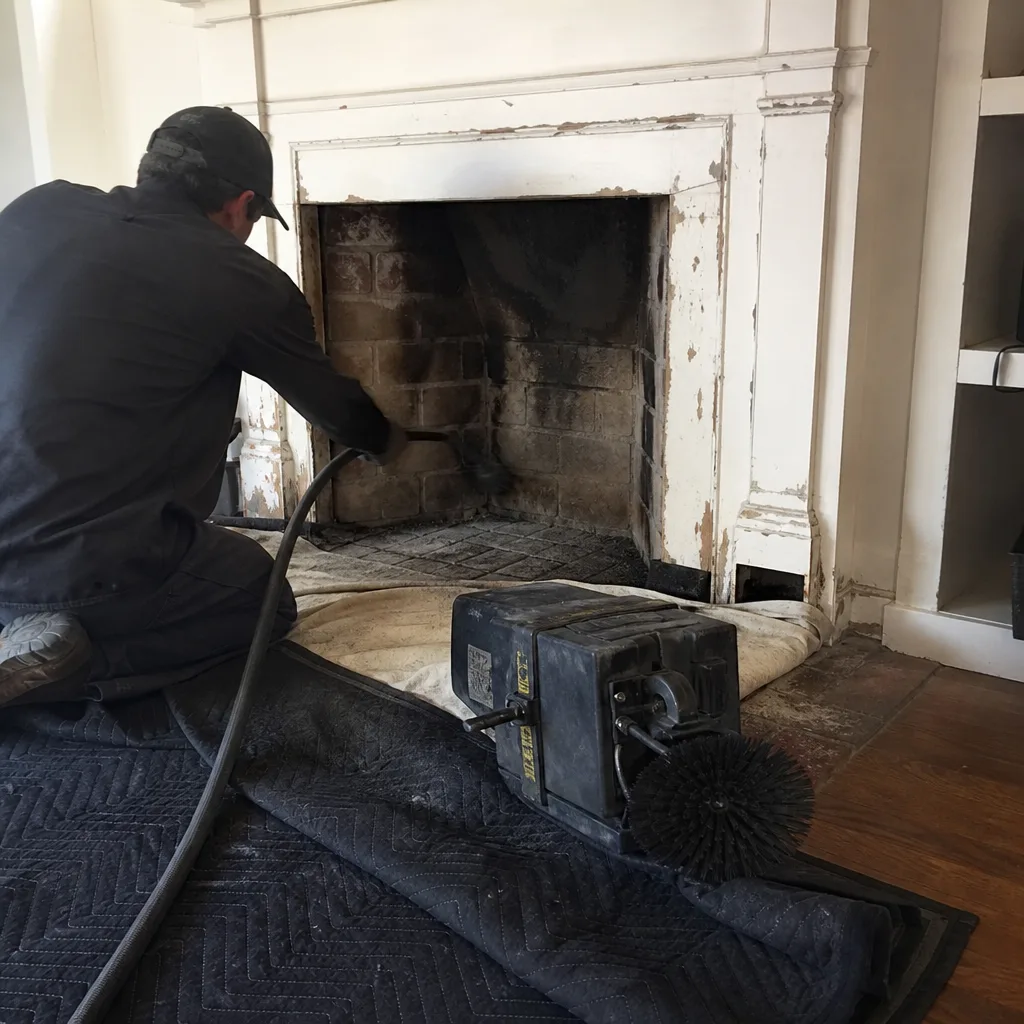 Before
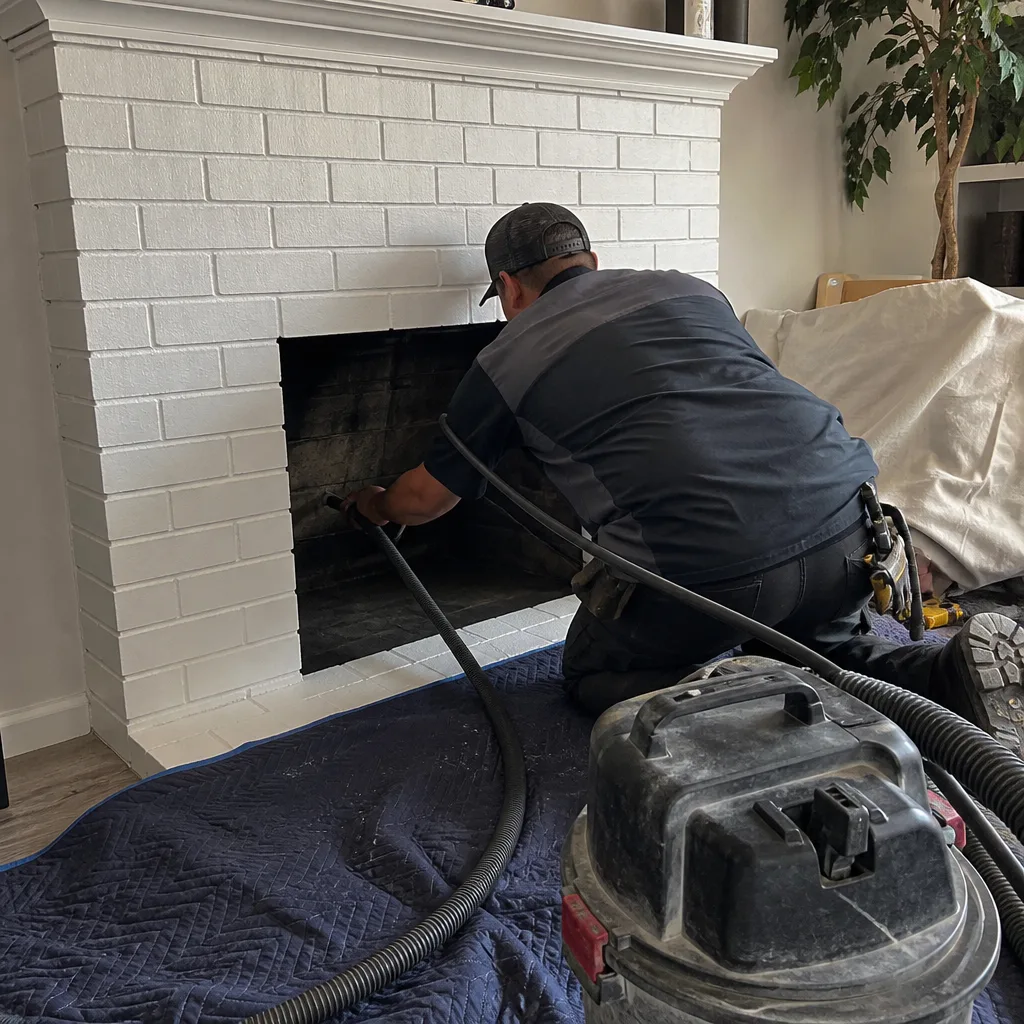 After
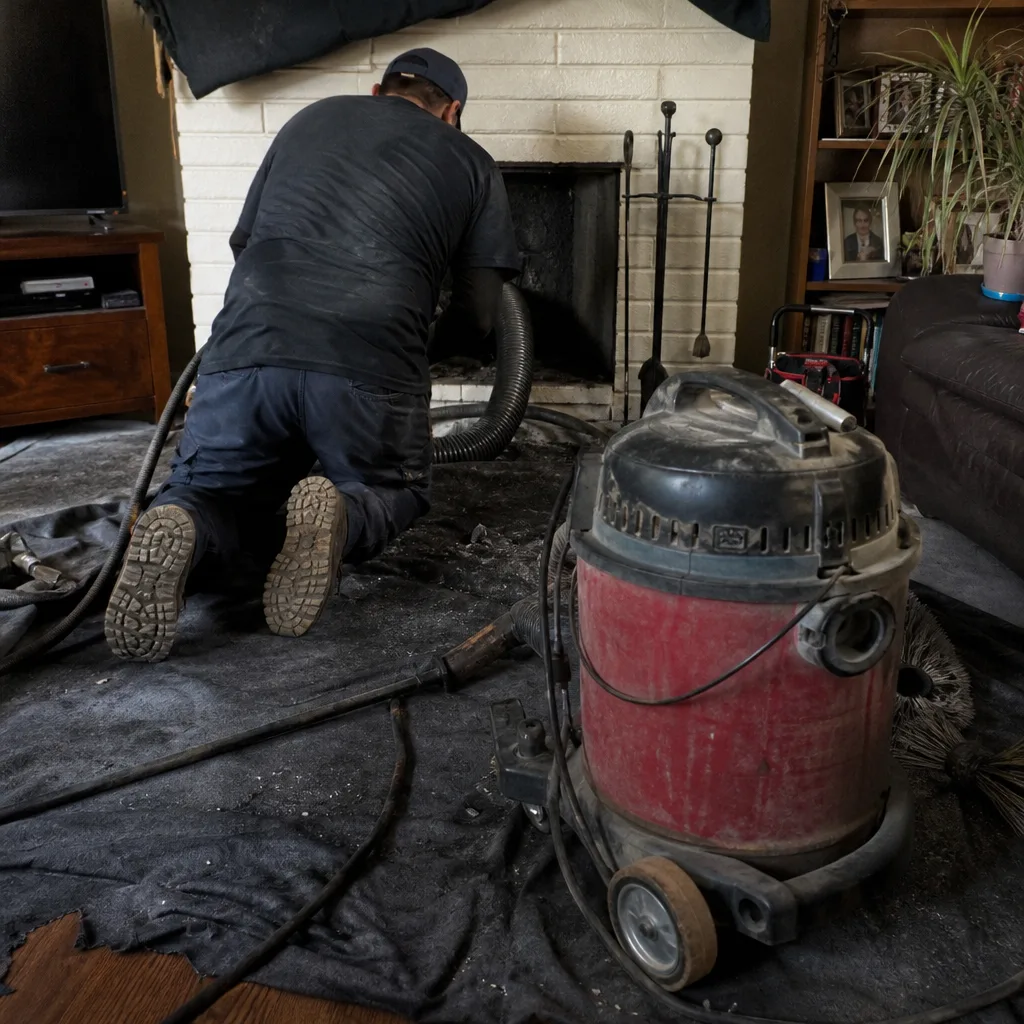 Before
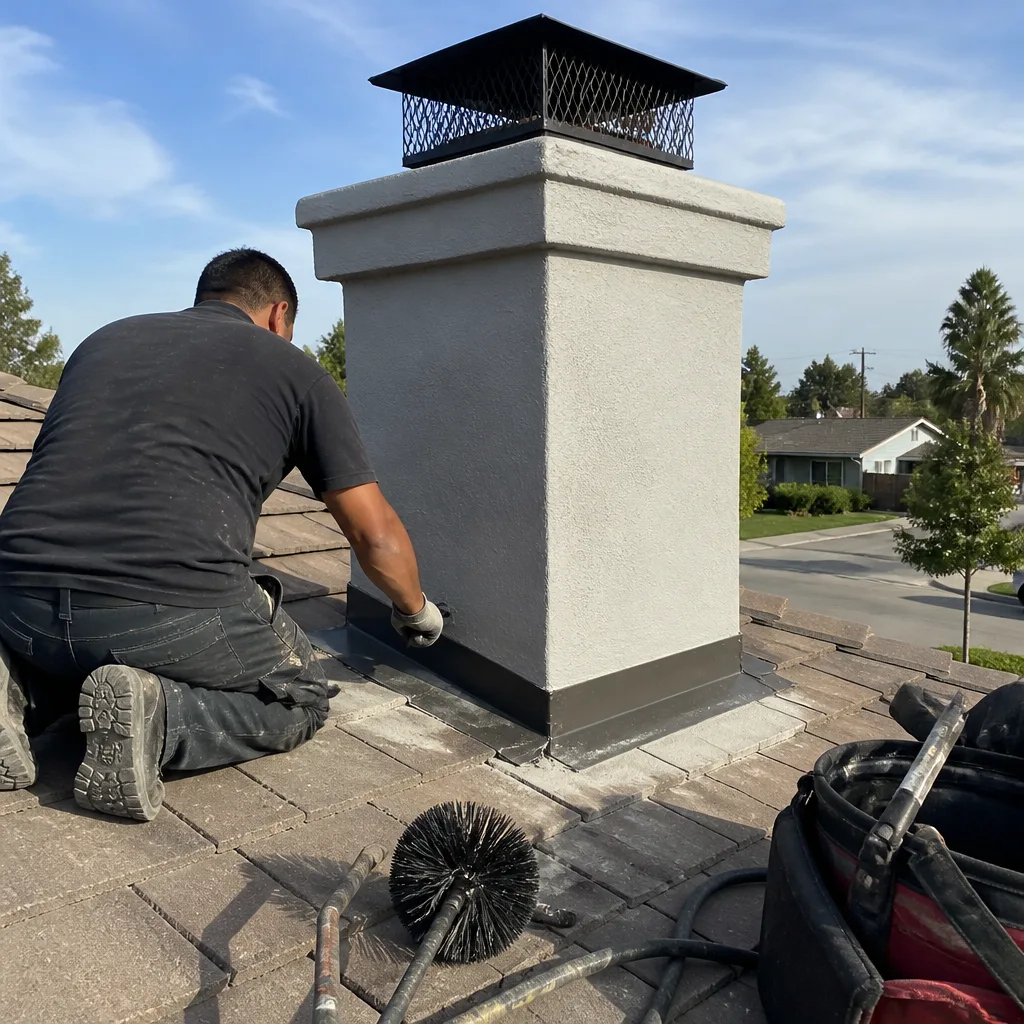 After
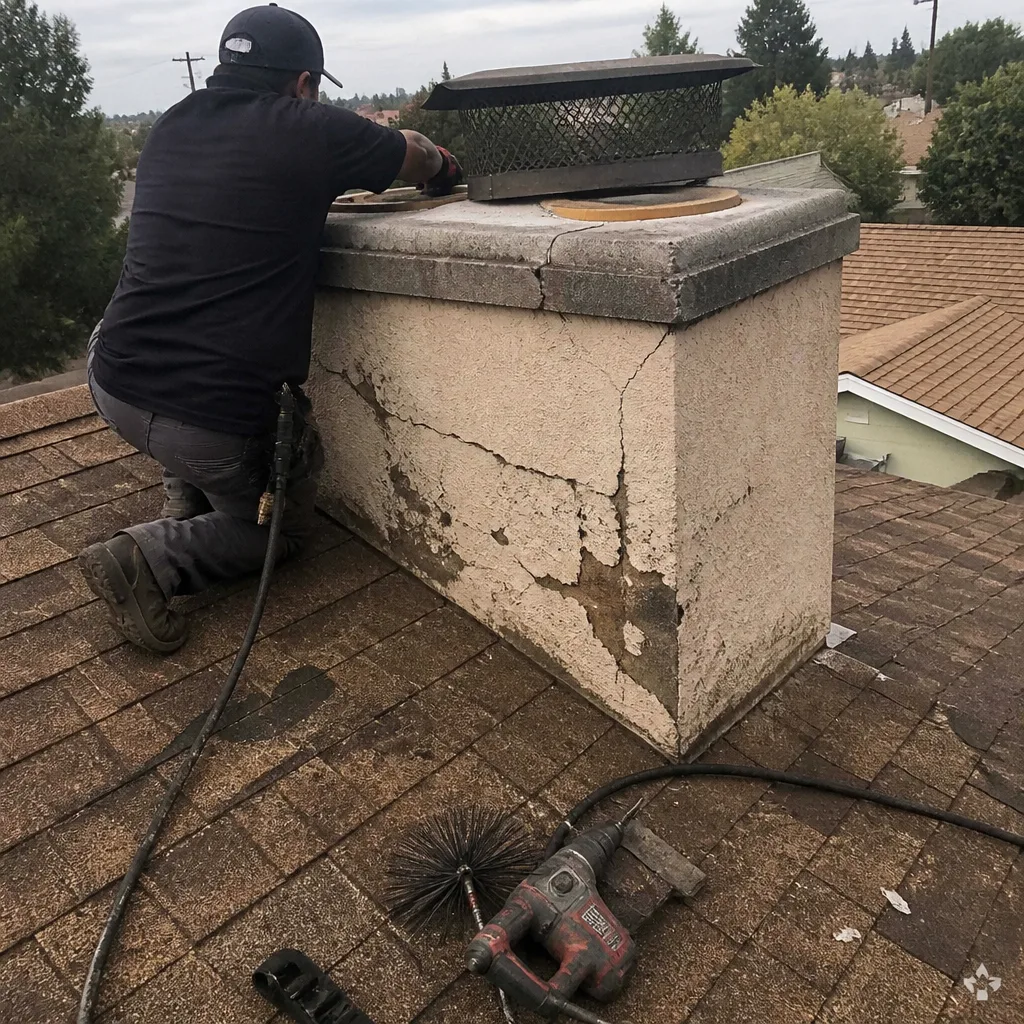 Before
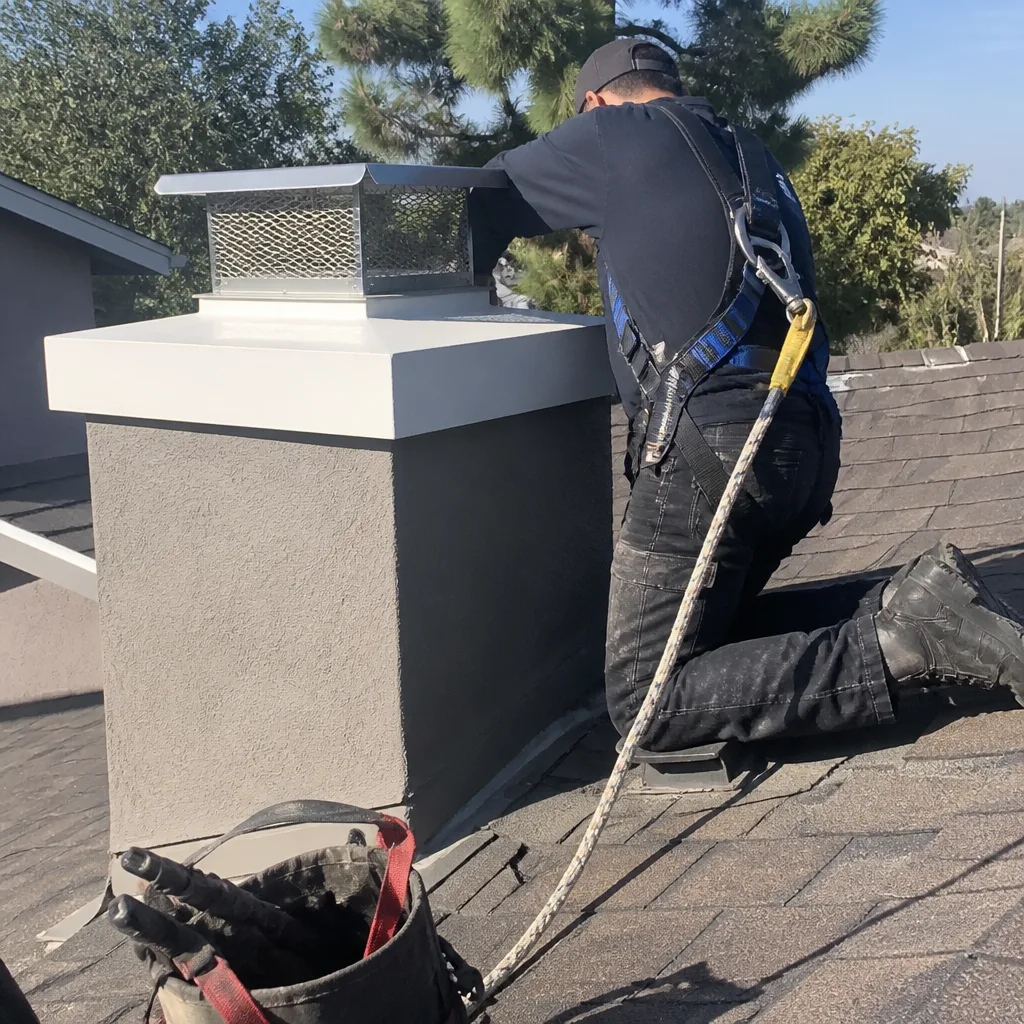 After
When to Call a Professional
Some warning signs you can monitor. Others require trained eyes. Call a professional if you have white staining that keeps returning after cleaning, a persistent chimney odor you cannot identify, dark streaking below the crown, popping sounds during a burn, stair-step cracks anywhere on the exterior masonry, spalling firebox brick, or smoke that rolls back into the room even after the flue warms. These are not all emergencies. But they are all conditions where a trained inspection changes the outcome. Santa Ana Chimney Sweep offers free estimates in Santa Ana. Call (855) 341-9658, and we’ll tell you what you’re looking at, what it means, and what can safely wait. See our Chimney Sweep Maintenance Checklist for Santa Ana Homeowners for a full seasonal schedule.
Frequently Asked Questions
A routine chimney sweep in Santa Ana typically costs between $180 and $320 depending on the type of chimney, the amount of creosote present, and whether you have a masonry or prefabricated system. Glazed creosote removal and structural repairs will run higher. Call (855) 341-9658 for an exact quote. Estimates are free.
Most liners can be cleaned, and we’ll tell you if yours does not need replacement. But if the liner is cracked, spalling, or has separated at the joints, cleaning will not restore its function. See Choosing the Right Chimney Cleaning Brand: A Buyer’s Guide for Santa Ana to understand the equipment and methods we use. In those cases, you may be a candidate for a DuraFlex flexible liner system, which allows relining without demolition. If the damage is still in the surface layers, HeatShield resurfacing can restore the flue without a full rebuild.
The National Fire Protection Association recommends a sweep when creosote reaches 1/8 inch in thickness, and at minimum, an annual inspection. For Santa Ana homeowners who burn recreationally a few dozen times a year, an annual cleaning before the burn season is usually sufficient. Heavy users or anyone burning unseasoned wood may need more frequent service.
Creosote accumulates, and if enough builds up, the risk of a chimney fire rises sharply. A chimney fire burns at temperatures that can crack liners, melt flashing, and spread into the home’s framing. Even without a fire, accumulated creosote off-gasses into the living space, and trapped moisture accelerates masonry deterioration. Skipping cleaning does not save money. It just moves the cost forward with interest.
Yes, and it’s the one combustion-vent hazard most Santa Ana homeowners never think about. Lint accumulation inside a dryer vent duct is highly flammable, and restricted airflow causes the dryer to overheat. If you have a gas dryer, a blocked vent can also force combustion gases back into the home. We offer Dryer Vent Cleaning in Santa Ana as a standalone service or bundled with your chimney work.
We stock and install DuraFlex flexible liners, HeatShield resurfacing materials, Gelco caps and chase covers, and Copperfield components, depending on the job. When your chimney needs a repair, we name the material we’re installing and explain why it’s specified for your system. No hardware-store substitutes.
The Bottom Line
Chimney warning signs are specific, and they are readable. White staining is water. Dark streaking is often a cap failure. Summer campfire smell is creosote off-gassing. Popping and crackling can be masonry moving, or pieces falling. Crack patterns on a Santa Ana chimney tell you whether you’re looking at settling or shear failure. The takeaway is not that every sign is an emergency. It’s that every sign means something, and the earlier you read it correctly, the less it costs to fix. Call (855) 341-9658 when something looks, smells, or sounds wrong. An inspection costs less than a chimney fire, and far less than a rebuild.
Written by the team at Santa Ana Chimney Sweep, serving Santa Ana since 2016.