Last updated October 31, 2026
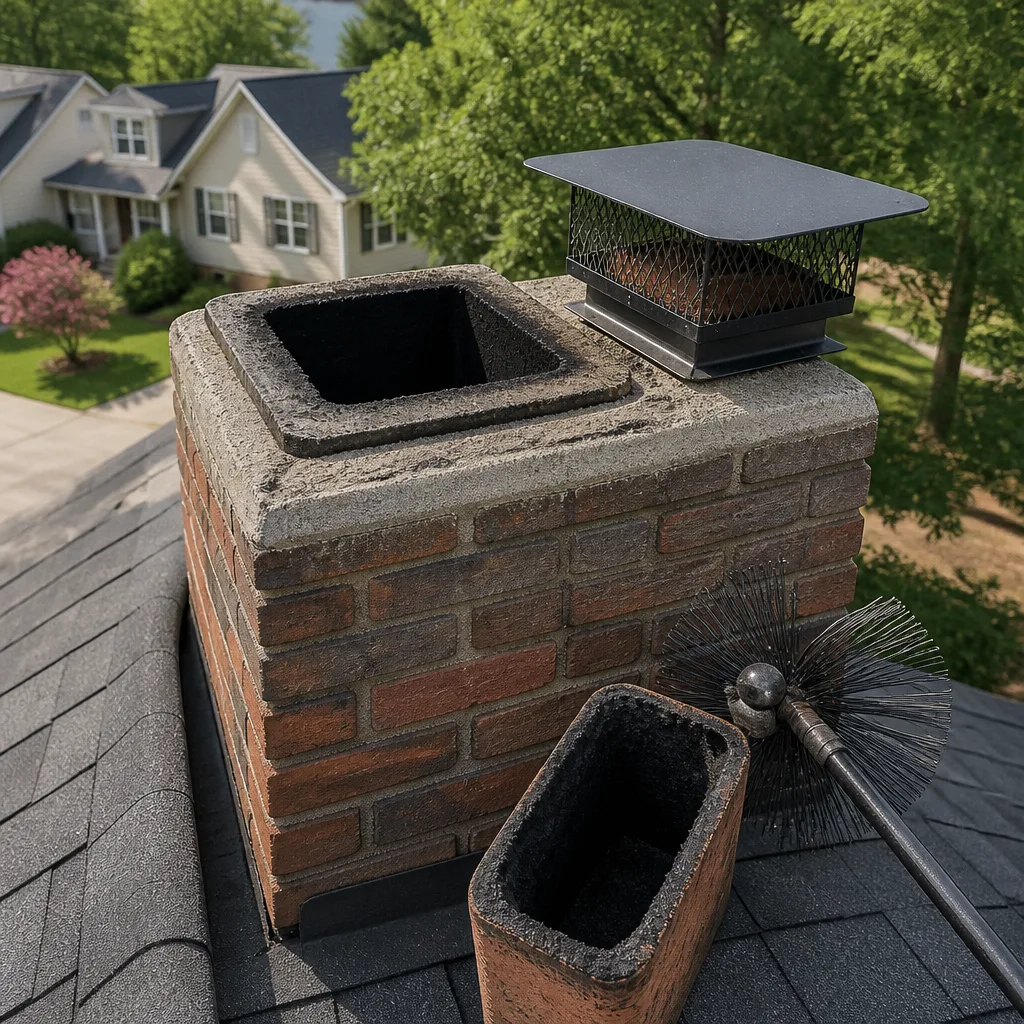 Sweep & inspection
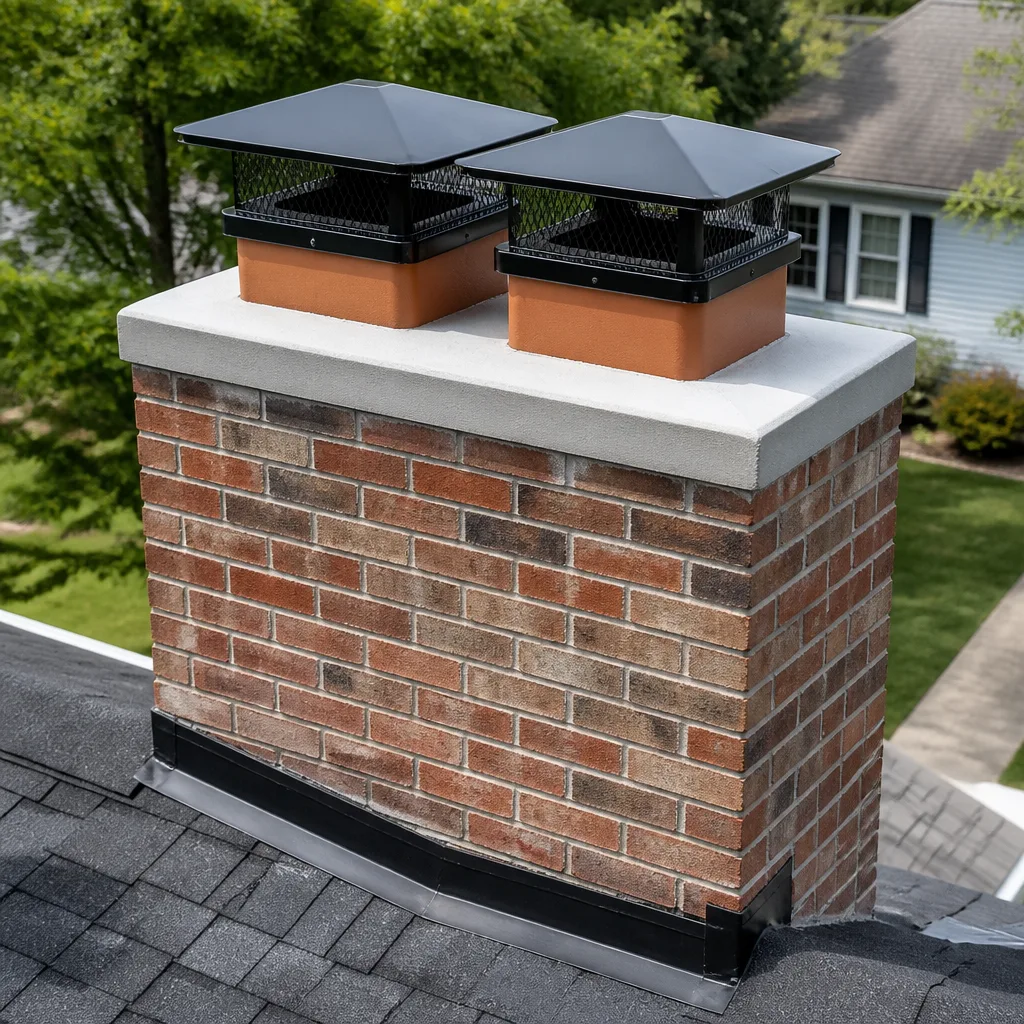 Caps & crowns
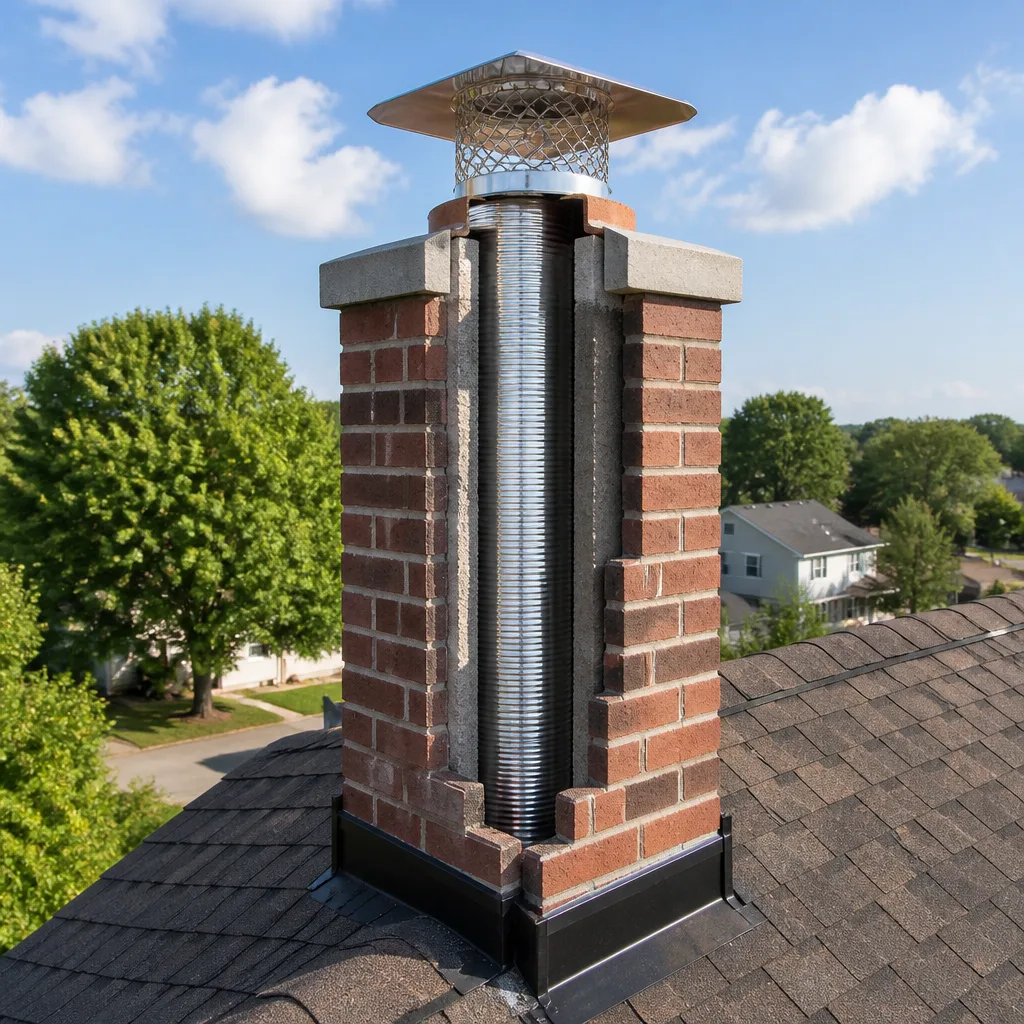 Flue relining
 Masonry repair
 Gas fireplace service
Level 1 sweep and inspection to the NFPA 211 annual standard - flue, crown, cap, and flashing checked and photographed
Chimney sweep logs do not sweep chimneys. They loosen some creosote - which then falls where a brush and vacuum still have to collect it.
Seasonal Chimney Cleaning Care for Santa Ana: Year-Round Homeowner’s Guide
In most of the country, chimney maintenance follows a simple, predictable rhythm: sweep in September, burn from November through March, close the damper, forget about it. Santa Ana doesn’t work that way. Our warm winters produce short, sporadic burns. Our wildfire season deposits ash and creosote-like particulates into flues during exactly the months most homeowners aren’t thinking about fireplaces at all. And our spring winds turn every uncapped flue into an open invitation for Orange County’s most persistent nesters. This guide lays out a month-by-month care framework built around Santa Ana’s actual climate, not a generic fall-cleaning script. You’ll learn why late September matters more than November here, what wildfire smoke does to a dormant fireplace, which local species target chimney flues, and when an off-season damper upgrade pays for itself.
Quick Answer
The best time to schedule chimney cleaning in Santa Ana is late September, before Santa Ana wind season kicks up dust and wildfire smoke becomes a recurring air-quality event. Homes here need a sweep at least once per year, and many benefit from a second inspection after spring nesting season or a heavy wildfire-smoke summer. A closed throat damper is not a seal, and top-mount dampers like Gelco models keep wind-driven dust, embers, and pests out of the flue year-round.
Styles & brands we work with
Table of Contents
- Why Santa Ana Has a Different Chimney Calendar Than the Rest of the Country
- The Santa Ana Month-by-Month Chimney Care Calendar
- Wildfire Smoke and Your Chimney: The July – October Infiltration Window
- Spring Wind Season and Nest Infiltration: What Moves Into Santa Ana Flues
- Warm Winters, Infrequent Burns: How Underuse Accelerates Liner Deterioration
- Why Late September Beats November: The Optimal Cleaning Window for Santa Ana Homes
- Off-Season Damper Sealing: Why Top-Mount Gelco Dampers Outperform Throat Dampers Here
- The Overlooked Cousin: Dryer Vent Fire Risk in Santa Ana Homes
Why Santa Ana Has a Different Chimney Calendar Than the Rest of the Country
The standard chimney-cleaning advice you’ll find in national publications was written for places with real winters. Minneapolis. Boston. Denver. Places where a fireplace burns hundreds of hours between October and April and builds creosote at a predictable rate. Applying that model to Santa Ana produces two mistakes: homeowners clean too late in the year, and they assume one sweep covers all twelve months.
Santa Ana sits in a semi-arid Mediterranean climate. We average roughly 13 inches of rain per year, nearly all of it between November and March. Our winter lows rarely dip below 45°F. A typical Santa Ana homeowner might light 20 to 40 fires per winter, often only on evenings when the temperature drops or during the holiday stretch from Thanksgiving to New Year’s. That’s a fraction of the burn hours a Chicago fireplace sees.
But the risks here don’t come primarily from creosote volume. They come from three local forces that don’t exist in colder climates:
- Wildfire smoke infiltration. Between July and October, prevailing wind patterns carry smoke from inland fires across Orange County. That smoke settles into flues, coats firebox interiors with fine particulate residue, and introduces acidic compounds that interact with existing creosote deposits.
- Spring wind season nesting pressure. From March through June, Santa Ana’s namesake winds create ideal conditions for birds to discover uncapped or damaged chimney flues. Once a nest is established, the flue is no longer just dirty; it’s obstructed.
- Extended dormancy. A chimney that sits unused for six to ten months at a stretch doesn’t stay clean. Moisture (what little we get), dust, spider webs, and pest activity accumulate. When a homeowner finally lights a fire in November, they’re burning through whatever settled in the flue over summer.
This is why our Santa Ana Chimney Sweep home page emphasizes year-round inspection timing, not just pre-season sweeping. The threats shift with the calendar.
The Santa Ana Month-by-Month Chimney Care Calendar
Here’s what we recommend for a typical Santa Ana home with a wood-burning fireplace. Adjust slightly if you burn more than average (more than 3 fires per week in winter) or if your chimney is 30+ years old.
- January – February (Low Use, Low Priority): Burn normally if you use the fireplace. Watch for any change in draft behavior: smoke pushing into the room, unusual odors, or a fire that struggles to stay lit. These are early warning signs of flue obstruction or negative air pressure in the home. No action needed if everything burns cleanly.
- March – April (Start of Nest Monitoring): This is when chimney swifts, house sparrows, and starlings begin scouting nesting sites in Orange County. Listen for chirping or scratching sounds from the flue, especially in early morning. If you notice birds repeatedly landing near your chimney cap, call for a visual inspection sooner rather than later. Nest removal is far less expensive before eggs hatch and before nesting material becomes compacted.
- May – June (Cap and Flue Check): Wind season peaks. Walk outside and look at your chimney cap. Is it still attached? Is there visible rust? A missing or deteriorated cap in May means wind-driven debris has had weeks to collect in the flue. This is also the right time to have a dryer vent checked, since spring winds push pollen and fine dust into exterior vent hoods.
- July – August (Wildfire Smoke Watch): Monitor air quality reports. On days when AQI exceeds 100 due to wildfire smoke, keep the damper closed and consider a temporary firebox seal if you have an older throat damper that doesn’t seat tightly. Smoke particles are fine enough to pass through even a “closed” damper and will settle on firebox masonry and interior surfaces.
- September (Primary Sweep Window): This is the month to schedule a professional chimney sweep in Santa Ana. Wildfire season is winding down. Nesting season is over. The flue has accumulated a full year of whatever the climate threw at it, and you’re still 6 – 8 weeks away from the first holiday fire. A late-September sweep leaves your system clean and ready.
- October – November (Pre-Fire Verification): If you swept in September, do a quick visual check before the first fire. Look up the flue with a flashlight. Check the firebox for fallen debris. If anything looks off, call before you burn. Burning on top of fresh debris is how chimney fires start.
- December (Holiday Burn Season): Enjoy the fireplace. Burn seasoned hardwood only. Avoid wrapping paper, cardboard, or pine branches, which create fast-burning, high-particle fires that deposit more creosote in a single hour than a month of proper hardwood fires.
Wildfire Smoke and Your Chimney: The July – October Infiltration Window
Orange County’s air quality index routinely spikes during wildfire season, and every hour a fireplace sits sealed during a smoke event is an hour particulates are migrating down through the damper. A closed throat damper doesn’t create an airtight seal; it’s a metal plate resting in a cast-iron frame. Smoke particles measure between 0.4 and 0.7 microns. They slip through the gaps in most dampers without resistance.
What happens inside the flue during a smoke event depends on what’s already there. If the flue has creosote deposits from previous winters (and most do), wildfire smoke adds a layer of fine ash and carbon that bonds with the sticky creosote. The result is a denser, more acidic residue that’s harder to remove than either substance alone. If the flue is clean, wildfire smoke still leaves a gray film on firebox masonry and can discolor interior brick over time.
What to do during red-flag air quality days in Santa Ana:
- Keep the damper closed, but understand its limits. A standard throat damper reduces smoke infiltration, it doesn’t eliminate it.
- If you have a top-mount damper, keep it closed. Top-mount dampers seal at the flue opening, which is far more effective at keeping outside air and particulates out of the flue entirely.
- After a prolonged smoke event (3+ consecutive days of AQI over 100), schedule a visual inspection. The flue doesn’t need a full sweep necessarily, but a technician should check what settled in the firebox and whether the smoke introduced any moisture-reactive compounds.
- Don’t burn during smoke events. Occasionally a homeowner thinks they can “burn off” the residue. They can’t. Burning during poor air quality pulls more smoke into the home and bakes the wildfire residue into the flue walls.
In our experience, Santa Ana homes that sit within a few miles of a wildfire burn scar or that experienced multiple smoke events in a single summer benefit from a second sweep in late summer, even if they swept the previous fall; our Chimney Cleaning Emergency Preparedness Guide for Santa Ana Homes explains how to plan ahead. The accumulation is real and measurable.
Spring Wind Season and Nest Infiltration: What Moves Into Santa Ana Flues
Santa Ana’s spring winds don’t just dry out hillsides. They carry nesting materials across the county and make it easier for birds to access flues that lack proper caps. The species we see most often in Orange County chimneys are chimney swifts, house sparrows, and European starlings. Each creates a different problem.
Chimney swifts are protected under the Migratory Bird Treaty Act, which means it’s illegal to remove an active nest with eggs or hatchlings. If you hear rapid, high-pitched chirping from inside the chimney in spring, you likely have swifts. The nest must stay until the birds fledge, typically 4 – 6 weeks. This is why early-season inspection matters: identifying a swift pair before they lay eggs gives you a window to have a proper cap installed, legally and without harming the birds.
House sparrows and starlings are not protected in the same way and build dense, messy nests from grass, twine, plastic fibers, and whatever else they find. Their nests obstruct airflow and are a fire hazard if the homeowner lights a fire without realizing the flue is blocked. Starling nests are particularly dangerous because they’re large and tightly woven, and starlings will defend the nest aggressively if disturbed.
How to identify nesting activity before it damages your chimney:
- Listen for sounds: chirping, scratching, fluttering, especially at dawn and dusk.
- Watch around the chimney cap: repeated bird landings are a sign of scouting.
- Look for debris at the base of the firebox: twigs, grass, feathers, or insect casings that fell through the damper.
- Smell it: an active or abandoned nest in the flue produces a distinct musty-sweet odor that intensifies when air moves through the chimney.
If you suspect nesting, don’t light a fire. A compacted nest blocks flue gases from exiting, which pushes carbon monoxide back into the home. That’s a medical emergency before it’s a fire hazard. Call a professional chimney service to remove the nest and install or repair the chimney cap. Our Chimney Sweep in Santa Ana service includes cap inspection and replacement as part of every standard sweep.
Warm Winters, Infrequent Burns: How Underuse Accelerates Liner Deterioration
This is the part of Santa Ana chimney care that surprises most homeowners: infrequent burning can accelerate certain types of liner deterioration faster than regular use. The mechanism is chemistry and moisture, not heat.
Clay tile flue liners, the standard in most Santa Ana homes built before the 1990s, absorb moisture. When a fireplace burns regularly, the heat drives that moisture out through the masonry and the flue stays relatively dry. When a fireplace sits unused for months at a time, moisture from rain, morning fog, and our marine-layer humidity has time to soak into the clay tiles. If that moisture sits long enough, it begins to break down the mortar joints between tiles and can cause surface spalling (flaking) on the tiles themselves.
The heat-cycling pattern we see in Santa Ana makes it worse. A typical homeowner might burn three fires in one week in December, then nothing for a month, then two fires in January. Each fire rapidly heats moisture-saturated tiles. Moisture trapped inside clay expands when heated. Over years, this repeated expand-contract cycle creates hairline cracks that widen slowly. A homeowner with a 40-year-old flue liner who burns exactly as described above can develop significant cracking without ever producing enough creosote to notice a problem.
What this means practically:
- Annual inspection is non-negotiable for older Santa Ana homes, even if you rarely burn.
- If a camera inspection (standard with our Chimney Repair in Santa Ana work) reveals cracked or spalled tile, there are options short of a full rebuild.
- HeatShield ceramic resurfacing can restore a deteriorated flue interior without tearing out the chimney. The material is applied to the flue walls, fills cracks and gaps, and creates a smooth, insulated surface rated for the temperatures of a wood-burning fireplace.
- For severely deteriorated tile liners, a DuraFlex flexible liner system can reline the flue without demolition, even in older chimneys with irregular dimensions.
Sweep, repair, reline. These three services covered by the same crew mean you’re not hiring one company to diagnose, another to rebuild, and a third to sweep next year.
Why Late September Beats November: The Optimal Cleaning Window for Santa Ana Homes
The national advice says “sweep before the first fire,” but local codes and inspection rules add another layer; see Chimney Cleaning Permits, Codes & Inspections in CA: What You Need to Know. In Santa Ana, that first fire can happen anywhere from late October to late December depending on the year. If you wait until November, you’re competing with every other homeowner in Orange County who just remembered they have a fireplace. Wait until December, and you’re into holiday scheduling chaos.
Late September is the sweet spot for Santa Ana chimney cleaning for four specific reasons:
- Wildfire smoke deposits have peaked. By late September, the worst of the summer smoke season is behind us. Any residue that settled in the flue during July – September gets removed in the sweep, rather than waiting until next year.
- Nesting season is fully over. Chimney swifts have migrated by this point, and other species have finished their breeding cycle. Any abandoned nests or partial structures can be cleared safely and legally.
- Scheduling is open. October is when every professional sweep in the county starts getting backed up. A late-September appointment gets you quick availability and unhurried service.
- You’re ready for the first fire, whenever it comes. A chimney swept in late September is clean and verified. When the first cold snap hits in November, you light a fire without wondering what’s up there.
If you burn frequently through the winter (more than 3 fires per week), we recommend a mid-season check in January as well. Most Santa Ana homes don’t need it, but high-use households accumulate creosote faster than seasonal users.
Off-Season Damper Sealing: Why Top-Mount Gelco Dampers Outperform Throat Dampers Here
Most Santa Ana homes built before the 2000s have a throat damper: a cast-iron plate in the throat of the chimney, just above the firebox, operated by a lever or chain. Throat dampers were the standard for decades, and they work acceptably in climates where the primary job is keeping warm air from escaping the house.
Santa Ana’s climate demands more from a damper. Our chimney is exposed to:
- Wind-driven dust and debris from the Santa Ana winds, which push fine particles through the damper gaps into the firebox.
- Wildfire smoke, which is fine enough to pass through a closed throat damper and coat interior surfaces.
- Pest pressure from birds and rodents that can work their way past a loose-fitting damper plate.
- Off-season humidity from our marine layer and periodic rain, which settles in the flue when the damper doesn’t create a moisture-resistant seal.
- Clothes take longer than 45 minutes to dry on a normal cycle.
- The dryer exterior feels unusually hot during operation.
- You smell a burnt lint odor when the dryer runs.
- Lint is visible around the dryer vent hood outside.
- The vent hood flap doesn’t open when the dryer is on.
A throat damper, even when “closed,” leaves a gap around its perimeter. A top-mount damper, like the Gelco models we install, is different. It mounts at the flue opening on top of the chimney and seals closed with a gasket-riding mechanism that closes the opening entirely. The result is an actual barrier against wind, smoke, insects, and nesting birds.
The Gelco difference is in the materials: cast aluminum and stainless steel construction instead of the thinner metals used on budget dampers. In Santa Ana’s salt-adjacent and wind-abrasive environment, that material choice matters. A Gelco damper installed on a Santa Ana chimney will outlast two or three throat damper replacements, and it pays for itself in reduced cleaning frequency and eliminated pest removal calls.
We name the materials we use, and why they matter. This is one of those places where the hardware-store alternative simply doesn’t hold up.
The Overlooked Cousin: Dryer Vent Fire Risk in Santa Ana Homes
The same family living in a Santa Ana home with a fireplace also runs a clothes dryer. It’s the same air system in the same house, subject to the same dust, wind, and nesting pressures. We treat dryer vent cleaning as a fire-safety service alongside chimney work, not an afterthought.
Lint accumulation in dryer vents is one of the leading causes of home fires in the United States. The scenario is consistent: a homeowner runs the dryer for years without vent cleaning; lint builds up inside the duct; the dryer’s heating element runs hotter because airflow is restricted; the lint, which is highly combustible, eventually ignites. Santa Ana’s dry air and frequent use of air conditioning (which pushes more lint into the duct as indoor air is pulled through the dryer) can accelerate the buildup.
Signs your dryer vent needs cleaning:
We bundle Dryer Vent Cleaning in Santa Ana with chimney service calls. If we’re already at your home for a sweep, adding a dryer vent cleaning takes a fraction of the time and addresses the other major combustion-vent risk in the house. Full-service scope means cleaning, structural repair, and liner/cap installation covered under one company. Your dryer vent is a fire risk too. We clean those as well.
Common Mistakes to Avoid
- Waiting until November to schedule a sweep. In Santa Ana, the best time is late September. November scheduling is backed up, and you’ll either wait longer or pay premium pricing for rush service.
- Assuming a closed damper means a sealed chimney. Throat dampers leave gaps. Wildfire smoke, dust, and pests all find their way through. A top-mount damper is the only true off-season seal.
- Ignoring springtime bird activity near the chimney. A nest discovered in July is a protected-species legal issue. A nest discovered in March is a quick cap repair. Early detection saves money and complications.
- Burning occasionally without an annual inspection. Infrequent burning creates moisture-based liner deterioration that’s invisible from the firebox. You won’t know there’s a problem until it’s expensive.
- Cleaning the flue but not the dryer vent. Both systems are combustion-vent pathways in the same home. A clean chimney and a clogged dryer vent still leaves a fire risk under the roof.
- Using a hardware-store chimney sweep log. These products promise creosote removal but mostly just loosen surface deposits. They don’t inspect the flue, don’t remove nests, and don’t identify liner damage. They create a false sense of security.
- Burning wet or unseasoned wood. Santa Ana’s dry climate makes it easier to store firewood properly, but too many homeowners buy a cord in November and start burning it in December. Unseasoned wood produces more smoke, more creosote, and less usable heat.
See the difference
 Before
 After
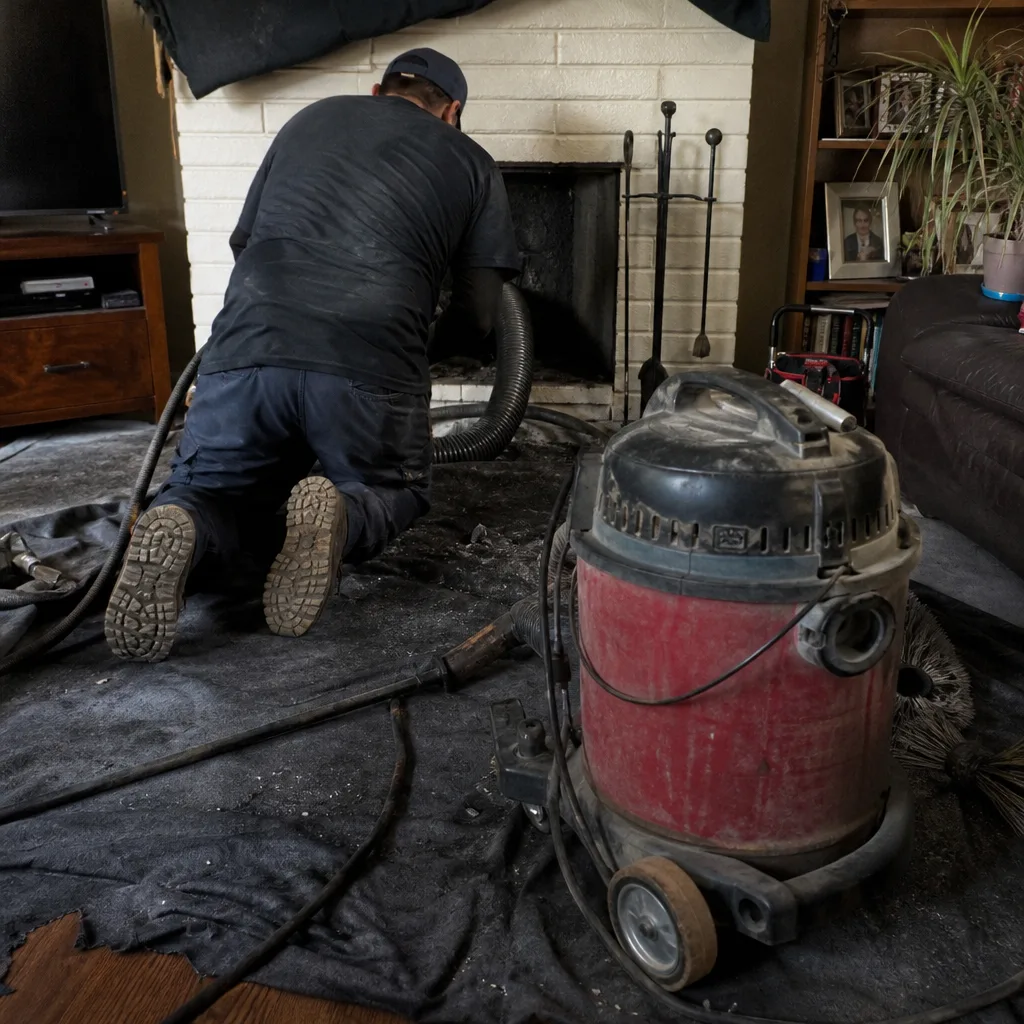 Before
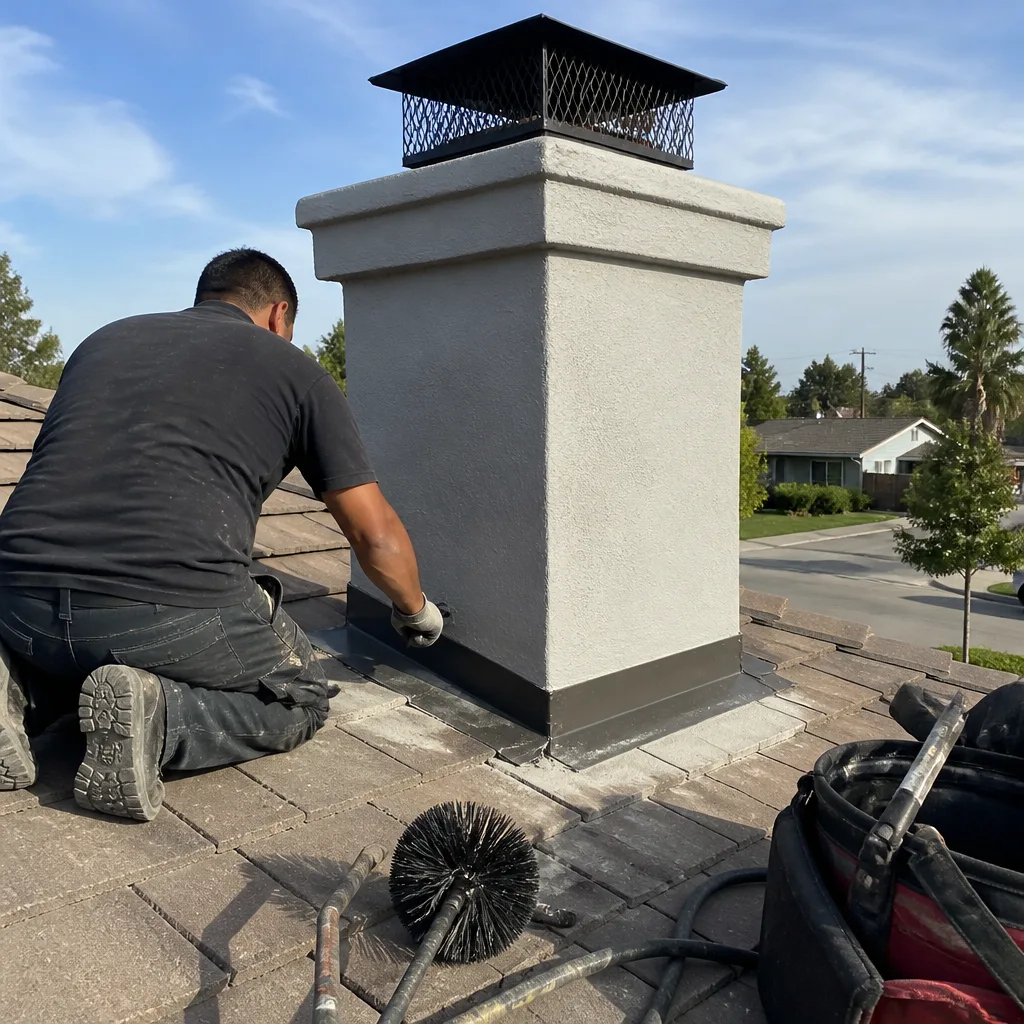 After
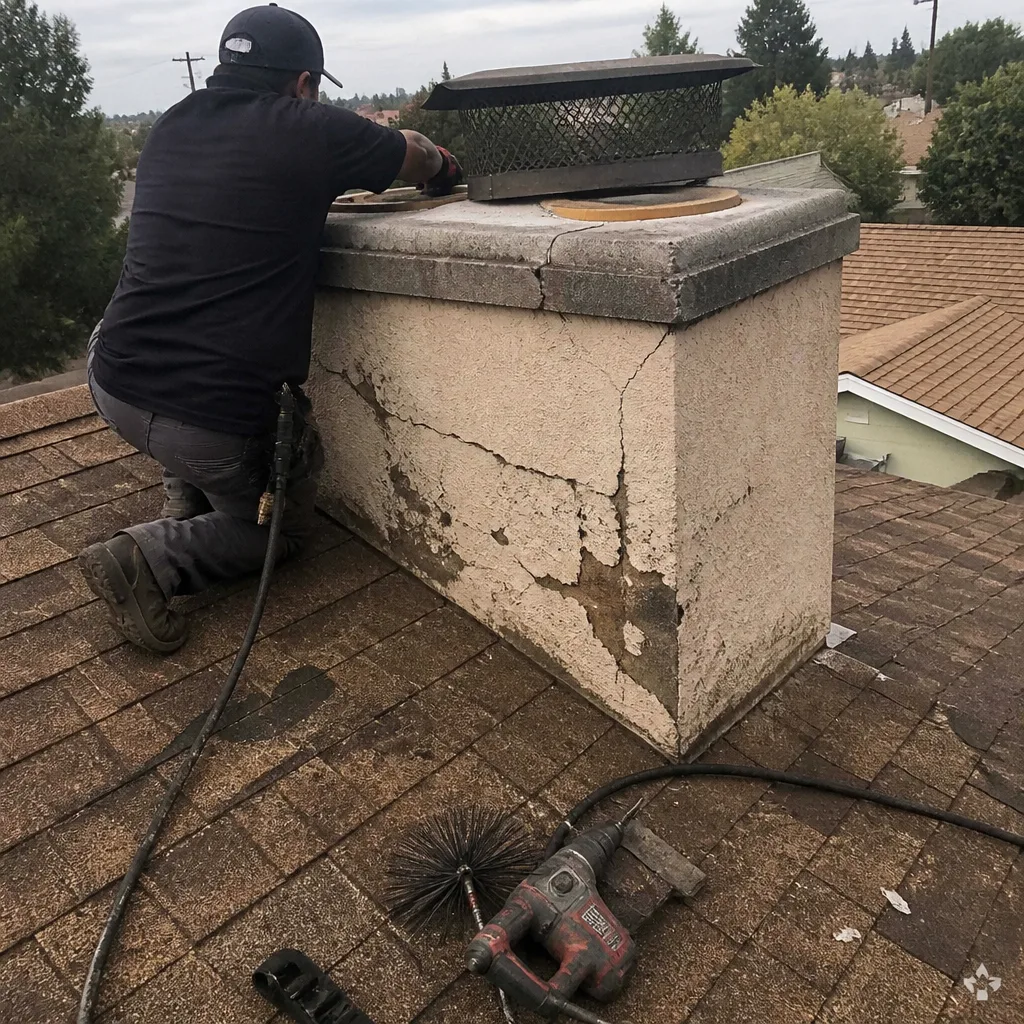 Before
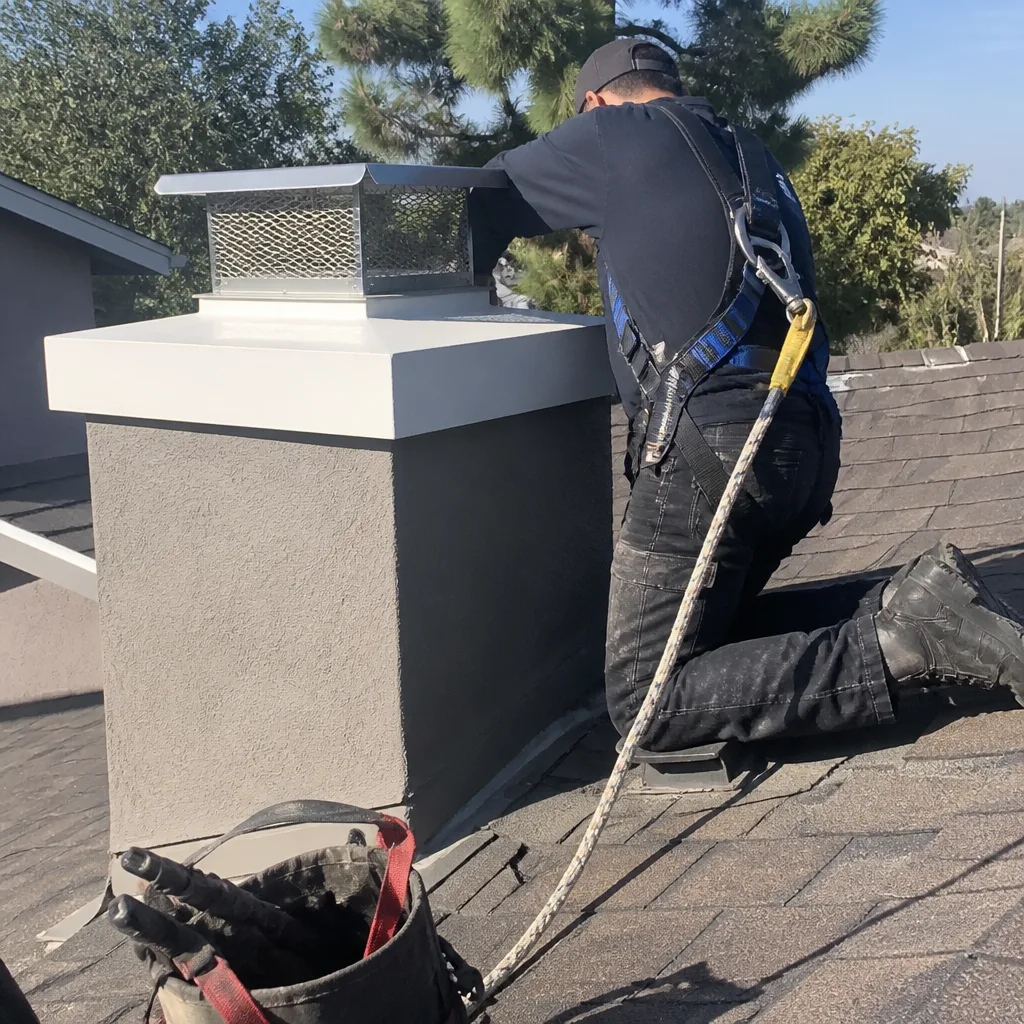 After
When to Call a Professional
Call a professional chimney technician if you notice any of these conditions in your Santa Ana home:
Smoke entering the living space when the fireplace is in use (this is never normal, even on windy days). A strong odor from the fireplace that persists when the fire is out. Visible soot or creosote buildup inside the firebox that you can scrape with a fingernail. Sounds of animals inside the chimney. Water staining on the ceiling or walls near the chimney. A chimney cap that’s visibly damaged, rusted, or missing. Or if you haven’t had a professional inspection in 12 months and you plan to use the fireplace this season.
Santa Ana Chimney Sweep offers free estimates in Santa Ana. Call (855) 341-9658 to schedule a sweep, inspection, or repair consultation.
Frequently Asked Questions
A standard chimney sweep in Santa Ana typically runs between $180 and $340 depending on the flue condition, chimney height, and whether additional services like cap replacement or camera inspection are needed; see our Chimney Cleaning Cost Breakdown: The Santa Ana Homeowner’s Reference for 2026 for detailed pricing factors. Homes with heavy creosote buildup, nests, or deteriorated liners cost more because the work takes longer and requires specialized clearing methods. Call (855) 341-9658 for an exact quote. Estimates are free, and we tell you the price before any work begins.
Once per year is the minimum for a Santa Ana home with a wood-burning fireplace, even if you only burn 15 – 20 times per winter. Homes that experience heavy wildfire smoke summers or that burn more than 3 fires per week through winter may need a second sweep or mid-season inspection. The key is matching the schedule to your actual burn habits and local environmental exposure, not a generic national recommendation.
Not necessarily. Some cracked or deteriorating liners can be restored with HeatShield ceramic resurfacing, which fills gaps and creates a smooth, heat-rated interior surface without a full rebuild. More severe damage may require a DuraFlex flexible liner system, which relines the flue without demolition. We always show you the camera footage before recommending any liner work, so you can see the condition for yourself. If the liner can safely wait, we say so plainly.
The most likely outcomes are creosote accumulation that increases chimney fire risk, deteriorated liner tiles from moisture that sat in the flue for too long, and pest or debris obstructions that block proper venting. The longer a chimney goes uninspected, the more likely a small problem becomes a structural repair. In Santa Ana’s climate, skipped years also compound wildfire smoke residue, which bonds with creosote and becomes harder to remove over time. Call (855) 341-9658 to get caught up with an inspection first, then a sweep if needed.
You can remove visible soot from the firebox with a shop vac and a wire brush, but that addresses less than 10% of the surface area of your chimney system. Professional cleaning requires proper flue brushes sized to your specific flue dimensions, rooftop access equipment, and safety training for ladder work and creosote handling. We’ve also seen too many homeowners miss liner cracks or partial blockages that only a camera inspection would reveal. The cost of a professional sweep is far less than the repair that follows a missed problem.
It rarely causes structural damage on its own, but it leaves acidic, fine-particle residue that bonds with existing creosote and makes future cleaning harder. It also settles on firebox masonry and can discolor brick over time. The bigger concern in Santa Ana is cumulative: multiple smoke events over several summers create a coating that a standard sweep may not fully remove on the first pass. If your home has been exposed to repeated wildfire smoke, mention it when you schedule so the technician can account for it. Call (855) 341-9658 for a consultation.
The Bottom Line
Santa Ana’s chimney care calendar runs on a different clock than the rest of the country; explore more guides & resources to keep your system safe year-round. Late September is your primary sweep window. Spring is your nesting-monitoring season. Summer demands vigilance during wildfire smoke events. Winter is for clean, safe burning. A top-mount damper like a Gelco model closes the gaps that a throat damper can’t, and an annual camera inspection catches liner deterioration before it becomes a rebuild. If you also clean the dryer vent on the same schedule, you’ve covered the two biggest combustion-vent fire risks in the home. Sweep, repair, reline. Handled by the same crew, with the materials named and the work shown to you on camera. That’s the standard this climate demands.
Written by the team at Santa Ana Chimney Sweep, serving Santa Ana since 2016.