Last updated October 31, 2026
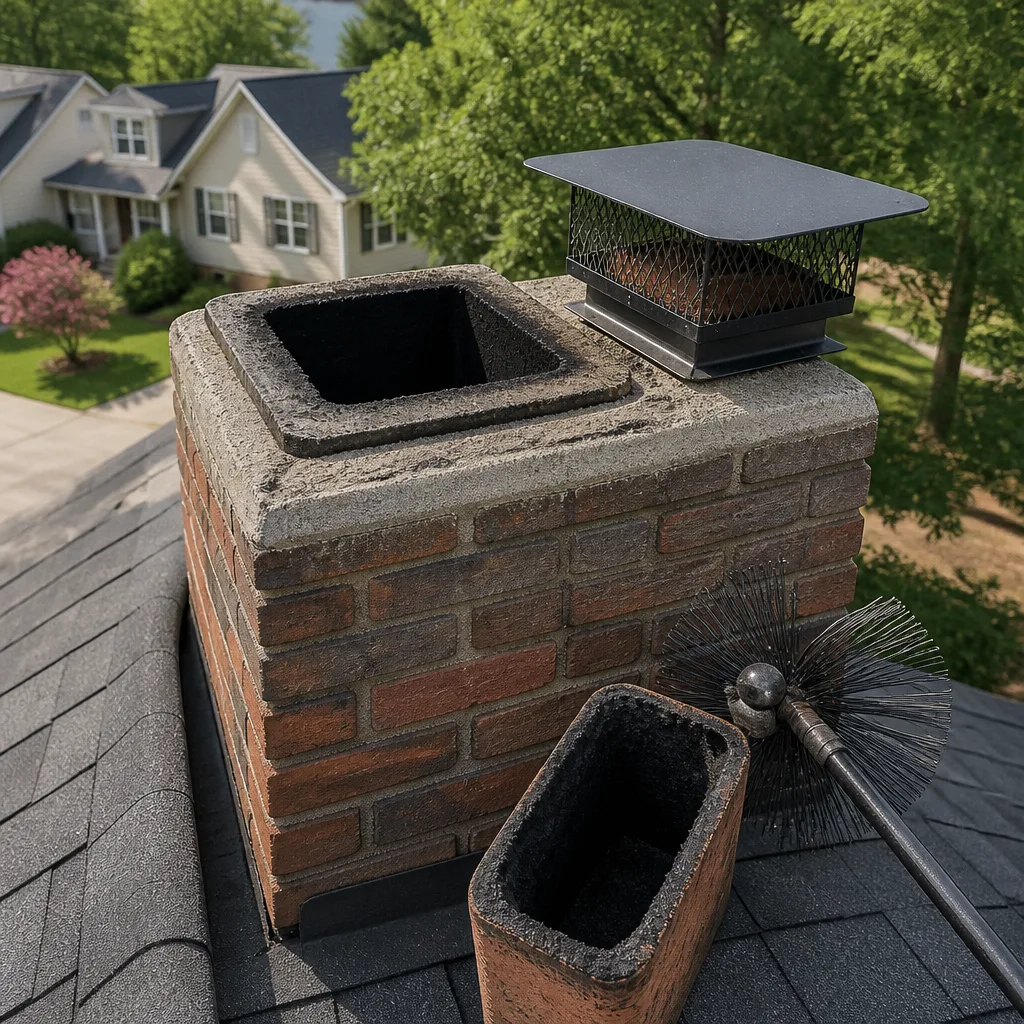 Sweep & inspection
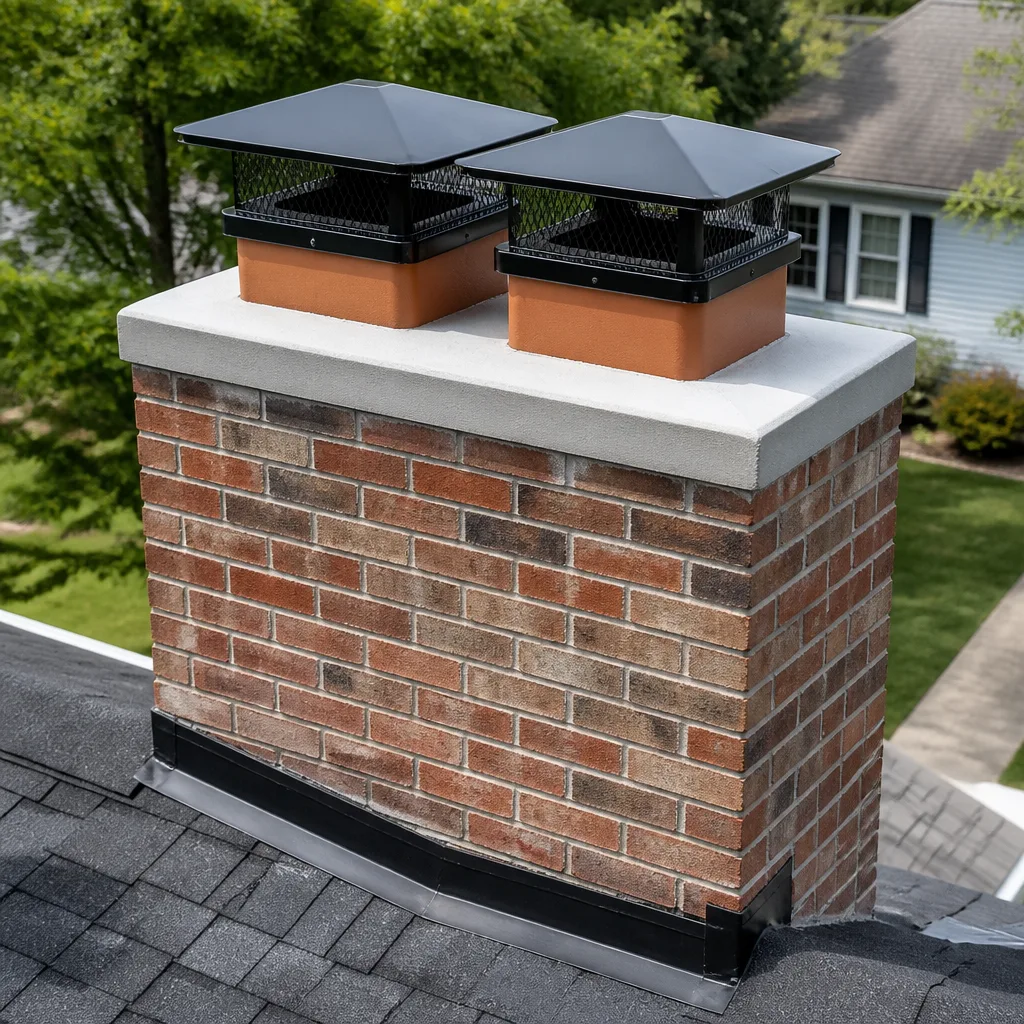 Caps & crowns
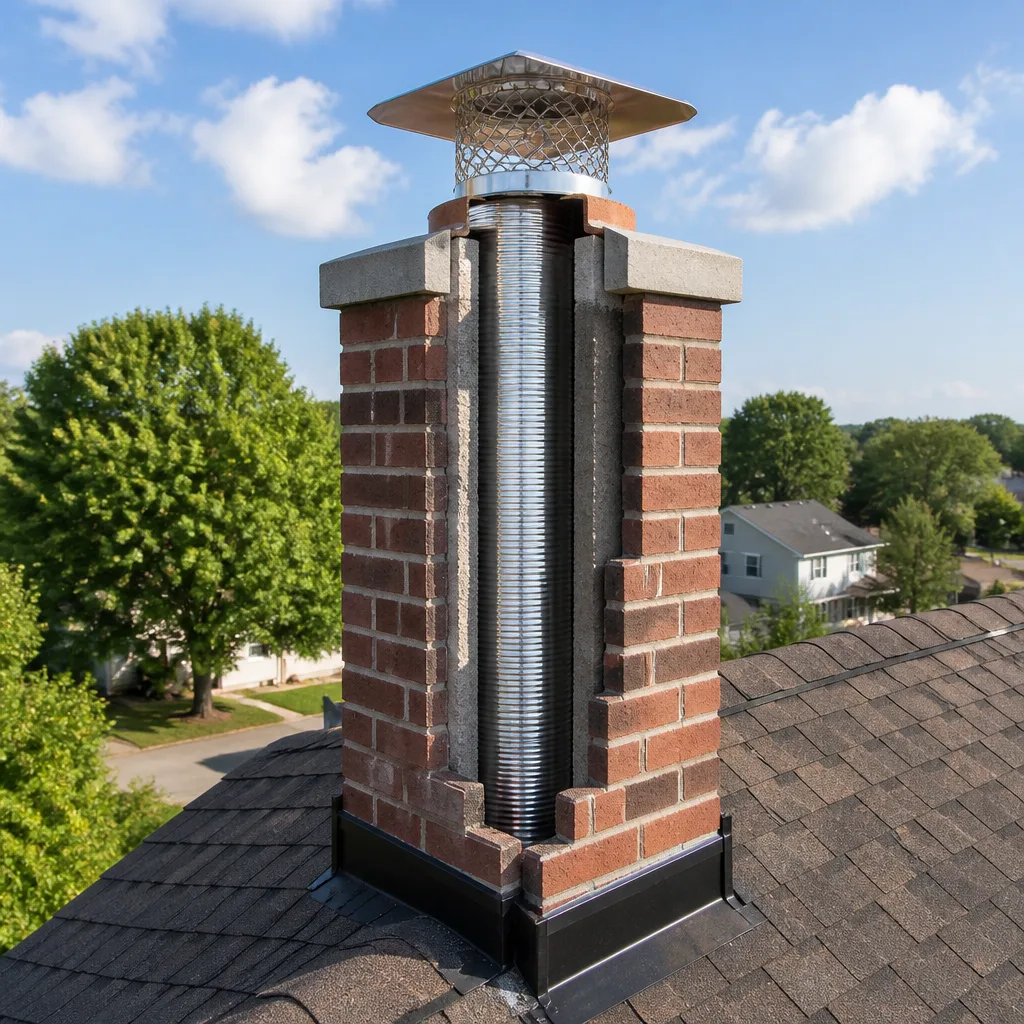 Flue relining
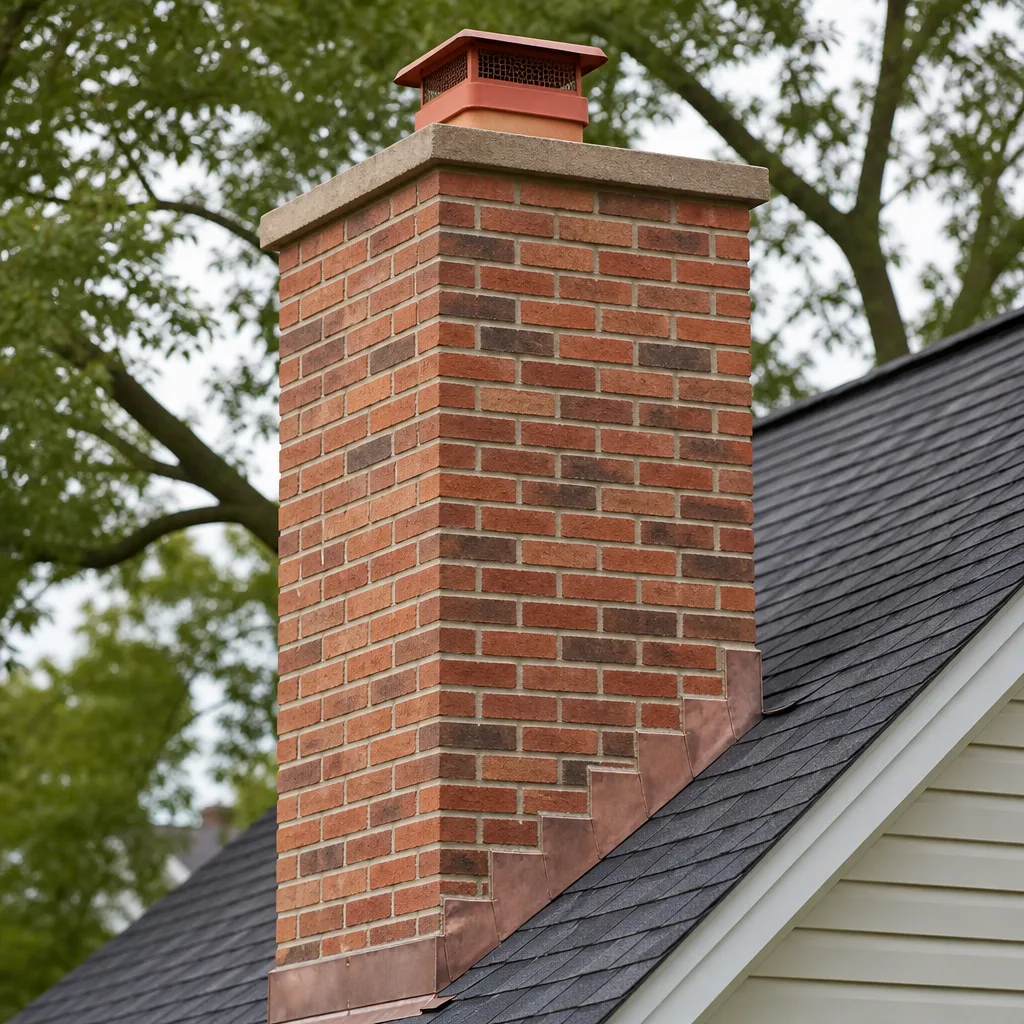 Masonry repair
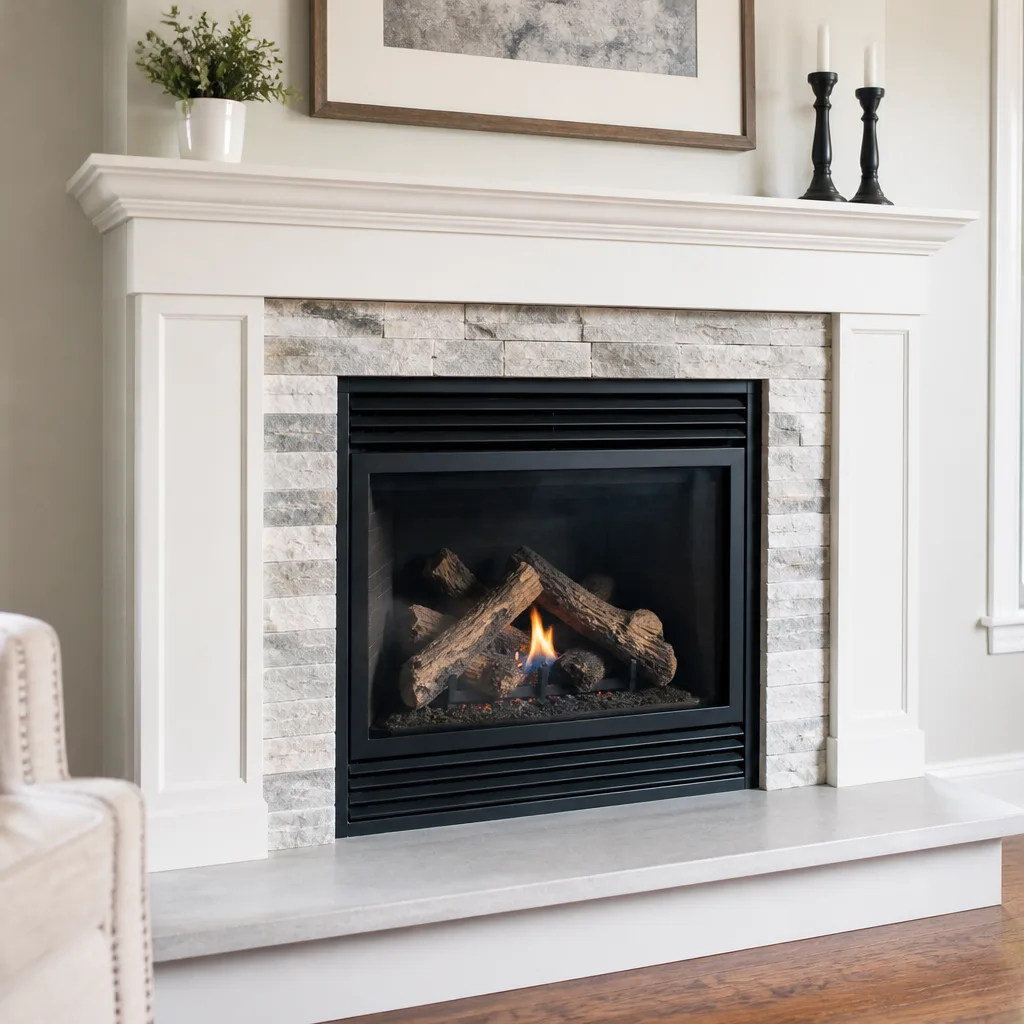 Gas fireplace service
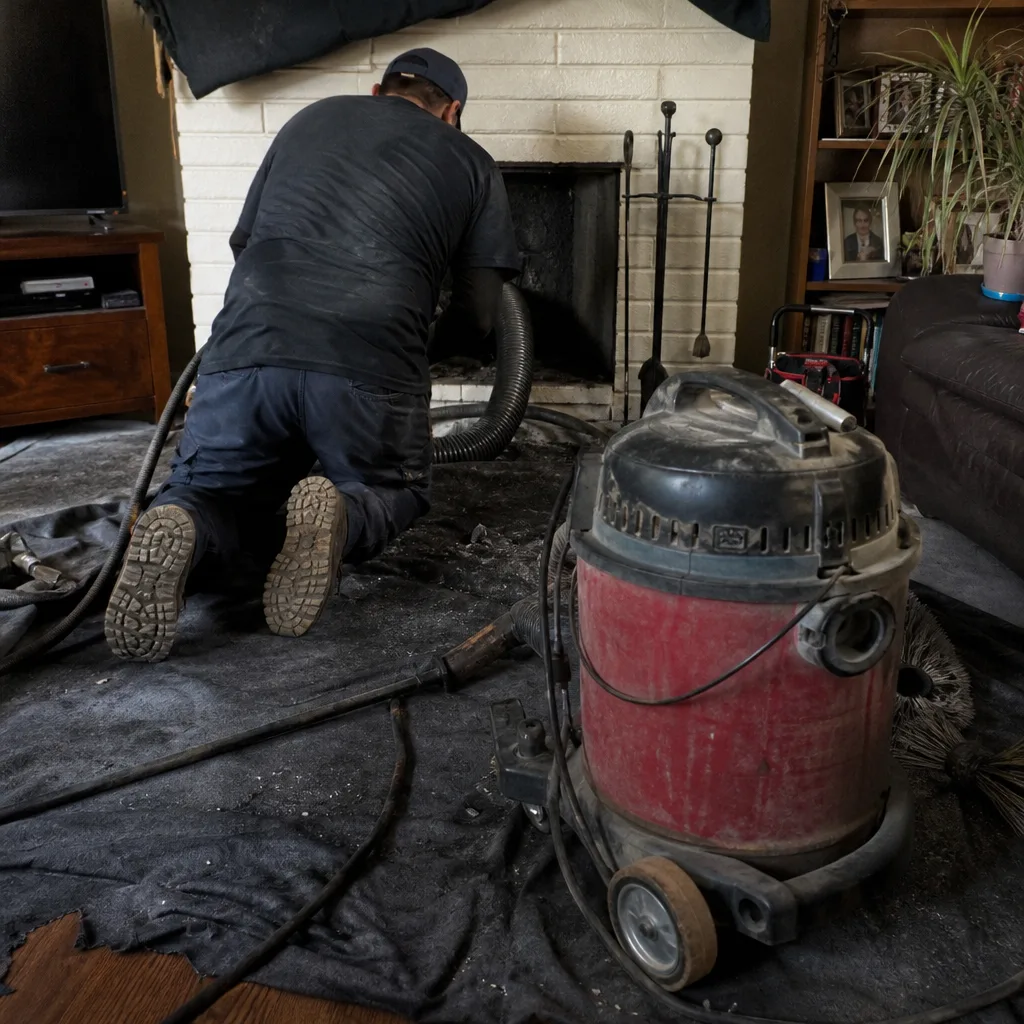
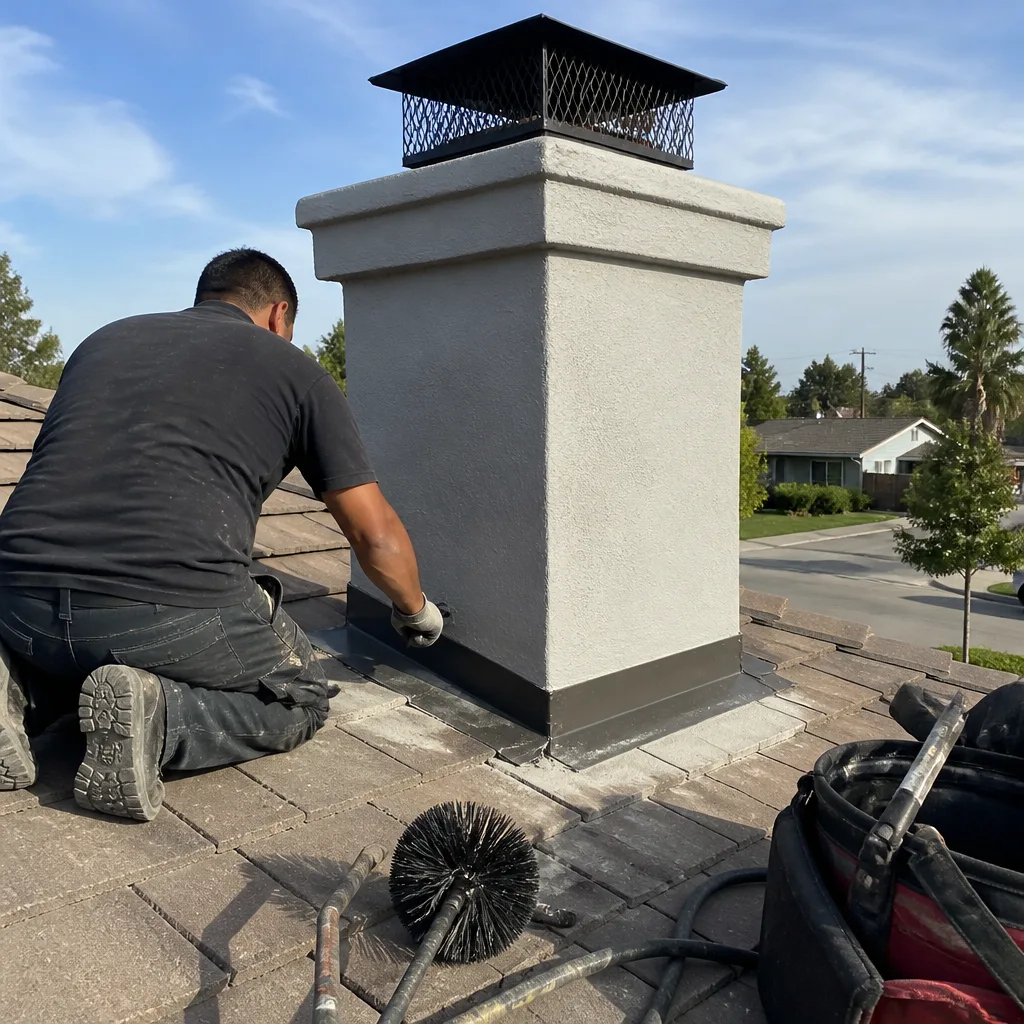
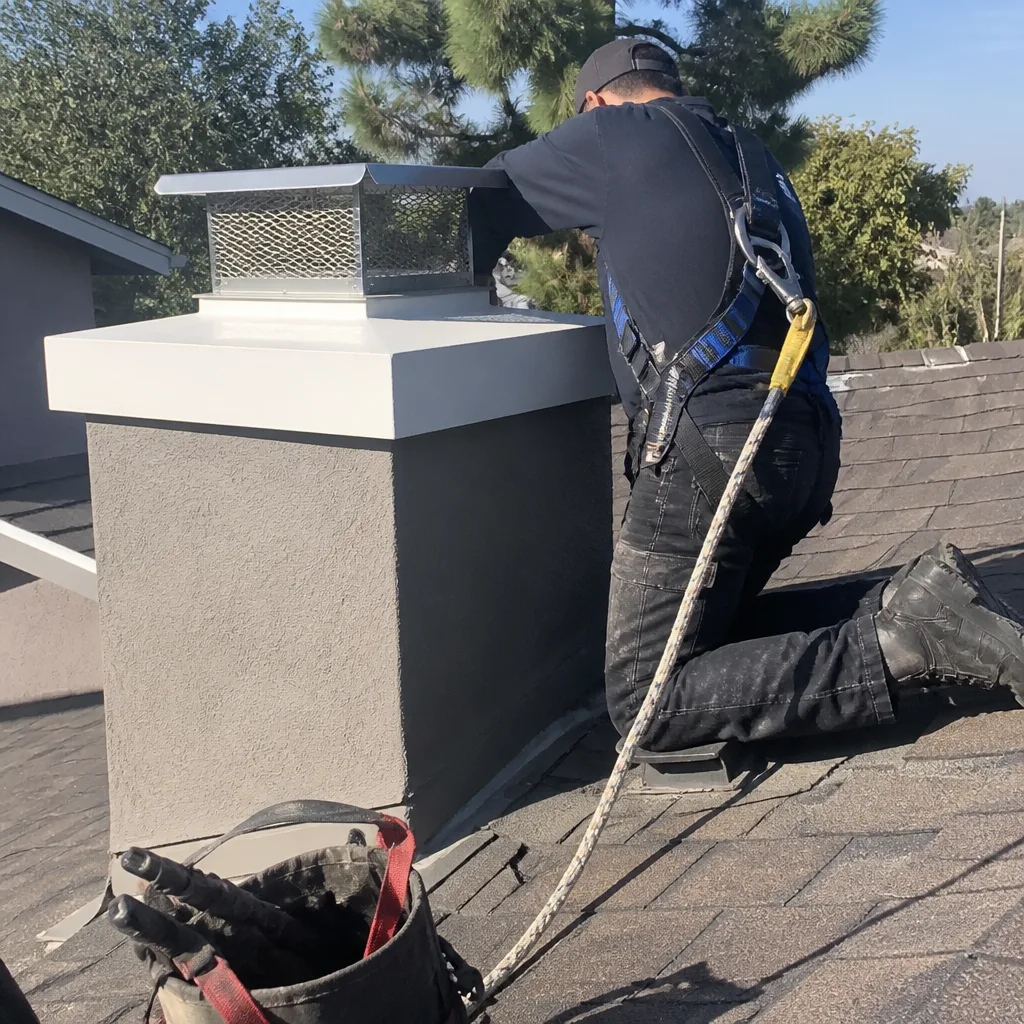
Level 1 sweep and inspection to the NFPA 211 annual standard - flue, crown, cap, and flashing checked and photographed
Chimney sweep logs do not sweep chimneys. They loosen some creosote - which then falls where a brush and vacuum still have to collect it.
Chimney Sweep Troubleshooting: Common Problems and How to Fix Them
If your fireplace smells like a campfire even when it hasn’t been used in weeks, the problem isn’t ash. It’s almost certainly a draft reversal caused by your home’s HVAC pulling air down through an open flue, a fixable issue that a chimney cap or damper adjustment solves without a full sweep. This Complete Chimney Sweep Guide for Santa Ana Homeowners walks you through the symptom-to-cause logic we use on service calls across Santa Ana every week. By the time you finish, you’ll know whether you’re dealing with a creosote buildup, a liner issue, negative air pressure, or a simple damper that needs attention, and you’ll know which fixes are safe to handle yourself and which need a trained technician.
Styles & brands we work with
Quick Answer
Chimney problems fall into four mechanical categories: draft failure (smoke entering the room), odor (air moving the wrong direction), creosote restriction (slow fires, glazed flue walls), and water intrusion (efflorescence, spalling brick). Each symptom traces to a specific root cause – a damper not seating, a liner with missing mortar joints, an undersized flue, or a chase cover leaking at the corner. Most problems homeowners attribute to needing a Chimney Sweep are actually liner or pressure issues that sweeping alone won’t fix.
Table of Contents
- Smoke in the Room: Reading the Draft Backwards
- Odor Without Smoke: The Reverse-Draft Problem
- Creosote Problems: When Sweeping Isn’t Enough
- White Stains on Your Chimney Exterior: What Efflorescence Tells You
- HeatShield Resurfacing vs. DuraFlex Liner Replacement: How to Decide
- Three Problems You’re Blaming on Sweeping That Actually Need a Different Fix
- Negative Air Pressure: The Hidden Culprit in Santa Ana Homes
- Common Mistakes to Avoid
- When to Call a Professional
- Frequently Asked Questions
- The Bottom Line
Smoke in the Room: Reading the Draft Backwards
Smoke pouring into your living room isn’t a mystery. It’s physics. A chimney works because warm air rises, but if the air inside your flue is colder than the air in the room, or if your house is competing with the chimney for air, the draft reverses. In Santa Ana, where winter temperatures hover in the 50s and 60s, the temperature difference between inside and outside is smaller than in colder climates. That means drafts are weaker to begin with, and any obstruction or pressure imbalance tips them into failure faster.
Here’s what we check first on a smoke-in-room call, in order:
- Damper position. A damper that doesn’t fully open, or one that’s warped from years of heat exposure, chokes the flue opening and forces smoke backward. This is the most common cause we find in Santa Ana homes with older fireplaces.
- Flue obstruction. Bird nests, fallen mortar chunks, or a creosote cap that’s narrowed the flue diameter. Even a 30% reduction in flue area cuts draft velocity enough to cause spillage.
- Competing exhaust. A running bathroom fan, range hood, or furnace can depressurize the room faster than the chimney can supply combustion air. Open a window an inch when you light the fire and watch what happens.
- Flue height or termination issues. If the chimney terminates below the roof peak or into a wind shadow from a taller addition next door, the draft can fail on certain wind days.
If the damper opens fully and the flue is clear, the next diagnostic step is a draft gauge reading and a video scan of the flue interior. That’s the only way to see whether the liner’s inside surface is smooth and continuous or whether missing mortar joints are letting cool air bleed into the smoke path. A smoke test alone won’t tell you that.
Odor Without Smoke: The Reverse-Draft Problem
A fireplace that smells like last winter’s fires in August is usually not a cleaning issue. Ash and creosote have a smell, but it’s not the sharp “campfire in the house” odor that homeowners describe. That specific smell is the product of air moving down the flue through a creosote-coated liner, picking up the odor, and dumping it into your living room. The mechanism is simple: your home is pulling air through the chimney from outside.
Every exhaust fan in your house – bathroom, kitchen, dryer, and the furnace itself if it’s a naturally aspirated unit – removes air. That air has to be replaced. The house pulls replacement air from wherever it can, and an open flue is a large, unobstructed pipe to the outside. In the summer, when the chimneys in Santa Ana sit unused for months, that pipe becomes a dedicated odor delivery system.
The fixes rank from simple to structural:
- Chimney cap and damper upgrade. A top-sealing damper (Gelco makes the ones we install most often) closes the flue at the top, not at the firebox like a throat damper. That alone kills most reverse-draft odor.
- Glass door with a tight seal. A secondary barrier at the firebox opening reduces air exchange even when the damper is open.
- Address the pressure source. If a kitchen remodel added a high-CFM range hood and the odor started shortly after, the hood is the cause. You need makeup air, not a chimney sweep.
- Inspect the flue liner’s creosote loading. A heavily coated liner makes odor transmission far worse because the creosote surface holds and releases the smell. A mechanical sweep with rotary rods and chains will reduce that surface area substantially.
We’ve had Santa Ana customers tell us they “just put up with” a summertime chimney smell for years. After a top-sealing damper install, the smell disappears the same day. It’s one of the highest-satisfaction fixes that doesn’t involve touching the masonry at all.
Creosote Problems: When Sweeping Isn’t Enough
Creosote is the condensation of unburned wood gases onto the flue wall. Stage one creosote is flaky and brushes off with standard sweeping. Stage two is tar-like and requires rotary rods with chains or a PowerSweep. Stage three is glazed – it looks like black glass, it’s extremely hard, and it can’t be removed by sweeping equipment alone. In Santa Ana, where many fireplaces burn soft woods like pine or eucalyptus from local landscaping, stage two and three creosote develop faster than in areas that burn hardwoods exclusively—something we cover in Choosing the Right Chimney Cleaning Brand: A Buyer’s Guide for Santa Ana.
Here’s what to look for:
- Slow draw immediately after lighting. The flue opening is now smaller than designed because of coating thickness.
- Chunks of shiny black material falling into the firebox. That’s stage three creosote shedding as the flue heats and cools.
- A persistent chemical odor, not just wood smoke. Creosote has its own acrid smell distinct from smoke.
- Reduced flame height even with dry wood and a fully open damper. The chimney isn’t pulling enough air.
If the coating is stage two, a thorough rotary sweep restores the flue to near-factory diameter. If it’s stage three glazed creosote, the mechanical action needed to remove it can damage an older clay-tile liner. That’s the point where we recommend a video inspection before and after – and often the conversation shifts from “sweep it” to “this liner has to be addressed.”
For homes with recurring stage-three creosote, the long-term fix is typically a properly sized, insulated liner system. A DuraFlex flexible liner, correctly matched to the appliance, promotes hotter flue gas temperatures, reducing the condensation that creates glaze in the first place. You can read more about our approach on the Chimney Sweep in Santa Ana page.
White Stains on Your Chimney Exterior: What Efflorescence Tells You
That white, chalky stain spreading across your brick isn’t mold and it isn’t salt from the beach air. It’s efflorescence, and it’s a direct signal that water is moving through your chimney’s masonry. Here’s the mechanism: water enters the brick or mortar, dissolves naturally occurring salts in the masonry, migrates to the surface, and evaporates. The salt stays behind as a white deposit. It’s not dangerous by itself, but it confirms that your chimney is taking on water – and water is the leading cause of structural chimney damage in Santa Ana.
The source of the water matters more than the stain:
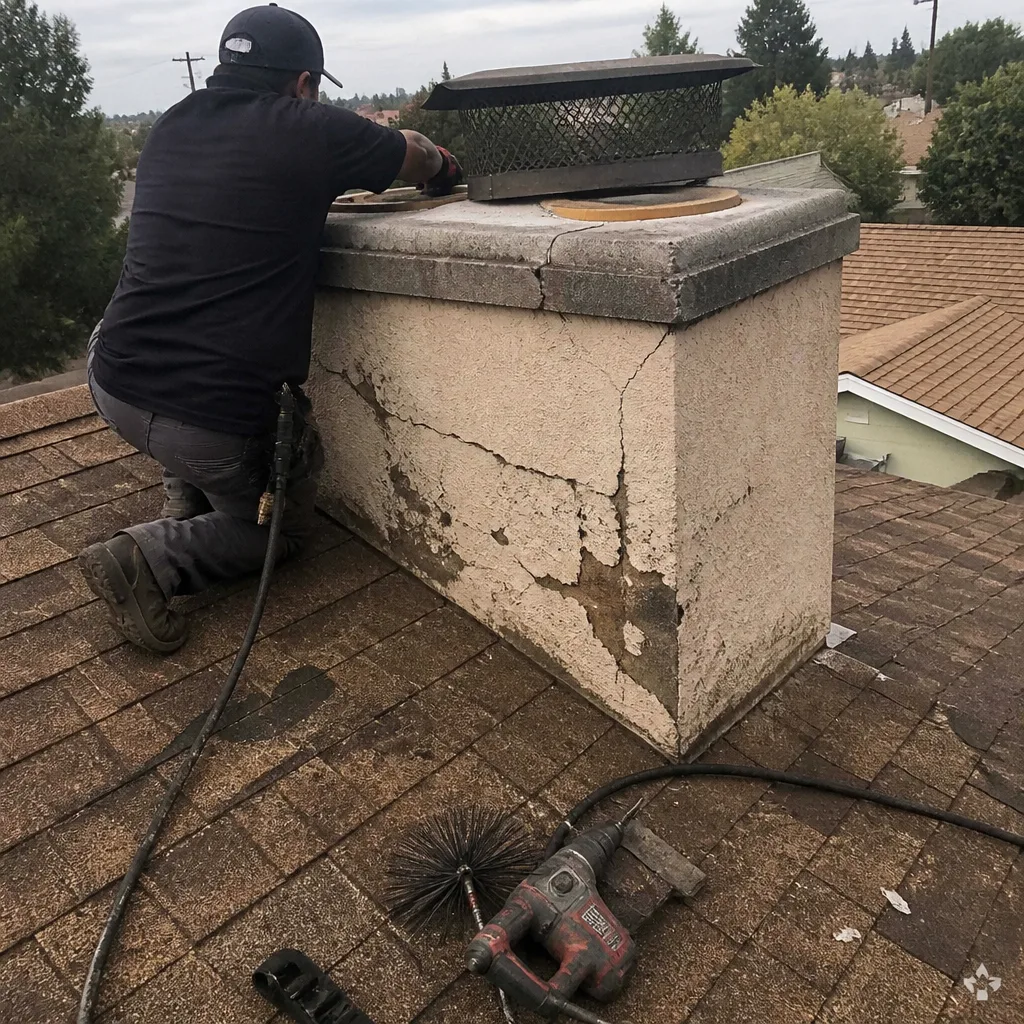
- Cracked chimney crown. The crown is the concrete cap at the top of the chimney that sheds water away from the flue. Hairline cracks let water in through the top.
- Missing or failed chase cover. On factory-built (prefab) chimneys, the metal chase cover at the top corrodes at the corners first. Santa Ana’s coastal proximity accelerates that corrosion.
- Spalling brick or deteriorated mortar joints. Once the outer surface fails, water moves into the chimney body and travels down.
- Flashing failure at the roofline. When the metal flashing where the chimney meets the roof separates, wind-driven rain enters there.
What water entering from the top or sides also does is attack the flue liner. Clay tile liners crack when water-soaked masonry freezes (rare in Santa Ana, but it does happen in cold snaps) or when the surrounding mortar expands. Once a clay liner cracks, flue gases can escape into the home or into the chimney chase. That’s the sequence: water intrusion today, liner failure tomorrow, and a much larger repair bill than a crown repair or chase cover would have been.
If you see efflorescence, the correct next step is a water-trace inspection to identify the entry point. Cleaning the brick won’t stop it. Sealing the brick won’t stop it if the water is coming through a failed crown. You have to fix the entry point first.
HeatShield Resurfacing vs. DuraFlex Liner Replacement: How to Decide
When a video scan reveals cracked clay tiles, missing mortar joints, or spalled flue surfaces, homeowners face a choice: reline the flue or resurface it. Both are legitimate repairs. They’re appropriate in different situations. Here’s the decision logic we use on service calls in Santa Ana:
HeatShield Cerfractory resurfacing is a cementitious material applied to the existing flue walls, filling cracks and restoring a continuous, insulated surface. It’s the right fix when:
- The existing clay liner is intact enough to serve as a form (cracks and gaps are present, but the liner hasn’t collapsed).
- The flue’s diameter is adequate for the appliance, and you don’t want to reduce it with an insert liner.
- The chimney is masonry (not factory-built) and the surrounding brick structure is sound.
- You want to preserve the original firebox opening and aesthetic.
HeatShield restores the flue’s smoke-tight integrity without tearing out the chimney. We’re certified applicators, and it’s become the standard recommendation for Santa Ana homes with 30-to-60-year-old masonry chimneys showing early-to-mid-stage liner deterioration.
DuraFlex flexible liner replacement is a stainless-steel liner installed inside the existing flue or as a full replacement when the original liner is removed. It’s the correct fix when:
- The original clay liner has collapsed or shifted so severely that resurfacing isn’t possible.
- The appliance (fireplace insert, furnace, or water heater flue) needs a specific diameter the existing flue can’t provide.
- The chimney serves a wood-burning appliance and the homeowner wants a liner with a lifetime material warranty.
- The flue path is irregular, offset, or curved in ways that make rigid liner sections impossible.
In many cases, the right answer is a combination: HeatShield for the smoke chamber and a DuraFlex liner for the flue itself. The key is diagnosing liner condition with a camera before recommending anything. We never tell a customer they need a liner replacement without video they can watch with us.
For detailed repair scenarios, our Chimney Repair in Santa Ana page explains the full scope of structural work we handle.
Three Problems You’re Blaming on Sweeping That Actually Need a Different Fix
Every chimney company gets calls that start with “I think it just needs a good cleaning.” Sometimes that’s true. Often it isn’t. Here are the three issues we most frequently find behind that assumption:
1. A Damper That Doesn’t Seat Properly
Symptoms: draft fluctuations, odor in the home, a fire that won’t “settle down.” The damper controls the flue opening, and if it’s warped, rusted, or installed with poor tolerances, air passes around it even when it’s closed. Sweeping the flue does nothing for a bad damper. The fix is a replacement throat damper or, better, a top-sealing damper that stops air exchange at the top of the chimney. Gelco manufacturers the top-sealing damper line we install most often, and it addresses both odor and draft consistency with one component.
2. A Chase Cover That’s Leaking at the Corners
Symptoms: water stains on the ceiling near the fireplace, rust streaks on the chimney exterior, musty smell after heavy rain. On factory-built chimneys, the chase cover is a sheet-metal cap over the entire chimney chase. When it corrodes through at the corners (and it always fails at the corners first), water enters the chase and runs down inside the wall assembly. No amount of sweeping addresses that. The fix is a new chase cover, properly fabricated with a drip edge, or in some cases a full chase top replacement.
3. Glazed Creosote That’s Become Structural
Symptoms: hard, shiny deposits visible at the top of the flue, slow draw, and a sweeps company that’s already “cleaned” it twice this year with no improvement. Stage-three glazed creosote isn’t a cleaning problem; it’s a chemistry and liner-surface problem. The creosote has bonded to the flue wall, and removing it mechanically risks damaging an already-compromised liner. The correct response is chemical treatment, possible removal, and often a liner decision (HeatShield or DuraFlex) rather than another sweep.
Negative Air Pressure: The Hidden Culprit in Santa Ana Homes
Santa Ana’s housing stock is a mix of 1950s-70s ranch and split-level homes, many of which have been remodeled more than once. Each remodel tends to tighten the building envelope: new windows, better weatherstripping, more insulation. Tighter homes are more energy efficient, but they also make the house more sensitive to negative air pressure.
Here’s the simple version: your home’s volume of air stays roughly constant. When exhaust fans, furnaces, water heaters, and dryers pull air out, makeup air enters through whatever openings exist. An open chimney flue is often the largest opening in the house. The result is a steady flow of outside air down the chimney and into the living space.
We see this regularly in Santa Ana neighborhoods where homes have been updated with high-efficiency HVAC systems and pot fans but the chimney was left as an unsealed penentration. The symptoms read as “chimney problem” but are actually “house pressure problem”:
- Fireplace odor in the home with no recent fires
- Cold air entering through the firebox even with glass doors
- Pilot lights that flicker or go out on the water heater
- A furnace that struggles to draft correctly when the fireplace is in use
The diagnostic sequence is simple. We run the exhaust fans in the home and take a pressure reading at the firebox. If the house goes notably negative, the chimney isn’t the root cause. The fix may be a top-sealing damper, a makeup air vent, or adjusting the HVAC’s combustion air supply, depending on what the pressure readings show.
This is why we emphasize diagnostics over assumptions. A sweep can clear a dirty flue, but it won’t fix a pressure imbalance, and the symptoms will return within weeks.
If you’re dealing with a dryer vent that’s also underperforming, that’s part of the same pressure conversation. Our Dryer Vent Cleaning in Santa Ana service covers the other half of the vent-safety equation.
Common Mistakes to Avoid
- Scheduling a sweep without a video inspection. A sweep alone addresses surface creosote. If the liner has hidden gaps or the smoke chamber is deteriorating, you’ll pay for a cleaning that doesn’t solve the real problem. Always ask whether a camera scan is included.
- Sealing the exterior brick to “stop water.” Sealants trap moisture inside the masonry and accelerate spalling. Fix the water entry point first, then address the surface.
- Ignoring a slow-drawing fireplace for an entire season. Slow draw is often a symptom of flue restriction. Restricted flues operate at hotter surface temperatures, increasing fire risk inside the chimney.
- Burning eucalyptus or pine without yearly inspection. These soft woods produce creosote faster than hardwoods. Santa Ana homeowners who burn eucalyptus should be on an annual schedule, not every-other-year.
- Assuming the fireplace damper is fine because it “looks okay.” Dampers warp invisibly. The only way to confirm a damper seats is to check it in operation or replace it with a top-sealing model.
- Trying to repair a cracked clay flue with mortar from inside the firebox. This never works. Flue repair has to happen from above with the correct materials and technique, and a heat-cured ceramic or steel liner is the only durable solution.
- Declaring a chimney “unusable” after one smoke incident. Most draft failures are fixable. Before you stop using a fireplace altogether, get a draft reading and a liner scan. The problem may be a $400 damper, not a $6,000 rebuild.
When to Call a Professional
Call a chimney technician if you see efflorescence spreading on the exterior (water is getting in), if smoke enters the room after you’ve confirmed the damper is fully open and a window is cracked, if you see shiny black glaze inside the flue, if debris falls into the firebox without a recent storm or nesting season, or if you smell chimney odor in the home when the fireplace hasn’t been used in a month. Any of these suggests a structural or liner issue beyond what a basic sweep will solve. Santa Ana Chimney Sweep offers free estimates in Santa Ana, and we bring the camera, the draft gauge, and the experience to tell you exactly what’s happening and what it will take to fix it. Call (855) 341-9658 to book a diagnostic appointment.
Frequently Asked Questions
A standard chimney sweep in Santa Ana typically runs between $180 and $340 depending on flue condition, creosote stage, and whether a video inspection is included. If the flue has stage-two or stage-three creosote, expect to pay more for the additional labor and equipment required. Santa Ana Chimney Sweep gives free estimates before any work is scheduled, so you’ll know the number before we start. Call (855) 341-9658 for an exact quote.
The NFPA standard is that a chimney should be inspected annually and swept when creosote accumulation reaches 1/8 inch or more. For a Santa Ana home that burns wood 20-40 times per winter season, that usually means a sweep every year. Homes that burn eucalyptus or fresh-cut wood may need sweeping more often because those woods produce creosote faster.
Not always. A cracked or deteriorated clay liner requires either HeatShield resurfacing or a DuraFlex stainless-steel liner, but you should insist on video footage that shows the cracks or gaps before committing. If a company recommends a liner replacement without showing you the camera scan, get a second opinion. A liner is sometimes the only safe fix, but it should always be a demonstrated one.
Creosote continues to build, narrowing the flue and trapping more heat in the chimney. The risk shifts from “dirty” to “flammable”: stage-three glazed creosote can ignite and burn at temperatures that crack clay liners and spread fire to the surrounding structure. Water intrusion that goes unaddressed during those same years accelerates masonry deterioration, turning a $300 sweep into a multi-thousand-dollar structural repair.
In Santa Ana’s warmer months, the temperature difference between inside and outside air reverses the natural draft in an open chimney. Combined with exhaust fans and a tight building envelope, air flows down the flue and into the home, carrying creosote odor with it. A top-sealing damper or tight-fitting chimney cap stops that reversal at the source.
Yes. Santa Ana Chimney Sweep provides Dryer Vent Cleaning in Santa Ana as a standalone service or bundled with a chimney sweep. Dryer vents are a separate combustion-vent safety concern, and most homes in Santa Ana go years without cleaning them, which is why we recommend checking both in the same appointment.
The Bottom Line
Chimney problems are rarely mysterious once you trace the symptom to its actual source. Smoke in the room is a draft issue: damper, flue diameter, or competing exhaust. Odor without smoke is reverse draft: a top-sealing fix, not a sweep. Efflorescence is water: water comes from a crown, chase cover, or flashing failure, and it threatens your liner over time. Creosote becomes structural when it glazes. And the biggest error is assuming the fireplace is the problem when the house’s air pressure is the real culprit. Before you live with a smell, stop using a fireplace, or pay for a sweep that won’t change anything, get a diagnostic that names the actual fix. Santa Ana Chimney Sweep can do that. Santa Ana Chimney Sweep home has more on how we work.
Written by the team at Santa Ana Chimney Sweep, serving Santa Ana since 2016. For more guides & resources, visit our blog.
See the difference
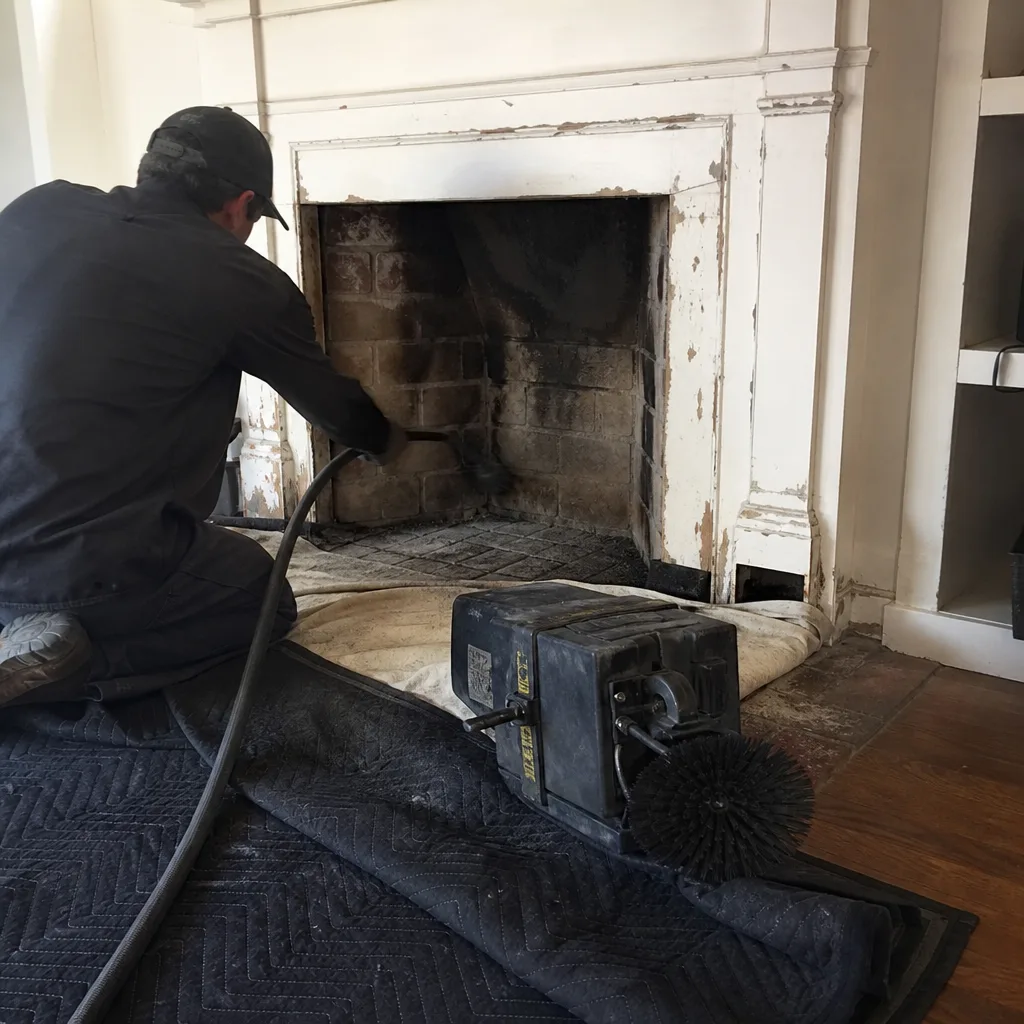 Before
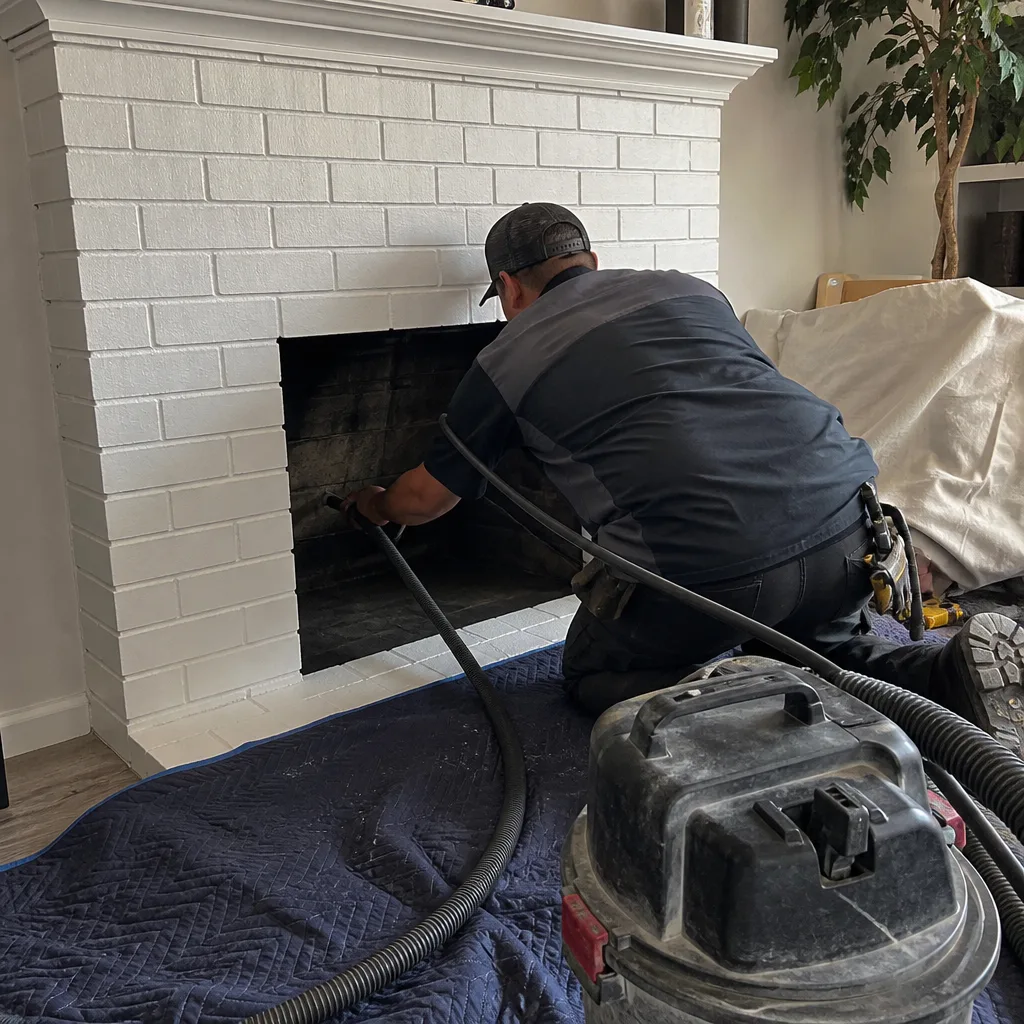 After
 Before
 After
 Before
 After