Gelco Chimney Sweep in Santa Ana: A Homeowner’s Guide
Gelco chimney products, specifically their 304 stainless steel chase covers and rain caps, are the most common repair we spec for prefabricated fireplaces in Santa Ana. These replace the thin galvanized covers that rust through and warp in about five to seven years under Southern California sun and marine air. If your chimney has rust streaks, leaks into the firebox after rain, or you can see a warped metal top from your driveway, you likely need this exact fix, and you’ll want to understand what separates a Gelco cover from the universal-fit parts most sweeps carry. If you’d rather skip the research and just get it handled, call (855) 341-9658 and we’ll measure, spec, and install the right cover for your chase.
What Gelco Actually Makes (and Why the Material Spec Matters Here)
Gelco is a sheet metal manufacturer that produces chase covers, shrouds, and chimney caps. They don’t make liners, they don’t make fireplace boxes, and they don’t make flue tile. They make the metal that sits on top of your chimney chase and keeps water out of the system below it. That’s the whole product line, and it matters because a specialist who understands what Gelco builds understands what the part is supposed to do.
In Santa Ana, we’re dealing with a specific failure pattern. Most prefabricated fireplace chases in Orange County were built with galvanized sheet metal tops. Galvanizing protects steel until the zinc coating sacrifices itself, and in our climate, that happens faster than homeowners expect. The combination of intense UV exposure, salt-influenced air that moves inland from the coast, and the occasional heavy rain cycle we get between long dry stretches accelerates galvanic corrosion. We routinely see galvanized chase covers in Santa Ana neighborhoods like Floral Park and West Floral Park that are visibly compromised at year five or six.
Gelco’s solution is 304 stainless steel, and the gauge matters. A 24-gauge stainless cover will outlast a 28-gauge galvanized cover by decades, not years. The 304 alloy contains chromium and nickel, which form a passive oxide layer that actually repairs itself when scratched. It doesn’t need a coating. So when we install a Gelco 304 stainless chase cover, we’re not just swapping one piece of metal for another, we’re changing the material the part is made from. That’s the difference between a repair that lasts three years and one that outlives the fireplace itself.
We name the materials we use, and why they matter. This is one place where that habit pays off for homeowners, because the words “stainless steel” on a quote tell you nothing about gauge or alloy, and both of those numbers determine whether you’re buying a real fix or a temporary patch.
Why Prefabricated Fireplaces Need Spec-Matched Parts
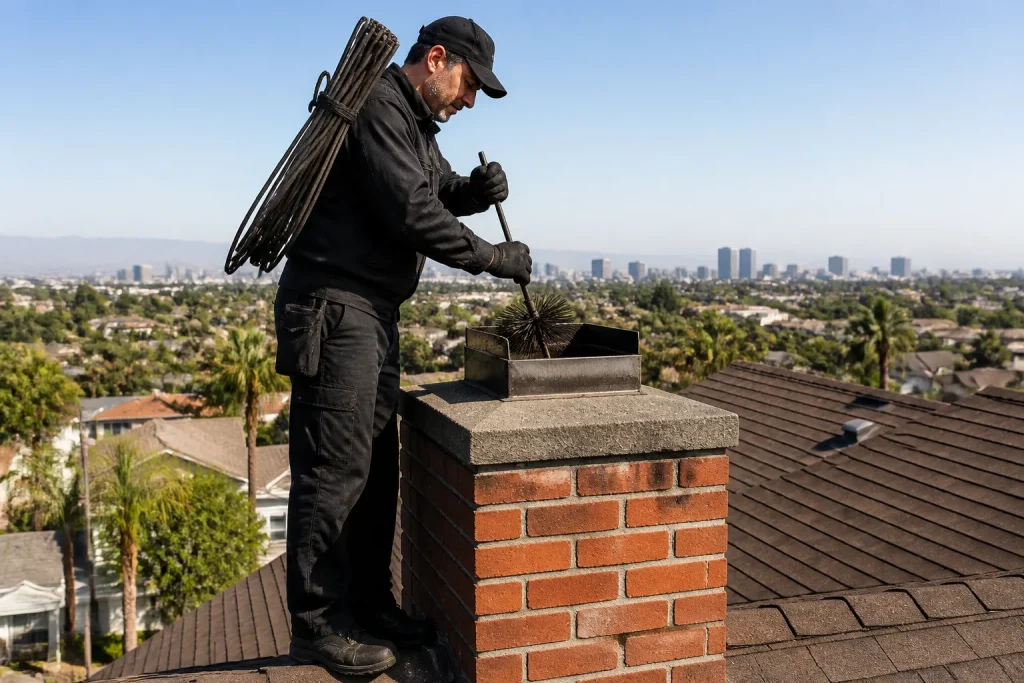
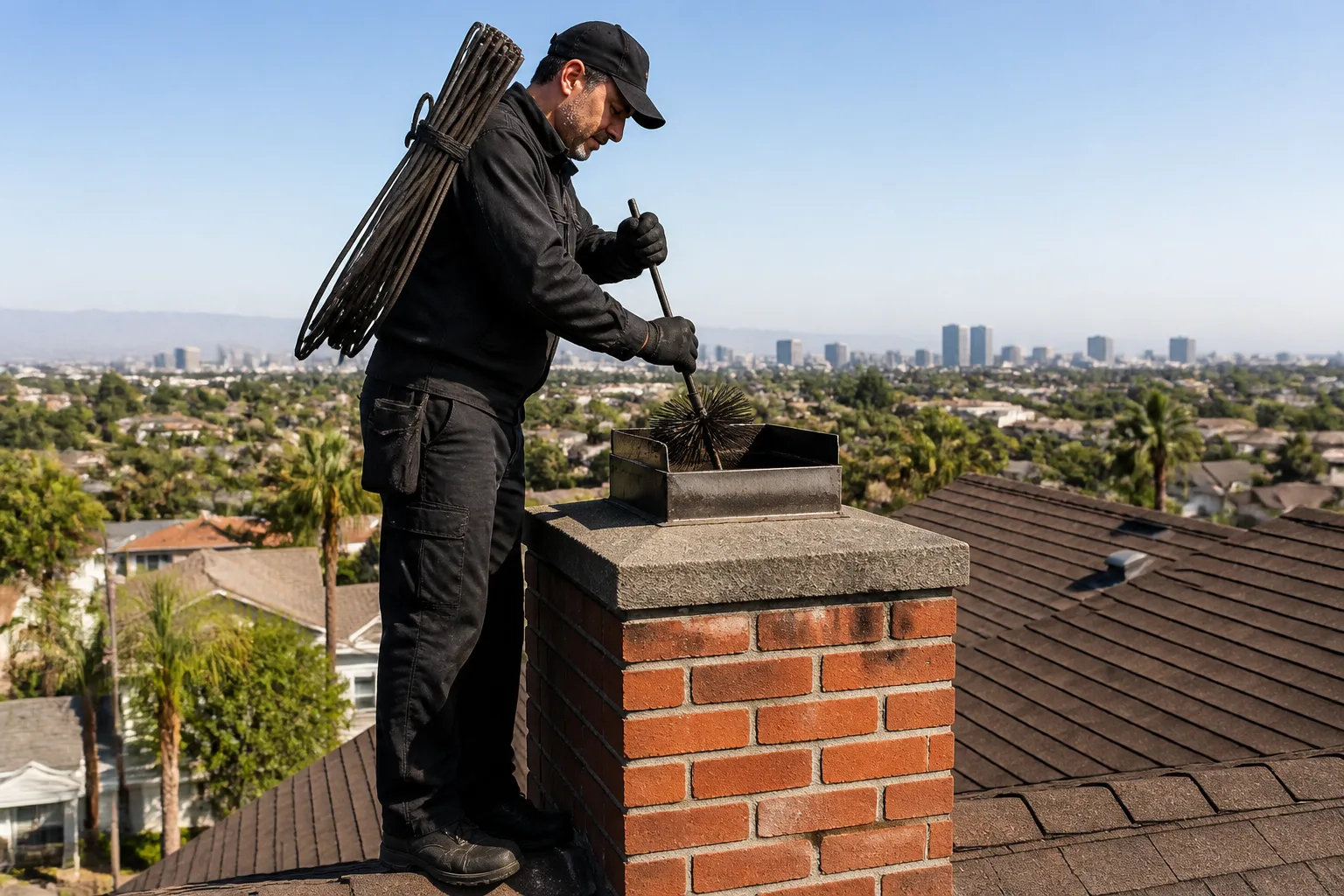
If your Santa Ana home has a traditional masonry chimney built from brick and mortar, this section doesn’t apply to you the same way. But if you’ve got a prefabricated, or zero-clearance, fireplace, you don’t have a masonry structure at all. You have a factory-built metal firebox connected to a metal flue pipe, enclosed in a wooden chase with a metal cover on top. The whole system was engineered as a unit, and the parts are supposed to match the engineering.
This is where universal-fit hardware fails. A generic chase cover from a hardware store or an online discount supplier is often stamped from thinner gauge galvanized steel and shipped flat, designed to fit a range of opening sizes rather than one specific chase. It may cover the opening, but it wasn’t designed for your chase dimensions, your flue offset, or the wind load your Santa Ana neighborhood experiences during Santa Ana wind events. A poorly fitted cover allows water entry at the seam, and a thin cover warps under repeated thermal cycling from our hot summers and cool nights.
Gelco covers are measured to the individual chase opening. We take the outside dimensions of the chase top, the inside dimensions, the flue pipe diameter, and the offset of the flue from the chase center, and we order a cover built to those numbers. That means the cover sits flat with the correct overhang, the flue collar is positioned correctly, and the whole assembly sheds water the way the original design intended. This is why we specify Gelco rather than picking up whatever’s on the shelf at a supply house.
Related services in Santa Ana: if you’re not sure whether your fireplace is masonry or prefab, or you want a professional assessment of your current chase condition, our Chimney Sweep in Santa Ana service includes a visual inspection of the entire system from firebox to chase top.
How to Check Your Current Chase Cover Before You Call Anyone
You can do a meaningful pre-inspection from the ground in about ten minutes. Here’s what to look for:
- Rust staining on the chase exterior. Walk to the street and look at the top two feet of your chimney chase. If you see orange or brown streaks running down the siding, stone, or stucco from under the metal lid, that’s dissolved metal washing down from the cover. It means the galvanized coating is gone and the steel itself is corroding.
- Water in the firebox after rain. After a good Santa Ana winter rain, open your fireplace doors or look inside the firebox with a flashlight. If you see water stains, damp ash, or actual puddles, water is getting past the chase top. This is the single clearest sign that the cover has failed, and it’s also the sign that tells you to stop using the fireplace until it’s fixed.
- A warped or bowed cover visible from ground level. Walk a full circle around your house and look at the top of the chimney from different angles. Thin galvanized covers expand and contract with temperature, and after enough cycles they warp. A cover that bows upward in the center pools water at the edges. A cover that bows downward pools water around the flue collar. Either way, standing water on steel is how you get pinhole leaks.
- Flashing separation around the flue. If you can see daylight or a gap between the flue pipe and the metal collar that surrounds it, the sealant has failed. Even if the cover itself looks okay, this gap lets water run straight down the outside of the flue into the chase.
We pulled a cover off a home over in the Washington Square neighborhood last winter where the homeowner had no idea anything was wrong until the drywall on the ceiling below the chase started staining. The cover had rusted through along the back edge, where nobody could see it from the street, and every rain event for two seasons had been dripping water into the chase cavity. By the time it showed up inside the house, the subfloor around the chase needed drying out and mold remediation. That’s the argument for looking at your chase cover every year, even when you’re not using the fireplace.
How to Measure for a Gelco Chase Cover Before Your Appointment
If you’re comfortable on a ladder and your roof is walkable, you can take the measurements we need before you call. If you’re not comfortable on a ladder, don’t get on one. We measure every chase ourselves during the estimate visit, and there’s no charge for it. But for homeowners who want to understand how the spec works, here’s the process:
- Measure the outside dimensions of the chase top. This is the lip of the wooden or metal chase frame, measured width by depth, from outside edge to outside edge. The Gelco cover needs to overlap this by about an inch on all four sides.
- Measure the inside dimensions of the chase opening. This is the open cavity the cover sits on top of. Most chases in Santa Ana are framed with 2x lumber, so the inside dimension is typically about 3 inches smaller than the outside in each direction.
- Measure the flue pipe diameter. Use a tape measure across the metal pipe that sticks up through the chase. Standard prefab flues are 6, 7, or 8 inches in diameter. This determines the collar size on the cover.
- Measure the flue offset. Measure from the inside edge of the chase opening to the center of the flue pipe. This tells the fabricator where to cut the collar hole. Off-center flues are common and this is what makes universal covers fit poorly.
We installed a Gelco cover over in the Park Santiago neighborhood where the flue was offset 4 inches to one side and a previous contractor had used a center-cut universal cover. The flue pipe rubbed against the edge of the collar, the vibration from wind wore through the pipe, and the homeowner had exhaust gases leaking into the chase. Spec-matched parts exist for exactly this reason. It’s not just about water, it’s about keeping the flue pipe centered and clear of the cover so the whole assembly vents the way it was designed to.
What to Ask a Chimney Company About Gelco (and What Their Answer Tells You)
Here’s a useful test when you’re calling around for chimney work in Santa Ana. Ask the person on the phone one question: “Do you stock Gelco covers, or do you order them per job?”
A company that stocks Gelco, or has an established ordering relationship with the manufacturer, is building custom-fabricated parts to the measurements of individual chases. That means they inspect, measure, and spec before they sell you anything. A company that doesn’t stock Gelco and doesn’t have a relationship with the brand is likely sourcing universal-fit covers from a local supplier or selling you whatever’s in the truck. There’s a place for universal parts in some situations, but a chase cover that’s going to sit on your roof for thirty years should not be one of them.
You can also ask what gauge the cover is. If the answer is “24-gauge 304 stainless,” you’re talking to someone who knows the product. If the answer is “stainless” or “galvanized” with no numbers, you’re talking to someone who hasn’t thought about it. If the answer is “we don’t really do chase covers,” you’ve just saved yourself a follow-up call.
We also stock and install DuraFlex flexible liner systems when a chase inspection reveals a deteriorated flue that needs relining rather than just a top replacement. And when a flue has minor cracking or surface spalling that doesn’t require a full rebuild, HeatShield ceramic resurfacing can restore the flue wall without tearing out the chimney. That matters because a failed chase cover often lets water sit on top of the fireplace for years, and by the time you discover it, the flue above the firebox may have rusted. Being able to fix the cover, reline the flue, and resurface the flue wall, all on the same visit, means you don’t have to coordinate three contractors. Sweep, repair, reline, handled by the same crew.
And while we’re up there: your dryer vent is a fire risk too. Lint accumulation inside a dryer duct is one of the leading causes of residential fires in Orange County, and it’s a vent that carries combustion byproducts and heat just like a chimney does, just from a different appliance. We clean those as well, either bundled with a chimney visit or as a standalone service. If you’re already making a call for your chimney, it’s worth asking about scheduling a Dryer Vent Cleaning in Santa Ana the same day.
When to Call a Pro (and When You Can Wait)
If you’ve found water in your firebox after rain, rust streaks on your chase, or a visible gap between the flue and the cover, don’t wait. Each of those is an active failure. Water that has entered the system is now sitting somewhere it shouldn’t be, and every rain event makes it worse. The fix is a new cover, and the cost of the cover is a fraction of what it costs to repair the firebox, the chase framing, and the ceiling below it if the water keeps coming.
If your chase cover looks intact but you haven’t had the chimney swept in a few years, you can wait to book annual maintenance until your next burn season, but don’t skip it. Santa Ana’s burn season is short, but creosote doesn’t care how short it is. It builds up every time you burn, and it builds up faster when you burn wood that isn’t fully seasoned. A sweep, a visual flue inspection, and a check of the chase top should happen at least once a year for any active fireplace.
If your fireplace is masonry and you’re seeing crumbling bricks or mortar joints, that’s a different issue and you’ll want a Chimney Repair in Santa Ana assessment rather than just a sweep.
If you’ve seen rust on the chase but no water inside the house yet, a chase cover replacement is still the right call. The rust is the warning. It’s telling you the galvanized coating is gone and the steel underneath is now exposed, and in Santa Ana, exposed steel at the top of a chimney chase has maybe two wet seasons left before it develops pinholes.
The Bottom Line
Here’s what to remember:
- A Gelco 304 stainless steel chase cover is the right replacement for most prefabricated fireplace chases in Santa Ana, because galvanized covers fail in five to seven years in our UV-intense, marine-influenced air.
- Gelco covers are measured and fabricated per individual chase, not cut as universal fit. The difference is a watertight seal vs. a slow leak you won’t discover until water shows up inside your house.
- Water in the firebox after rain, rust streaks on the chase, or visible gaps between the flue and cover are failure signs. Each one means the system needs attention now, not next season.
- Chase cover replacement is a fraction of the cost of the damage a leaking cover causes. The part is cheap relative to firebox replacement, chase framing repair, or ceiling remediation.
- Ask any chimney company whether they stock Gelco and what gauge cover they’re installing. A real answer includes numbers. A vague answer tells you what you need to know.
If you’re in Santa Ana and you’ve got a chase cover that’s rusting, warping, or leaking, we’ll measure it, spec the right Gelco cover, and install it. Estimates are free, and we’ll show you photos of what we found so you can see the problem for yourself before you spend anything. Call (855) 341-9658 or visit our Santa Ana Chimney Sweep home page to book.
Frequently Asked Questions
For a standard prefabricated chase in Santa Ana, a custom Gelco 304 stainless cover typically runs between $400 and $900 installed, depending on the chase dimensions, flue diameter, and whether the flue is centered or offset. Larger chases or odd shapes can push that higher. A galvanized universal cover might cost $150 to $250, but it won’t fit correctly and it’ll be rusting again in five years. Call (855) 341-9658 for an exact quote, estimates are free.
A 24-gauge 304 stainless Gelco cover will typically last 30 years or more in Santa Ana’s climate. The 304 alloy resists the UV degradation and marine-influenced corrosion that destroys galvanized steel in five to seven years, and it doesn’t rely on a coating that can be scratched or worn away. The cover will likely outlast the fireplace system underneath it.
You need a cover that is measured to your chase opening. A universal cover leaves gaps at the seam, has a collar hole cut for a centered flue even when yours is offset, and is usually made from thinner galvanized steel that warps within a few seasons. It costs less up front, but the water damage it eventually allows costs ten times the savings. For a prefab fireplace in Santa Ana, a spec-matched cover is a material requirement, not an upgrade.
Water continues to enter the chase cavity with every rain event. It saturates the framing around the fireplace, rusts the flue pipe, and eventually migrates into the firebox and the ceiling below the chase. You’ll discover it as a ceiling stain, a warped chase exterior, or smoke backing into the room when the rusted flue can’t draft. By the time it’s visible inside the house, the repair is no longer a $500 chase cover. It’s framing, drywall, firebox, and maybe flue replacement. If you’ve got rust on top of your Santa Ana chimney, call (855) 341-9658 now, not after the next heavy rain.
Written by the team at Santa Ana Chimney Sweep, serving Santa Ana since 2016.
Need Chimney Cleaning Help?
Call Santa Ana Chimney Sweep — licensed & insured, here with fast after-hours help in Santa Ana.
(855) 341-9658